

Wednesday, October 28, 2026
  • Home
  • About Us
  • Refund Policy
  • Privacy Policy
  • Terms and Conditions
  • Advertise With Us
  • Contact Us
  • Login
  • Register
SUBSCRIBE
Welcome to Saviours Voice of Khaki
Advertisement
ADVERTISEMENT
  • Foreign Policy
  • Internal Security
  • Policing
  • Border Management
  • Corrections
  • Disaster Management
  • Interviews
  • General
No Result
View All Result
  • Foreign Policy
  • Internal Security
  • Policing
  • Border Management
  • Corrections
  • Disaster Management
  • Interviews
  • General
No Result
View All Result
Welcome to Saviours Voice of Khaki
No Result
View All Result
Home General

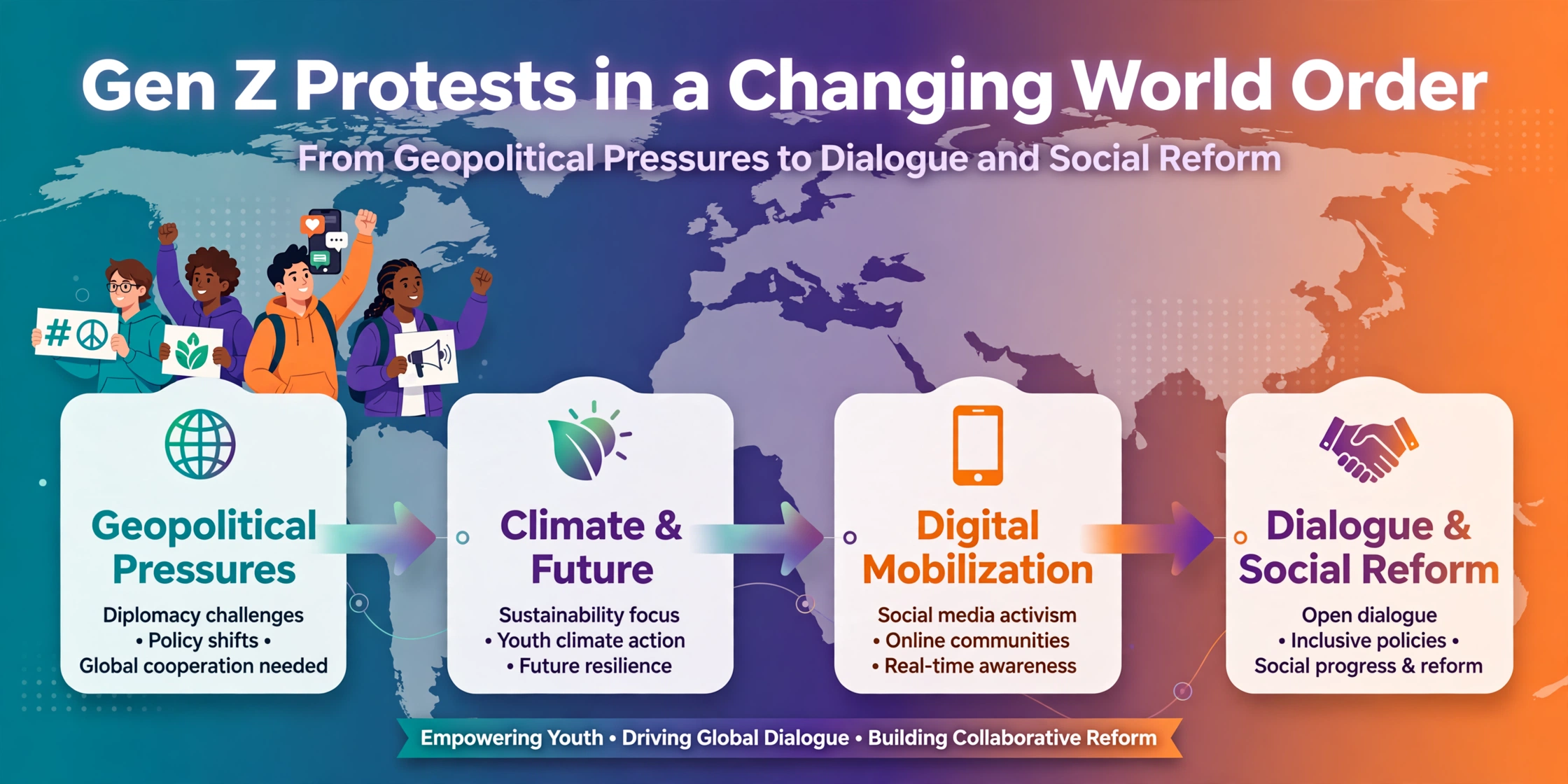
Gen Z Protests in a Changing World Order: From Geopolitical Pressures to Dialogue and Social Reform

War, Economic Pressure and the Changing World Order

RK RainabyRK Raina
October 26, 2026
in General, Internal Security, Policing
Reading Time: 7 mins read
0
0
Gen Z Protests in a Changing World Order: From Geopolitical Pressures to Dialogue and Social Reform
Share on FacebookShare on TwitterShare on LinkedInShare on WhatsApp

Introduction

The world is in a difficult phase of international relations. Wars are spreading their impact far beyond the countries directly involved, economic uncertainties are increasing, energy supplies are under pressure, and the cost of living is becoming a serious concern for ordinary people. At the same time, the world order is changing, forcing every country to reconsider its economic interests, energy security and foreign policy priorities.

In this context, the expectations of the younger generation, particularly Gen Z, have taken on a new dimension. Their aspirations for better living standards, employment, economic opportunities and a more responsive system are genuine. However, the question remains whether these aspirations can be addressed without letting domestic protests become instruments of international political competition.

The issue deserves serious consideration, especially as the consequences of international conflicts reach the kitchens of ordinary families.

Wars Beyond Borders and the Cost of Living

The current international situation reflects misjudgments, competing strategic interests, and an inability to contain conflicts within their original boundaries. The Russia-Ukraine war, the confrontation involving Iran and the United States, and the wider tensions affecting Saudi Arabia, the Houthis and the Middle East have created a complicated situation for global energy supplies and international trade.

Two key energy routes are under pressure, raising concerns about the movement of oil, gas and other essential goods. The consequences are being felt across Europe, Asia, the Middle East and other parts of the world. When energy becomes expensive, transportation costs rise, production becomes costlier, and prices of essential commodities increase. Ordinary citizens, particularly the middle and lower middle classes, ultimately bear the burden.

Sanctions have added another dimension to this situation. They are often imposed to influence a country’s behaviour or bring it to the negotiating table. But their consequences frequently extend to countries that neither initiated the conflict nor have a direct role in it. Countries such as India and China, along with nations across Africa and South Asia, are then expected to adjust their energy purchases and economic relationships to others’ strategic preferences.

Every country must consider its people, its economic needs, and its long-term national interests. International politics, however, increasingly demands that countries demonstrate where they stand and whose interests they are prepared to support.

The result is a growing contradiction between international political objectives and ordinary people’s everyday needs.

When International Pressure Meets Gen Z Aspirations

Against this background, we must understand Gen Z’s expectations.

Young people today have grown up with the promise of greater opportunities, technological advancement, improved living standards and a more open world. They expect employment, affordable housing, better education and a reasonable opportunity to build their future. They also compare their lives with those of people in other countries and expect governments to respond more quickly to their concerns.

When these expectations meet rising prices, unemployment and economic uncertainty, frustration is inevitable. Meanwhile, governments operate under considerable constraints. They must manage public expenditure, inflation, energy costs, international commitments, and competing domestic demands.

This gap between public expectations and the government’s capacity to deliver has become a source of social and political unrest in several countries.

The Political Space Created by Protests

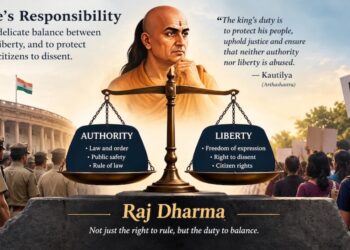
Every democratic society must protect citizens’ right to express disagreement, organise peacefully, and demand accountability from their governments. Public protest has an important place in democratic life. It can bring neglected issues to national attention and compel governments to reconsider hardship-causing policies.

But a protest that begins with economic grievances can gradually become a platform for wider political ambitions. Different political groups may attempt to influence its direction, while external actors may see an opportunity to advance their own interests.

This possibility deserves attention, as not every protest is foreign-sponsored. Still, some recent uprisings, particularly in India through Gen Z protests, have been seen as a byproduct of foreign-policy differences.

Public dissatisfaction can therefore create an opening and put pressure on a government. Demands may move beyond employment, prices, and public services toward changes in government, political alignment, or foreign policy.

A country’s foreign policy is particularly vulnerable during periods of international turmoil, especially when internal political pressure mounts. Decisions involving energy supplies, international partnerships, sanctions and strategic relationships have long-term consequences. If the country makes such decisions hastily to satisfy immediate political pressure, it may compromise interests that require a more careful assessment.

Democracy Requires Patience as Well as Rights

The younger generation has every right to question its government’s decisions. But democratic rights also operate within established constitutional procedures. People can challenge a government, mobilise public opinion, and pursue political change through democratic institutions and processes.

The demand for immediate change, however, can sometimes overlook the complexity of governing a country. Every major policy decision involves competing interests. What benefits one part of society may cost another. What appears to be a short-term solution may create long-term difficulties.

The danger arises when people are encouraged to see only the immediate problem and are not allowed to understand the wider consequences of the proposed solution. This needs to be understood and addressed through broader public debate within and outside educational institutions.

We have also seen situations where protests have been followed by violence, loss of life, property damage, and disruption of economic activity. Businesses suffer, employment opportunities contract, and society bears the cost of recovery. In such circumstances, young people’s original grievances may remain unresolved while their families and communities face additional hardship, along with pressure from international players.

Foreign Policy in a Changing World Order

The international consequences of domestic unrest are growing more significant as countries become increasingly interdependent. Energy supplies, trade routes, technology, investment, and security partnerships connect nations’ fortunes in ways that were less visible in earlier decades.

A change in one country’s foreign policy can affect the strategic calculations of several others. This is especially relevant for India, which must maintain relationships across competing international groupings while safeguarding its energy security, economic development, and strategic autonomy.

India cannot make its decisions without considering the wider international environment. Nor can it ignore the economic pressures its people face. The challenge is to reconcile domestic expectations with long-term national interests, rather than letting international pressure or immediate public anger become the sole basis for decision-making. This is a new normal for the present generation and cannot be kept separate from them.

Educating Gen Z for a More Complicated World

Governments alone cannot explain these realities. Educational institutions, public intellectuals, the media, and political leadership must help young people understand how international events connect to their daily lives.
A rise in fuel prices may be linked to a conflict thousands of kilometres away. A government’s decision to buy energy from a particular country may reflect economic necessity, diplomatic relationships, and strategic calculations. Sanctions intended to influence one government may impose costs on millions of people elsewhere.

Young citizens should be encouraged to ask questions about these decisions, examine different arguments and hold their governments accountable. They should also be helped to distinguish legitimate criticism and political mobilisation from attempts to use public anger for purposes unrelated to the original grievance.

That education must also explain that foreign policy is not simply an extension of domestic political competition. It requires continuity, careful judgement and an understanding of consequences that may emerge years later.

A Balance Between Aspiration and Responsibility

The world is entering a period in which war, economic insecurity, energy competition and political uncertainty are becoming closely connected. The resulting pressure on ordinary people is real, and governments cannot expect public patience without responding seriously to their concerns.

At the same time, young people must recognise that they cannot always resolve the difficulties confronting their countries through immediate political change. Nor should their legitimate aspirations become a convenient platform for domestic or international interests seeking to influence a country’s direction.

Democratic societies must balance rights and responsibilities, public demands and institutional procedures, and immediate relief with long-term national interests. A broader dialogue between younger generations and other parts of society about the inherited contradictions and dynamics of international politics is essential.

How Countries Should Engage with Gen Z: A Way Forward

1. Recognise and respect their aspirations. The demands of Gen Z should not be denied or belittled. Their future, employment, and quality of life are at stake, and their concerns must be understood in context.
2. Establish a structured negotiation platform. Governments should create a regular, time-bound platform for dialogue with young people to discuss grievances, explore solutions, and monitor progress.
3. Ensure genuine and broad representation. Students, young professionals, educators and representatives of different sections of society should have a voice.
4. Address concerns at both government and institutional levels. Educational institutions, employers, civil society organisations, and other relevant bodies must help find practical solutions to issues affecting young people.
5. Keep channels of communication open. Young people should be able to communicate directly with governments through dialogue forums, social media and other accessible platforms. They must not feel that institutional bottlenecks prevent their concerns from reaching decision-makers.
6. Encourage patience through time-bound solutions. Governments should set realistic timelines for addressing genuine grievances and provide regular updates on actions taken. Young people, in turn, should participate constructively and allow agreed processes a reasonable opportunity to deliver results.
7. Involve think tanks and independent experts. Universities, research institutions, think tanks, and civil society platforms should help identify the root causes of unrest, assess proposed solutions, and provide independent channels for young people’s suggestions to reach the government.
8. Prevent the exploitation of genuine grievances. Open dialogue, transparent decision-making, and meaningful participation can reduce the risk that domestic political interests or external actors exploit public frustration for purposes unrelated to the original demands.
9. Preserve social harmony and democratic institutions. The objective should be to resolve genuine concerns without creating further instability, disrupting education and employment, or undermining the constitutional processes through which democratic change takes place.

The central message: Governments must ensure that Gen Z does not feel unheard, excluded or pushed into a dead end. Young people must, in turn, recognise that constructive dialogue, patience and participation can help turn their aspirations into practical outcomes. The responsibility is shared: protect the right to question, build confidence in the resolution process, and preserve the social harmony essential to every country’s future.

Tags: AgitationCJPDemonstrationDialoguefreedom of expressionGen ZindiaLibertyProtestsResponsibility
ShareTweetShareSend
RK Raina

RK Raina

Rajesh Kumar Raina is a former diplomat and strategic commentator on the South Asian geopolitics and dynamics. He contributes to policy platforms on issues linking technology, security, and civilisational diplomacy in Asia.

Related Posts

The Chola Lesson: Why India Must Turn to the Sea
Border Management

The Chola Lesson: Why India Must Turn to the Sea

October 25, 2026
State, Order and Liberty
General

State, Order and Liberty

October 19, 2026
Beyond the Badge and Gun: Institutionalising Negotiation Skills in Everyday Policing
Disaster Management

Beyond the Badge and Gun: Institutionalising Negotiation Skills in Everyday Policing

October 15, 2026
Green Card Freeze: Eight Companies Named, Indian Engineers Punished
Economy

Green Card Freeze: Eight Companies Named, Indian Engineers Punished

October 9, 2026

JUN-AUG 2025 ISSUE

ADVERTISEMENT

Trending Articles

Gen Z Protests in a Changing World Order: From Geopolitical Pressures to Dialogue and Social Reform
General

Gen Z Protests in a Changing World Order: From Geopolitical Pressures to Dialogue and Social Reform

byRK Raina
October 26, 2026
The Chola Lesson: Why India Must Turn to the Sea
Border Management

The Chola Lesson: Why India Must Turn to the Sea

byKBS Sidhu
October 25, 2026
State, Order and Liberty
General

State, Order and Liberty

byAshok K Abrol
October 19, 2026
Beyond the Badge and Gun: Institutionalising Negotiation Skills in Everyday Policing
Disaster Management

Beyond the Badge and Gun: Institutionalising Negotiation Skills in Everyday Policing

byJai Kumar Verma
October 15, 2026

About Saviours - Voice of Khaki

Saviours: Voice of Khaki (SVOK) aims to be the first ever platform in the Country for the men in khaki whether in the Police or Prisons or Central Armed Police Forces (CAPFs) through which they can voice their issues as well.

Quick Links

  • Home
  • About Us
  • Refund Policy
  • Privacy Policy
  • Terms and Conditions
  • Advertise With Us
  • Contact Us

Topics

  • Policing
  • Border Management
  • CAPFs
  • Corrections
  • Internal Security
  • Mod & Tech
  • Narcotics
  • Naxalism
  • Disaster Management
  • Interviews
  • Videos

Connect With Us

For PR Agencies & Content Writers: marketing@savioursmagazine.in

Connect With Us

Facebook Twitter Youtube Linkedin

© 2025 Designed by AK Network Solutions

Welcome Back!

Login to your account below

Forgotten Password? Sign Up

Create New Account!

Fill the forms below to register

All fields are required. Log In

Retrieve your password

Please enter your username or email address to reset your password.

Log In
No Result
View All Result
  • About Us
  • Advertise With Us
  • Cart
  • Checkout
  • Contact Us
  • Home
  • My account
  • Privacy Policy
  • Refund Policy
  • Subscribe
  • Terms and Conditions

© 2022 Designed by AK Network Solutions

Are you sure want to unlock this post?
Unlock left : 0
Are you sure want to cancel subscription?