

Introduction
On 31 January 2026, Baloch Liberation Army (BLA) militants struck across Balochistan. Armed assaults and suicide bombings hit several districts at once. Al Jazeera’s reporter in Quetta counted at least 12 locations. The BLA called it the second phase of “Operation Herof”. The Pakistani military’s figures rose as the fighting went on. On 31 January, it said 92 militants and 15 troops had been killed. The next day, Chief Minister Sarfraz Bugti put the militant toll at 145. Within days, security sources spoke of 197 militants killed in three days. On 5 February, the military declared its operation over. It said 216 militants, 22 security personnel and 36 civilians, including women and children, had died. Together, those figures come to 274.
Officials also said about 100 suspects were held. The BLA tells a different story. On 2 February, it claimed more than 200 security personnel were killed, 17 captured and 18 of its own fighters dead. By 3 February, it claimed 280 soldiers had been killed. On 6 February, it declared the operation over. It claimed 362 personnel killed. Of the 17 captured, it said, ten were released with warnings, and seven remained in its custody. It also admitted the loss of 93 of its own fighters. All these numbers are claims, made by the government or by the BLA. None can be confirmed independently. Internet service was cut during the fighting, and independent reporters have little access to the province.
Why the Baloch Resistance?
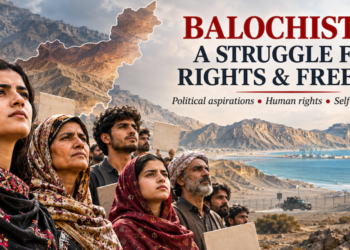
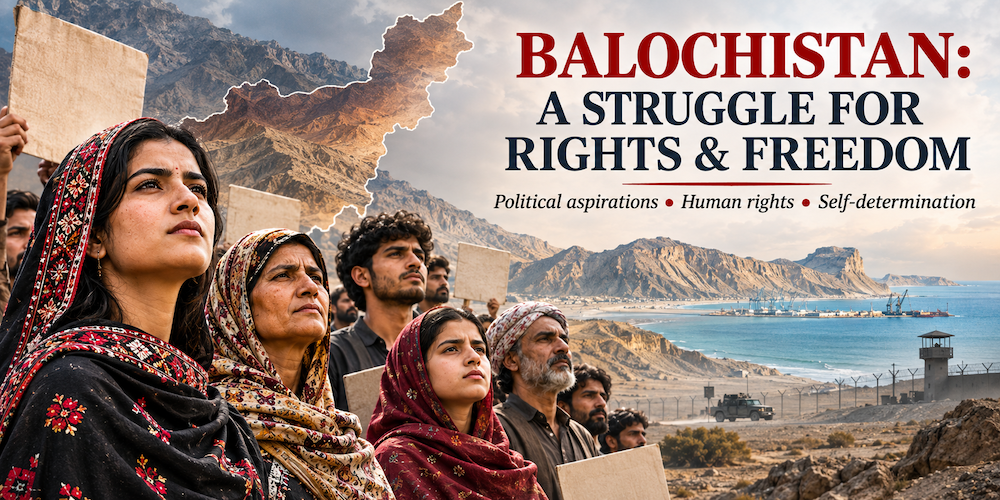
Balochistan is Pakistan’s largest province. It covers nearly 44 per cent of the country’s land, yet holds only about 6 per cent of its people. Its mountains and deserts hold gas, coal, copper and gold, and its coast holds Gwadar. Baloch nationalists say this wealth has served others, while a Punjab-dominated army and bureaucracy decide. Smaller provinces share that complaint, but nowhere is the gap wider. Only 42 per cent of Balochistan’s people can read, against 60.7 per cent nationally. Nearly 58 per cent of its children aged five to sixteen are out of school. About 70 per cent of its people were poor in 2019-20, by one study. This is the ground on which the revolt stands.
Islamabad has a ready answer. It calls the violence terrorism. In its telling, the attackers are criminals and foreign proxies, and the remedy is force. After every major attack, the script is the same. The military announces large numbers of militants killed. Ministers point across the border. The grievance itself goes unmentioned. This is the law-and-order view. It treats Balochistan as a security file, not a political one. It has one great convenience. It asks nothing of the state. If the problem is only outsiders and gunmen, then governance, justice and fairness need no examination. But the view has a weakness. Force has been tried for two decades, and the attacks have grown bolder, not rarer.
The National-question View
The other view is older and harder to dismiss. It holds that Balochistan is a national question. Baloch nationalists date their grievance to 1948, when Kalat joined Pakistan, and they say consent was never freely given. Several revolts have followed, each put down by force. Sui gas warmed homes elsewhere, while the province stayed poor. Families still search for sons who disappeared. When the grievance is a sense of dispossession, bullets cannot answer it. A national question needs a political answer: a real share in resources, accountability for the missing, and a seat at the table. Until Islamabad accepts this, each military victory will only prepare the next attack.
Background
Kalat was the region’s main princely state. Baloch nationalists say its treaties with Britain, unlike those of most princely states, made it a separate, sovereign state. On 11 August 1947, a communiqué recognised Kalat as independent. The Khan proclaimed independence the next day, effective 15 August. Baloch nationalists still mark 11 August as their day of independence. It did not last. In March 1948, after Pakistani troops moved into the coast, the Khan acceded to Pakistan. Islamabad says he did so lawfully and voluntarily. Baloch nationalists say he was coerced. His brother, Prince Abdul Karim, rebelled the same year. Revolts followed in 1958-59, 1962-63 and 1973-77. The present phase began around 2004. Its turning point came on 26 August 2006, when Nawab Akbar Bugti, a veteran tribal leader and former chief minister, was killed in a military operation. Analysts say his death swelled the ranks of the armed groups.
A History of Exploitation
The grievance begins with gas. The natural gas was discovered in Sui, Balochistan, in 1952. Its gas fuelled factories and kitchens across Pakistan. Quetta, the provincial capital, got gas only in the 1980s. Baloch nationalists ask why the province that held the resource was served last.
The same question is asked about ports and minerals. At Gwadar, 91 per cent of the revenue of the main terminal and marine services goes to the Chinese operator, and 9 per cent to the Gwadar Port Authority. In January 2026, the Authority told the provincial government that Balochistan gets no share at all. Nationalists make similar complaints about the Saindak copper-gold mine, where the province’s share was reportedly just 2 per cent at the start. They raise the same objection over Reko Diq, among the world’s largest copper deposits.
Power compounds the problem. Punjab dominates the army and the bureaucracy. So, say the nationalists, the decisions about Balochistan’s resources are taken elsewhere. Islamabad answers that the province receives 9.09 per cent of NFC transfers, well above its 6 per cent population share. That is true. But the money seldom reaches ordinary Baloch, because rampant corruption swallows much of it on the way.
Then there are the missing. Baloch groups say thousands of people have disappeared after being picked up by security agencies. The state disputes the numbers. Families have marched for years, demanding answers. The Baloch Yakjehti Committee, led by Dr Mahrang Baloch, a young doctor, gave this cause a peaceful, mass face. She was arrested in March 2025. In June 2026, she was sentenced to life imprisonment in a case over the death of a security man in Gwadar in 2024. UN experts called the sentence a grave injustice. The state says she must answer for violence. Her supporters say she was jailed for protest. Either way, when a peaceful leader goes to prison, the gunmen’s argument grows stronger.
The Armed Groups
The armed field is crowded, but one group dominates.
Baloch Liberation Army (BLA). This is the most active group. Secular and ethnonationalist, it wants an independent Balochistan and treats Chinese projects as hostile. It began its armed struggle in 2004. Its chief is Bashir Zeb, a former chairman of the Baloch Students Organisation. Its suicide wing, the Majeed Brigade, emerged in 2011 and has become its trademark.
Baloch Liberation Front (BLF). Led by Dr Allah Nazar Baloch, the BLF draws on a middle-class base. Its strength lies in the south, in Makran and Awaran. It shares the BLA’s goal of independence, but its reach across the province is smaller.
BRG, BRA and UBA. These are smaller groups with tribal roots. They are weaker and more local, and their attacks make fewer headlines.
The Baloch Raaji Aajoi Sangar (BRAS), or Baloch National Freedom Movement, is an umbrella alliance of Baloch armed groups that seek a sovereign Balochistan. It was formed in November 2018 on the initiative of the BLF’s Dr Allah Nazar Baloch. The BLA faction led by Bashir Zeb and the BLF were its core. Other groups, including the BRA and BRG, joined. In 2020, it also linked up with the Sindhudesh Revolutionary Army. Pakistan banned it in 2019. In March 2025, it announced a plan to merge its groups under a single military command. It is unclear whether this has happened. The alliance matters because division has long been the movement’s weakness.
The leadership has changed. Tribal chiefs led the older rebellions. Today’s fighters are mostly educated and middle class. Zeb himself came up through student politics. This makes it harder for Islamabad to manage through the sardars.
Women have also entered the fight. In 2022, a woman named Shari carried out a suicide bombing at the Confucius Institute at Karachi University. She killed three Chinese nationals and a Pakistani driver. In 2023, another woman, Samiya Qalandani, targeted security forces in Turbat. Such attackers are still rare, but they show how far the movement has reached. Outside pressure has grown too. Pakistan banned the BLA in 2006 and the Majeed Brigade in 2024. In August 2025, the United States designated both as Foreign Terrorist Organisations. Pakistan welcomed the move.
Recent Attacks
The year 2026 brought more. On 24 May, a suicide bomber from the Majeed Brigade drove a vehicle into a shuttle train carrying security personnel and their families in Quetta. Rescue officials put the dead at 47, including 20 soldiers. The BLA claimed the attack. The BLA also named the January 2026 wave the second phase of Herof. It said a woman suicide attacker targeted the ISI headquarters in Nushki. Women are now a visible part of the campaign. In September, the BLF said it had formed an all-female unit. The BLA claimed 38 operations in eight days in August 2026. It also claimed that 25 soldiers died in two attacks in early September. A second group came forward in October. On 22 October, the BLF said it opened a wave of attacks with a vehicle-borne suicide bombing at the entrance of an FWO camp. It claimed more than 129 personnel were killed in 25 operations during the month.
Drones are a new tactic. On 30 October, security forces said they shot down five drones aimed at a check post in Kharan. A new drone unit of the BRG also claimed an attack on a military installation, without giving figures.
Civilians have also been hit. On 27 October, four masked gunmen entered a girls’ college in Nushki. The chief minister said two students later died of their wounds. He blamed the BLA. No group claimed the attack.
Every figure above needs care. Most casualty numbers come from the BLA, the BLF or the military media wing, and none is independent. An Islamabad think tank reported that attacks in Balochistan fell from 132 in September to 71 in October. The militant groups claim they are expanding.
Pakistan’s Charge Against India and Afghanistan
After every major attack, Islamabad looks across its borders. The government officially uses the term “Fitna al-Hindustan” for the BLA and other Baloch groups. It says they act as Indian proxies. After the coordinated attacks on 31 January 2026, Defence Minister Khawaja Asif said all links pointed to India. Chief Minister Sarfraz Bugti said some of the militants killed were Afghan nationals. He also said senior BLA leaders operate from Afghan soil. Asif went further and called the Baloch Yakjehti Committee and the missing-persons campaign a veil for terrorism. Kabul and New Delhi deny the charges. Islamabad has not made public any evidence that independent observers can check.
India’s reply has been blunt. At the UN Security Council on 8 June 2026, its envoy, Parvathaneni Harish, called the label “officially sponsored misinformation”. He said blaming neighbours for its own failures is an old Pakistani habit. He also condemned Pakistan’s air strikes in Afghanistan for killing civilians.
Pakistan’s best-known exhibit is Kulbhushan Jadhav, a former Indian naval officer. Pakistan says it arrested him in Balochistan in 2016 and accuses him of spying. India says he is innocent and was taken from Iran. In 2019, the International Court of Justice held that Pakistan had denied him consular access. It ordered a review of his conviction. It did not rule on the spying charge.
India’s case is that the accusation is a projection. After 26/11, Pathankot, Pulwama and Nagrota, India sent Pakistan dossiers. One report counts nearly 20 judicial requests, along with detailed files and even DNA samples. India says Pakistan has not acted on them. After the Pahalgam attack of 22 April 2025, which killed 26 people, The Resistance Front, a Lashkar-e-Taiba front, first claimed the attack and then retracted. India gave the UN sanctions committee a dossier linking the group to Pakistan’s ISI. The United States later acted against the group, and India welcomed the move.
Asif told Sky News that Pakistan had done “dirty work” for the West for three decades. He called it a mistake. Delhi calls this a confession. Islamabad says he was speaking of the Cold War and the post-9/11 years. Pakistan has its own dossiers. In 2020, it gave the UN secretary-general a file accusing India of backing terrorism. India dismissed it as having zero credibility. Whichever dossier one believes, one point stands. A state that blames outsiders need not ask why a generation of educated young Baloch has picked up arms. The charge also serves a second purpose. It lets Islamabad treat every protest as a plot.
Can Balochistan Be Free?
Strengths. The Baloch do have real advantages. The land is vast, rugged and thinly policed. Pakistan says fighters shelter across the Afghan border. Kabul denies it. Even Pakistan’s defence minister has said the province’s size and sparse population give militants room to operate. Gwadar and the China–Pakistan Economic Corridor (CPEC) give the rebels leverage, because every attack on a Chinese project raises the price for Islamabad and Beijing. A new educated generation and a diaspora lobby carry the cause abroad. The army is also stretched. It faces the Tehrik-e Taliban Pakistan (also known as the Pakistani Taliban) in the northwest, strained ties with Afghanistan and a hostile eastern border.
Weaknesses. The weaknesses are heavier. The first is numbers. Balochistan holds only about 6 per cent of Pakistan’s people, and they are thinly spread, at roughly 43 per square kilometre. A rebellion needs recruits, towns and supply lines, and here there are few. Sparse settlement cuts both ways. It gives fighters space to hide, but it makes ground hard to hold. Bangladesh in 1971 was different. East Pakistan held most of the country’s people, and Indian forces entered the war on its side. Balochistan has no advantage. Second, the movement is divided. The groups compete, and tribes have old rivalries. There is no single command, no government in exile with wide recognition and no territory held for long. Third, the province itself is divided. Pashtuns, concentrated in the north around Quetta, Hazaras and settlers do not back a Baloch state. Fourth, there is no patron. States prefer existing borders, and no major power has recognised the cause. Iran, with its own restive Baloch region, is unlikely to help. China has billions at stake. Pakistan’s army is large, and the state is nuclear-armed, which makes any outside help riskier. Finally, attacks on civilians, including Punjabi labourers and passengers, have cost the BLA moral standing.
Independence is unlikely in the near term. But the insurgency is also unlikely to be crushed. Two decades of force have not ended it. The realistic outcomes are a long war of attrition or a political settlement.
Conclusion: India’s Stance
Balochistan will not go quiet because Islamabad blames others. Two decades of force have not ended the revolt. Blame has not ended it either. The roots lie in exploitation, enforced disappearances and a feeling of being ruled from elsewhere. Baloch nationalists reject Pakistan’s “foreign hand” story. They call theirs an indigenous movement. They say the label turns a failure of governance at home into a proxy war.
Pakistan’s habit of pointing outward is easy to explain. Critics say it also helps at home, by diverting attention from inflation, unemployment and political instability. India has sent Pakistan dossiers for years. Its own defence minister has spoken of three decades of “dirty work” for the West. A state with that record has much to deflect. India has been a target of cross-border terrorism, from Mumbai to Pahalgam. It has taken its case to Pakistan and to the United Nations. India, a democratic and non-aligned country, says it does not use terrorism as an instrument of policy. It rejects the charge.
India’s role in the Baloch question has been moral and diplomatic. In August 2016, Prime Minister Narendra Modi referred to human rights abuses in Balochistan in his Independence Day speech. A month later, India raised the issue at the United Nations for the first time. India’s spokesperson said it would keep raising it until repression ends. At the UN Human Rights Council, India has since spoken of enforced disappearances, repression and the targeting of activists. It has urged Pakistan to stop human rights violations in the province. India says its concern is human rights, not arms. It also holds, consistently, that violence against civilians can never be justified, whoever commits it.
Pakistan would do well to look inward. Blaming India does nothing for the grievances that drive the insurgency, or for the concerns raised by Baloch civil society itself. If Islamabad wants better relations with New Delhi, the path is clear. It should end the cross-border terrorism that India says is sponsored from its soil. It should stop meeting protests with force in Balochistan and in Pakistan-occupied Kashmir, where at least 24 people died in unrest in June 2026. It should also talk to its own citizens.
Pakistan has a choice. It can keep blaming outsiders, or it can talk to its own people. Until it does, the Baloch question will keep returning.