

The Challenge of Connecting the Past with the Present
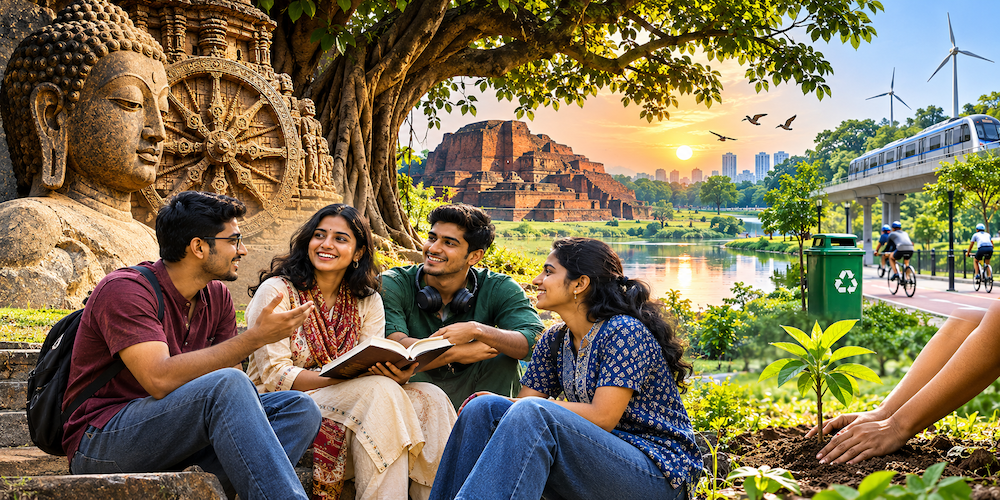
One of the most significant challenges facing societies today is the growing disconnect between their civilisational heritage and younger generations. The digital revolution has transformed how people communicate, learn, work and understand the world. Yet our approach to civilisation often remains confined to studying and celebrating the past. We have not done enough to connect its achievements, values and experiences with the everyday lives and aspirations of today’s youth.
This is particularly evident in India. We take considerable pride in our ancient civilisation, spirituality, philosophy, yoga, food traditions and cultural achievements. However, we often present these as chapters of a glorious past rather than as a living inheritance relevant to contemporary society.
The real question is not how much we teach young people about our history, but how much opportunity we give them to understand, interpret and carry its values forward through modern ideas, innovation and everyday conduct.
We must create opportunities for the younger generation to reflect on how earlier societies managed limited resources, respected nature, accommodated differences and balanced individual needs with collective welfare. The objective should not be to recreate an earlier way of life, but to rediscover its wisdom and apply it meaningfully to present-day challenges.
Civilisational Awareness and Responsible Living
Reconnecting young people with their civilisational roots has implications far beyond cultural awareness. It can help address some of India’s most pressing challenges today, particularly environmental degradation and growing indifference to pollution.
Air, water, and soil contamination damages ecosystems, harms public health, and intensifies climate-related challenges. Yet public awareness and individual responsibility remain inadequate. The problem becomes particularly visible after major festivals such as Diwali, when pollution levels rise, and governments and courts struggle to enforce restrictions and corrective measures.
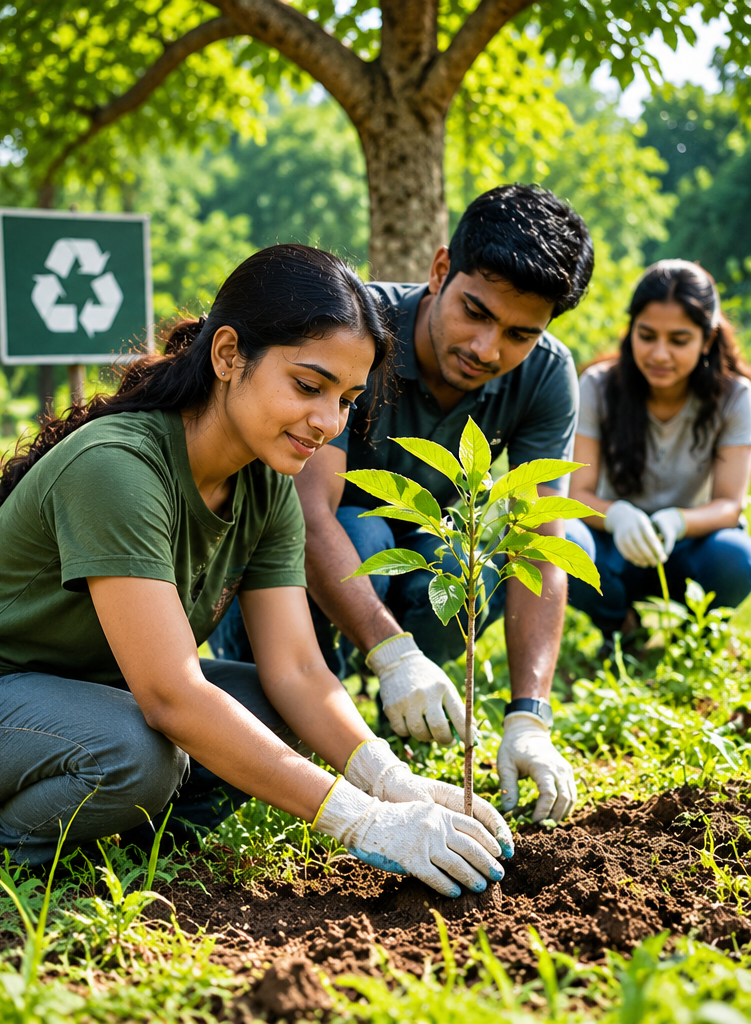
Regulations and judicial directions are necessary, but lasting change cannot come from enforcement alone. It requires citizens to recognise their responsibility towards the environment and translate that awareness into everyday behaviour.
Indian civilisation traditionally emphasised respect for the five elements and harmony with nature. From the Vedas to Buddha Dhamma, the relationship between human beings and the natural world found expression in philosophical thought and daily practice.
Our traditional food habits and household practices offer simple examples. For generations, people relied on earthen utensils, natural materials, reusable articles, and consumption methods that generated relatively little disposable waste. Reuse and conservation were part of everyday life, not topics for elaborate environmental campaigns.
Modern conveniences have brought enormous benefits, but we have often adopted them without adequately considering their environmental and social consequences. The answer is not to reject modernity or return to older practices. Instead, we should combine traditional wisdom with contemporary technology, innovation, and responsible consumption.
The same principle applies to social conduct, public safety and respect for women. Laws and policing are indispensable, but dignity, mutual respect and responsibility must also become part of everyday social behaviour. Civilisational awareness must ultimately find expression in how we treat one another and care for our shared surroundings.
Making Culture a Living Experience: Lessons from Diplomatic Service
No society can expect its younger generation to live by the methods of earlier centuries. The purpose of preserving civilisation is to carry its wisdom and values into the future, not to reproduce the past.
During my nearly four decades of service with All India Radio and in diplomatic assignments across several countries, I had opportunities to observe how different societies preserved their heritage while adapting to contemporary life. My involvement in UNESCO-related cultural activities and my role in establishing and leading India’s first cultural centre in Hanoi provided particularly valuable insights.
When I arrived in Hanoi, cultural centres representing Japan, Korea, France and several other countries were already well established. Their programmes were designed around the interests of younger audiences while adapting their cultural traditions to local aspirations and social conditions.
By comparison, our approach largely centred on presenting classical Indian dance forms such as Kuchipudi and Bharatanatyam, alongside yoga, Indian cuisine, and Ayurveda. These are valuable expressions of our heritage, and local audiences appreciated them. However, appreciating a cultural performance does not necessarily lead to active participation or a deeper understanding of another civilisation.
My experience also revealed weaknesses in the management of some cultural establishments. Programme decisions were not always guided by professional artists, cultural practitioners or a sound understanding of local audiences. At times, administrative convenience and personal preferences appeared to take precedence over cultural objectives. Those with professional expertise in the arts and culture did not always have an adequate role in institutional decision-making.
An important distinction exists between showcasing heritage and creating opportunities for people to experience and engage with it. Both are necessary. Classical arts must be preserved and presented in their richness, but cultural institutions must also understand what interests younger generations and encourage their participation.
In many countries, young people were already familiar with contemporary Indian culture through Bollywood, television, popular music, Diwali and Holi celebrations, and modern Indian art. These interests could have provided natural entry points for introducing deeper aspects of Indian civilisation.
Cultural centres should therefore become platforms for meaningful exchange, participation and mutual understanding—not merely venues for displaying achievements or serving the preferences of a select few.
Everyday Life Is Also a Cultural Inheritance
My travels through Southeast Asia, Europe, the Middle East and, more recently, Mexico City reinforced this understanding.
In Mexico, I saw museums bring together ancient architecture, historical collections, and the everyday experiences of more recent generations. Alongside ancient artefacts, they displayed household objects, clothing, vehicles and consumer goods from the 1940s through the 1980s. These ordinary objects helped younger visitors understand how their parents and grandparents had lived and how society had evolved.
Despite its extraordinary cultural diversity, India has not developed this continuity sufficiently. We frequently divide our understanding of history into ancient and modern periods, overlooking the everyday experiences that connect generations.
Museums, community collections and educational institutions should document the evolution of ordinary life—homes, neighbourhoods, markets, transport, clothing, food and social customs. Civilisation is represented not only by monuments, scriptures, and classical performances, but equally by ordinary people’s experiences and memories.
Rebuilding Community Spaces in Our Cities
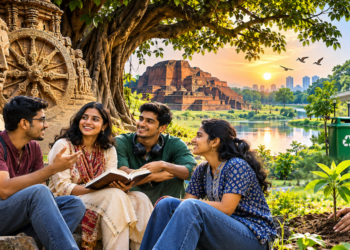
Perhaps the most visible manifestation of this disconnect lies in our urban surroundings. Where can young people meet, exchange ideas, pursue artistic interests and discuss their future? Where are the safe neighbourhood parks, walking paths, community centres and open cafeterias where different generations can interact?
During the 1970s and 1980s, open cafeterias and community spaces gave people opportunities to spend time together. Younger and older generations could meet informally, converse and exchange experiences.
Much of this social infrastructure has disappeared or become inaccessible. Our cities have concentrated on modern buildings, commercial complexes and industrial development without giving comparable attention to the quality of everyday social life.
A developed society must provide safe public spaces, accessible cultural facilities, secure walking routes and community centres. These should be places where young people can read, write, perform, debate, criticise and develop their own ideas. They should also enable older generations to share their experiences and memories.
Such interaction is essential to preserving the continuity of a civilisation. Without it, we risk losing the collective spaces through which values, knowledge and social understanding are transmitted.
Modern Facilities, Freedom of Expression and the Gen Z Dilemma
Young people deserve a better quality of life and the freedom to develop independent opinions. Modern libraries, theatres, cinemas, art centres, sports facilities, public transport and accessible recreational spaces should not be treated as luxuries. They are essential to a healthy, inclusive society.
Equally important is the freedom to question, criticise, and express disagreement through peaceful, democratic means. Young people must feel that their voices matter and that they have a role in shaping the society they live in.
The increasing frequency and intensity of youth protests around the world deserve attention in this context. Many young people feel excluded from decisions affecting their education, employment, environment, social freedoms and future.
When they travel abroad, they experience cities where modern libraries, cultural centres, theatres, public transport, safe walking spaces and recreational facilities coexist with historical architecture and traditional values. Their expectations naturally change. They return with questions about why their own cities don’t offer comparable opportunities.
We should not dismiss these questions as impatience or a rejection of tradition. They often represent a genuine demand for dignity, opportunity and meaningful participation.
When young people are excluded from social development and decision-making, frustration can turn into protest and alienation. The answer is not to suppress their voices or regard disagreement as a challenge to authority. We need permanent, non-partisan platforms where people can discuss, evaluate, and address their concerns through constructive, time-bound engagement.
A generation that feels included, respected and responsible is more likely to become an active partner in nation-building.
India’s Civilisational Influence: Wisdom, Dharma and Cultural Exchange
India’s historical contribution to the wider world offers an important lesson in the power of cultural exchange. Through centres of learning such as Nalanda and Takshashila, trade routes, travelling scholars and monks, Indian knowledge traditions reached South Asia, Southeast Asia, Central Asia and China.
The spread of Buddha Dhamma is a remarkable example of influence extending beyond geographical and political boundaries not through military expansion, but through the exchange of wisdom, learning, compassion and practical approaches to human life.
Indian contributions shaped philosophy, grammar, medicine, mathematics, literature, architecture, spirituality, and the relationship between human beings and nature. Respect for the five elements, harmony with the environment, kindness and concern for the wider community formed important strands of this inheritance.
Vasudhaiva Kutumbakam placed human welfare within a larger framework of interconnected responsibility. The individual, family, village, city, and nation were part of a wider existence in which humanity’s and the natural world’s welfare deserved consideration.
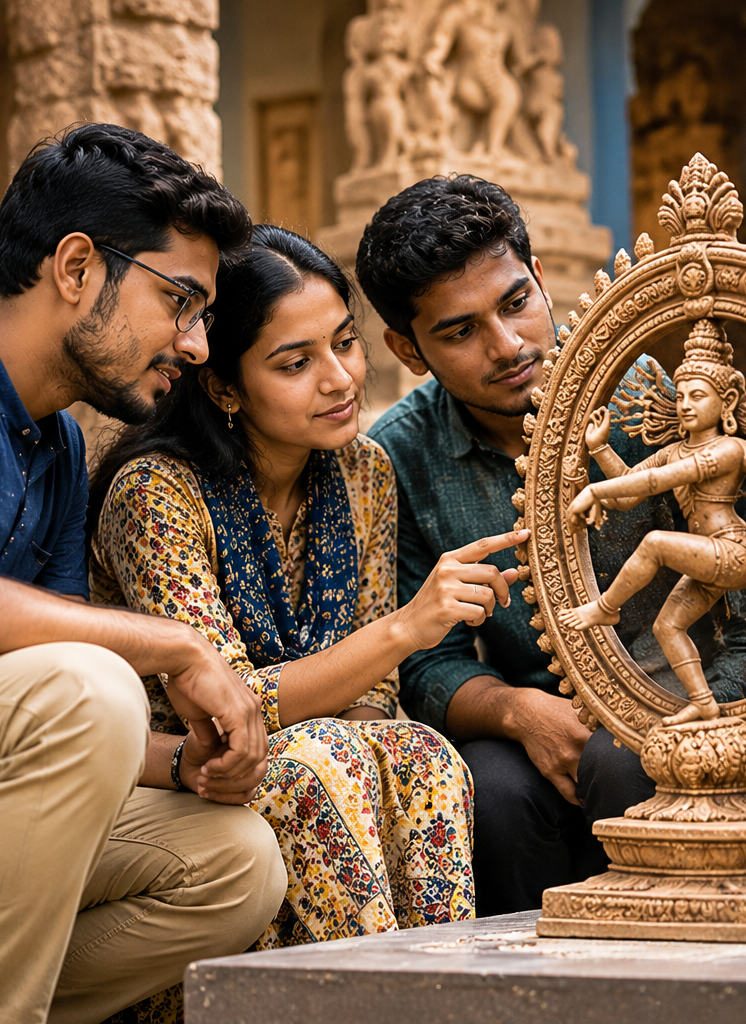
We must also rediscover Dharma’s wider cultural and philosophical significance. India’s civilisational heritage cannot be adequately understood through narrow religious categories alone. It encompasses duty, wisdom, learning, ethical conduct and the independent pursuit of self-realisation. Its traditions accommodated diverse interpretations, local customs and different forms of worship.
During my involvement in Buddhist diplomacy, including accompanying sacred Buddha relics to countries such as Thailand and Vietnam, I was struck by the depth of knowledge and preservation of Indian-origin traditions outside India. In Japan and other Asian societies, traditional practices and devotional objects associated with Shiva, Ganesha, Buddha and Saraswati continue to be preserved as part of their cultural heritage.
Within India, however, we have sometimes reduced these traditions to narrowly defined religious activities rather than recognising their wider philosophical, cultural and social significance.
The message of Appo Deepo Bhava—be your own light—captures the spirit of independent thought and personal responsibility that the younger generation needs to rediscover.
Cultural Institutions Must Evolve
The responsibility for rebuilding these connections cannot rest with government alone. However, cultural ministries, educational institutions and established organisations must provide the necessary direction and infrastructure.
Too often, cultural institutions concentrate on organising events, presenting traditional performances and displaying historical achievements. These activities have their place, but they cannot substitute for sustained public participation.
Cultural centres should become open platforms that involve historians, artists, architects, educators, local communities, and young people. Their programmes must reflect local interests and contemporary aspirations rather than being determined primarily by institutional convenience.
Yoga offers another instructive example. India has successfully introduced it to the world, and it enjoys enormous international recognition. Yet private institutions have often proved more accessible and attractive than Indian cultural establishments in communicating its wider philosophy and practical benefits. We should examine why this gap exists and make our institutions more responsive, participatory and flexible.
A Civilisational Agenda for the Next Generation
India needs a practical programme to reconnect its civilisational inheritance with contemporary life. Several priorities deserve attention:
- Community cultural centres: Every city and smaller town should develop accessible spaces where young people can learn, experiment, write, perform and discuss ideas.
- Living museums: Museums should document not only ancient history but also the everyday lives of previous generations, helping young people understand how society has evolved.
- Experiential education: Schools and universities should encourage students to explore local heritage, traditional knowledge, crafts, architecture, food, environmental practices and community histories through practical activities.
- Responsive cultural diplomacy: Indian cultural centres abroad should adapt their programmes to local societies and younger audiences, combining classical heritage with contemporary Indian creativity.
- Better public spaces: Parks, walking routes, cafeterias and community facilities must become safer, cleaner and more welcoming. These are essential elements of civilised urban life.
- Youth participation: Establish permanent platforms at neighbourhood, city, and institutional levels to encourage discussion, criticism, creative expression, and constructive engagement with governance. They must remain inclusive and independent of partisan political interests.
- Accountable public administration: We must understand why young Indians who follow rules and regulations and are respected as law-abiding citizens abroad sometimes behave differently at home. The contrast suggests that the environment created by public institutions and administrative systems also matters. For example, Delhi Metro remains considerably cleaner and more secure than many public spaces outside it. This points to the importance of effective systems, consistent enforcement and civic infrastructure.
Above all, we must listen to young people. We should welcome their questions, criticism, and aspirations rather than treat them as a threat to tradition.
Conclusion: From Heritage to Ownership
A civilisation survives because every generation finds meaning in it and makes it part of its own life. Its strength lies not in repeatedly proclaiming past achievements, but in showing how those achievements can improve the present and guide the future.
India cannot expect the world to admire its cultural heritage while its own younger generations remain disconnected from it. Nor can it build a truly modern society through economic growth alone while neglecting the social spaces, cultural experiences and human values that make life meaningful.
The challenge is to shift from preserving heritage to handing ownership to the next generation. Young people must have access to a clean environment, modern facilities, safety, freedom of thought and meaningful opportunities to participate in society. They must be free to question, innovate and express themselves while carrying forward the values of their civilisation.
Solutions to major societal challenges—including pollution, public safety and environmental degradation—must emerge through dialogue and brainstorming with younger generations. Their ideas, local innovations and active participation are essential if communities are to understand and take ownership of solutions. Government orders and regulations alone cannot bring lasting change unless public awareness and responsible everyday practices support them.
If we succeed, the benefits will extend well beyond cultural preservation. We can build greater environmental consciousness, respect for women, stronger democratic institutions, responsible citizenship and a more harmonious society. We can also provide constructive avenues for young people to express their aspirations, reducing the alienation that can otherwise lead to social unrest.
A civilisation remains alive only when the next generation sees it not merely as the history of its ancestors, but as a meaningful part of its own life and future.