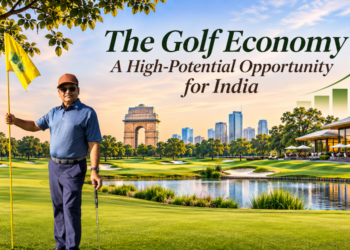


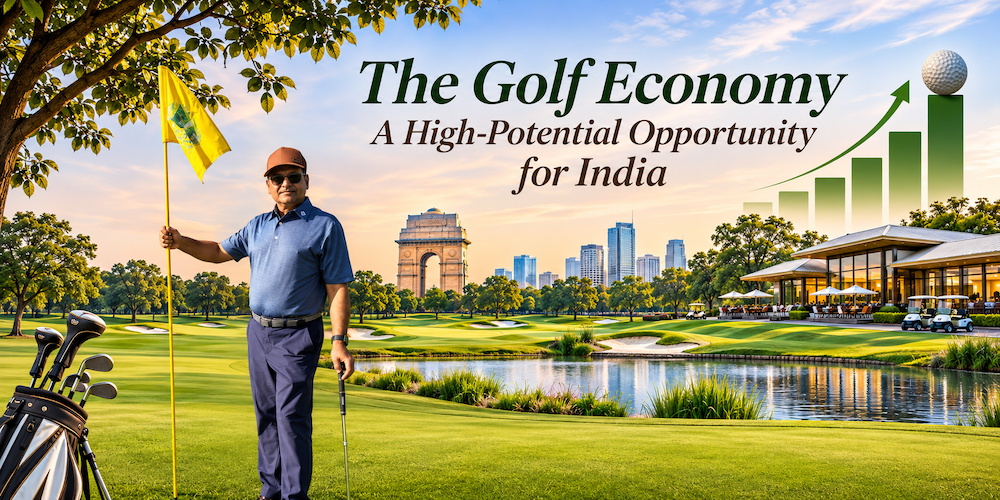
Once considered an elite sport, golf is emerging as a popular sport that provides wholesome sporting entertainment, fair competition, and an opportunity to excel and contribute to the Indian economy in ways never imagined before.
Introduction
By the end of 2026, golf in India is set to evolve from its image as an exclusive club sport. Two Chandigarh men—one a legendary cricketer and the other an accomplished golfer who played on the Indian Tour, Asian Tour, and European Tour—Kapil Dev and Amandeep Singh Johl—are scripting a never-before-seen plot that drives financial growth, attracts major corporate sponsors like DP World, and raises prize funds. Collaborations with HCL, Air India and others also point to a positive trajectory.
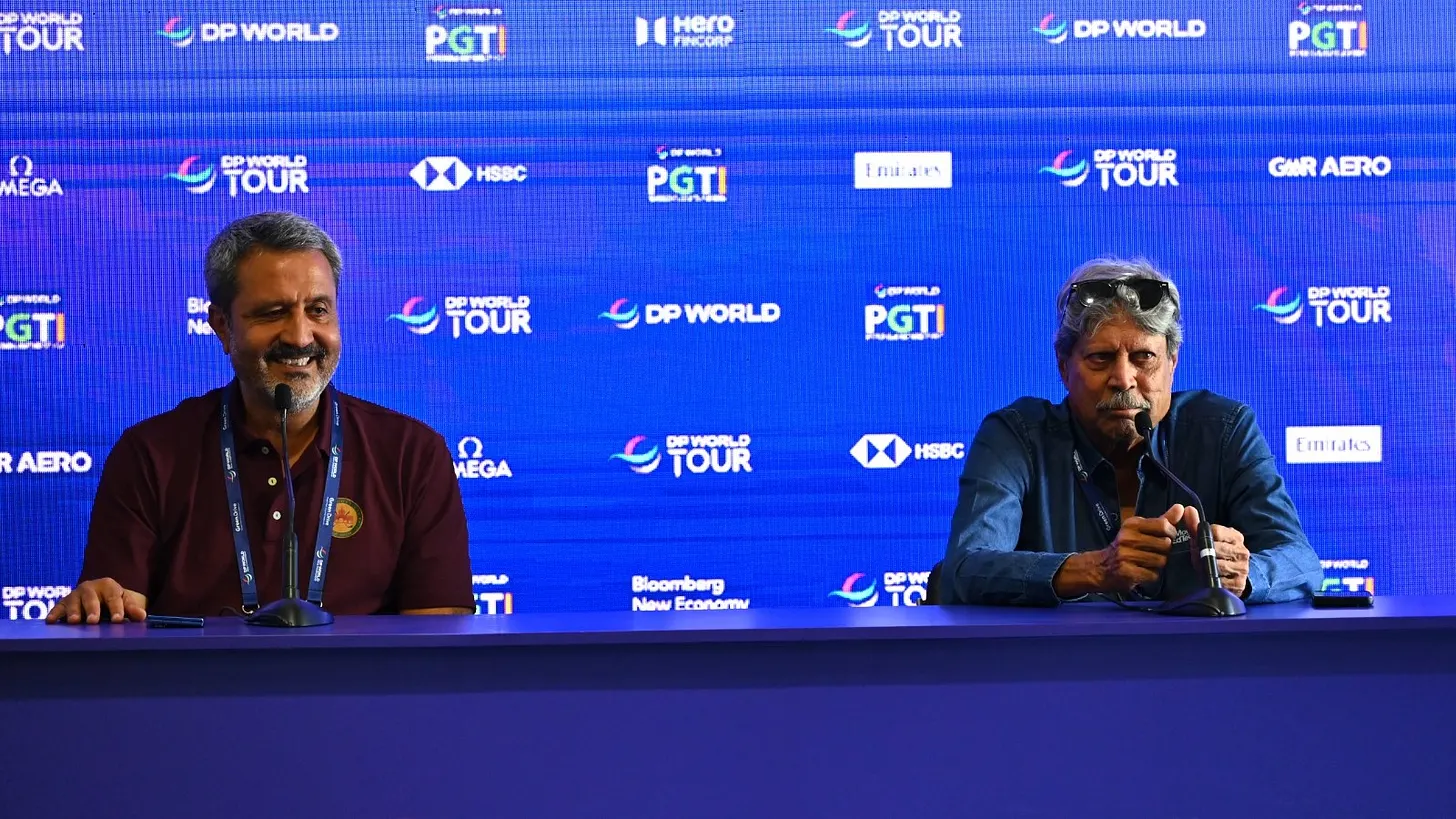 The DP World India Championship in October this year at Delhi Golf Club, with a first-ever $4 million purse, will feature multiple past winners from the PGA and DP World tours, as well as Major winners.
Notably, the DP World Professional Golf Tour of India (DP World PGTI) commenced the current season, with 12 events carrying a total prize purse of Rs 14 crore, highlighting a step-up in scale, prize money and format innovation, attracting wider international participation and creating a career growth pathway through DP World PGTI NexGen events. The Hero Honda Open also offered a prize purse of $2.6 million. Emerging professional leagues, rising golf tourism, growing equipment sales, grassroots facilities, corporate participation, and golf-linked real estate are laying the groundwork for a much larger sports economy.
India Story
India holds a unique position in global golf. It has produced internationally recognised players, hosts a DP World Tour event, boasts hundreds of golf courses, and has a large aspirational middle class. Yet, golf participation remains low relative to the country’s population.
The latest R&A Global Golf Participation 2025 report indicates that approximately 368,000 individuals play 9- or 18-hole golf in India, including both registered and unregistered golfers. It also notes around 289 golf courses and about 200,000 registered golfers, including 40,000 junior and 60,000 women golfers.
However, low golf penetration presents a significant opportunity.
A ₹15,000 Crore Economy
Grand View Research estimates that India’s golf equipment market will reach US$205.6 million in 2025, increasing to US$221.8 million in 2026. The broader golf products category—comprising equipment, apparel, shoes, gloves, balls, and more—is estimated at US$313.6 million in 2025. The Research projects India’s golf tourism market valued at US$418.4 million in 2025, with a projected compound annual growth rate (CAGR) of 13.3% through 2033.
These figures illustrate that golf-related consumption and travel already represent significant economic activities. However, these categories cannot be added together because their market definitions overlap. Therefore, a reasonable estimate of India’s direct golf economy falls within the broad range of ₹12,000–18,000 crore annually, with ₹15,000 crore as a useful midpoint for discussion. The true economic impact, however, is much larger, as it also includes employment, hospitality, corporate events, property development, course construction, and other indirect activities.
Golf courses can be viewed as economic assets that generate an economic ecosystem around them. A typical facility can generate revenue through memberships, green fees, coaching, caddies, driving ranges, golf academies, equipment rentals, pro shops, tournaments, corporate events, restaurants, hospitality services, weddings, social functions, and tourism packages.
The employment footprint extends well beyond professional golfers. It includes groundskeepers, irrigation specialists, horticultural workers, caddies, coaches, hospitality staff, security personnel, administrators, equipment technicians, and event managers.
India has a unique advantage that many competing golf destinations cannot easily replicate: our geographical diversity. Golfers can combine their golfing experience with heritage tourism, beaches and backwaters, wellness retreats, mountain adventure tourism, and other activities.
Cities with multiple golf courses, including Mumbai, New Delhi, Ahmedabad, Srinagar, Pune, Bengaluru, Chennai, and Kolkata, could drive golf tourism, similar to popular Southeast Asian destinations like Thailand, Cambodia, and Vietnam.
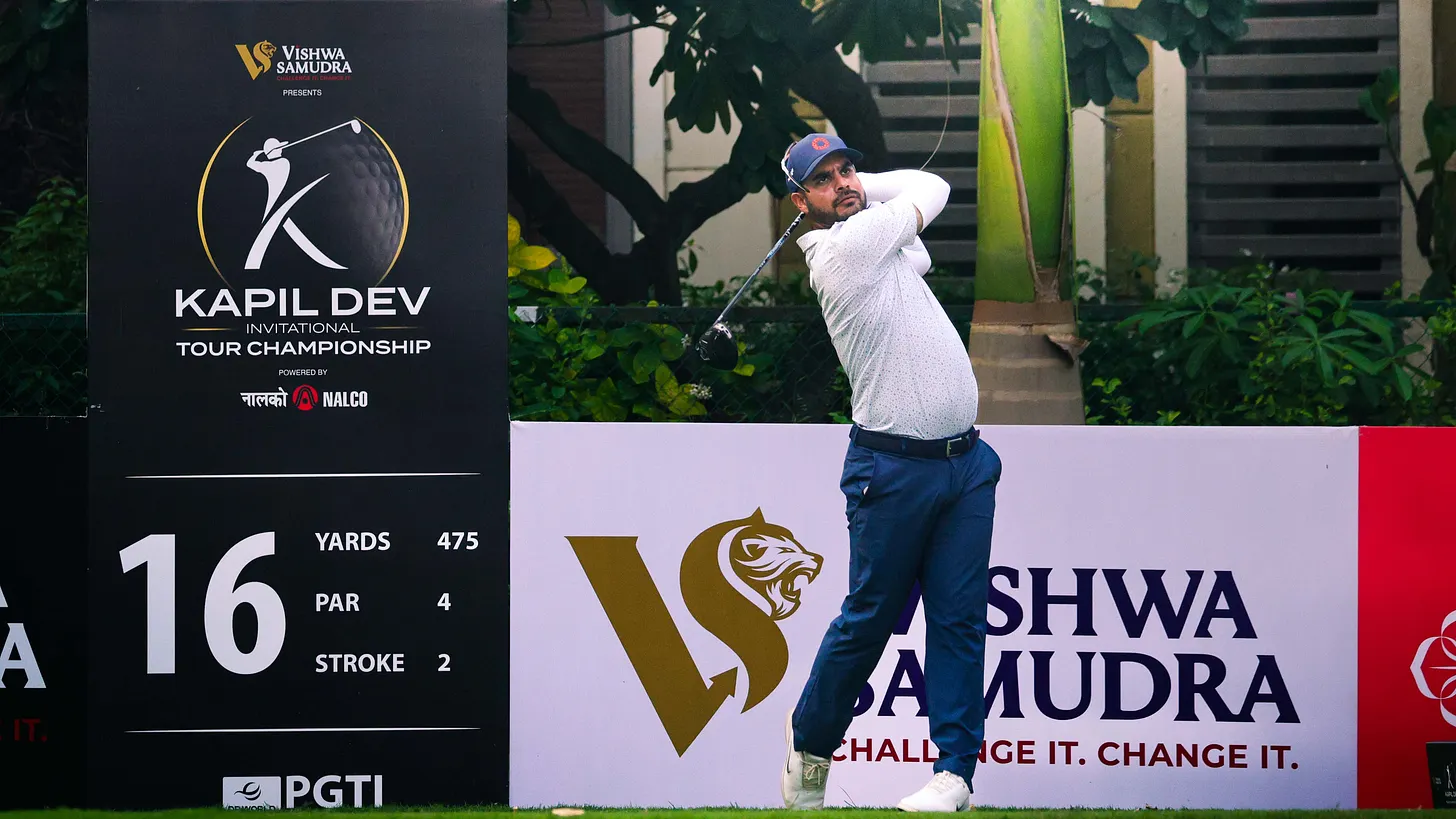 Golf is now an Olympic sport. The Government of India, State governments, tourism boards, tourism industry captains, and golf realty owners could come together to forge a roadmap for more golf infrastructure and tourism.
Leagues to Boost
Inspired by successful cricket leagues, the PGT of India has launched ‘72 The League’, India’s first exclusive national professional golf league with six city-based franchises. Each team has 10 professional players, for a total of 60 positions for players registered with the PGT of India. The league offers a winner’s purse of ₹6 crores, with the total player auction purse also set at ₹6 crores.
 Several other city and club leagues also attract considerable corporate interest through team ownership and sponsorships.
Beyond the purses, the league creates additional revenue streams through television and digital rights, advertising, and sponsorships. Non-revenue gains include city identities and strong fan support, which are essential to popularising the sport with the masses.
Indeed, the league transforms a golf course into a mass entertainment property. The announced franchise commitments of US$100 million, along with the US$250 million infrastructure commitment, total US$350 million, which does not represent IGPL’s overall valuation. Over time, as the sport and revenue streams grow, the valuation could increase significantly, with the IPL commanding a business value exceeding US$20 billion in 2026.
Perhaps the most important development in Indian golf is the attempt to democratise access. The US$250 million infrastructure infusion aims to create accessible golf facilities—including compact 8–10-acre courses in Tier-2 and Tier-3 cities and rural areas—dramatically expanding the addressable market.
Freeing Army Golf Courses
Nearly 50% of existing golf courses are on 8,000-acre prime defence land. If citizens can freely access the 97 Army-operated golf courses, expansion will be much faster.
Youth & Women: Drivers of Growth
The youth and women market could change everything. Developing school and college programmes in collaboration with existing golf courses, ranges, and academies is therefore critical to golf’s growth.
 Women represent another upcoming market. Indian girls like Aditi Ashok, Diksha Dagar, Avani Prashanth, Pranavi Urs, Vaani Kapoor, Hitaashee Bakshi and Tvesa Malik are making their mark on the LPGA and LET tours. Pranavi Urs’s gold medal at the recently concluded Asian Games in Japan, along with a team silver medal, has generated significant buzz around the sport in India. In the Indian Leg of the Ladies European Tour, three Indian girls finished among the Top 10. They inspire a whole generation of girls to pursue golf professionally.
Increasing female participation could have a multiplier effect. A family-oriented golf ecosystem is always substantially larger than a male-dominated club model.
Golf & Real Estate
Perhaps the most underappreciated component of India’s golf economy is real estate. Golf courses can anchor residential communities, luxury housing, hotels, resorts, retirement communities, commercial developments, and destination tourism. Golf can thus create a much stronger indirect value chain that can surpass direct golf-economy revenues.
However, a major caveat remains. Golf courses require land and, depending on design and climate, substantial water and maintenance resources. India faces water stress. Therefore, the emphasis should be on drought-resistant grass, treated wastewater, rainwater harvesting, efficient irrigation, native landscaping, reduced chemical use, solar power, smaller footprints, brownfield redevelopment, and water-neutral course design.
Could golf become India’s next major sports-business opportunity?
India already has a multi-thousand-crore golf economy, but its penetration remains extraordinarily low. The next phase could transform golf from a predominantly club-based elite sport into a broader consumer, tourism, entertainment, and grassroots industry. It would be premature to suggest that golf will become another IPL.
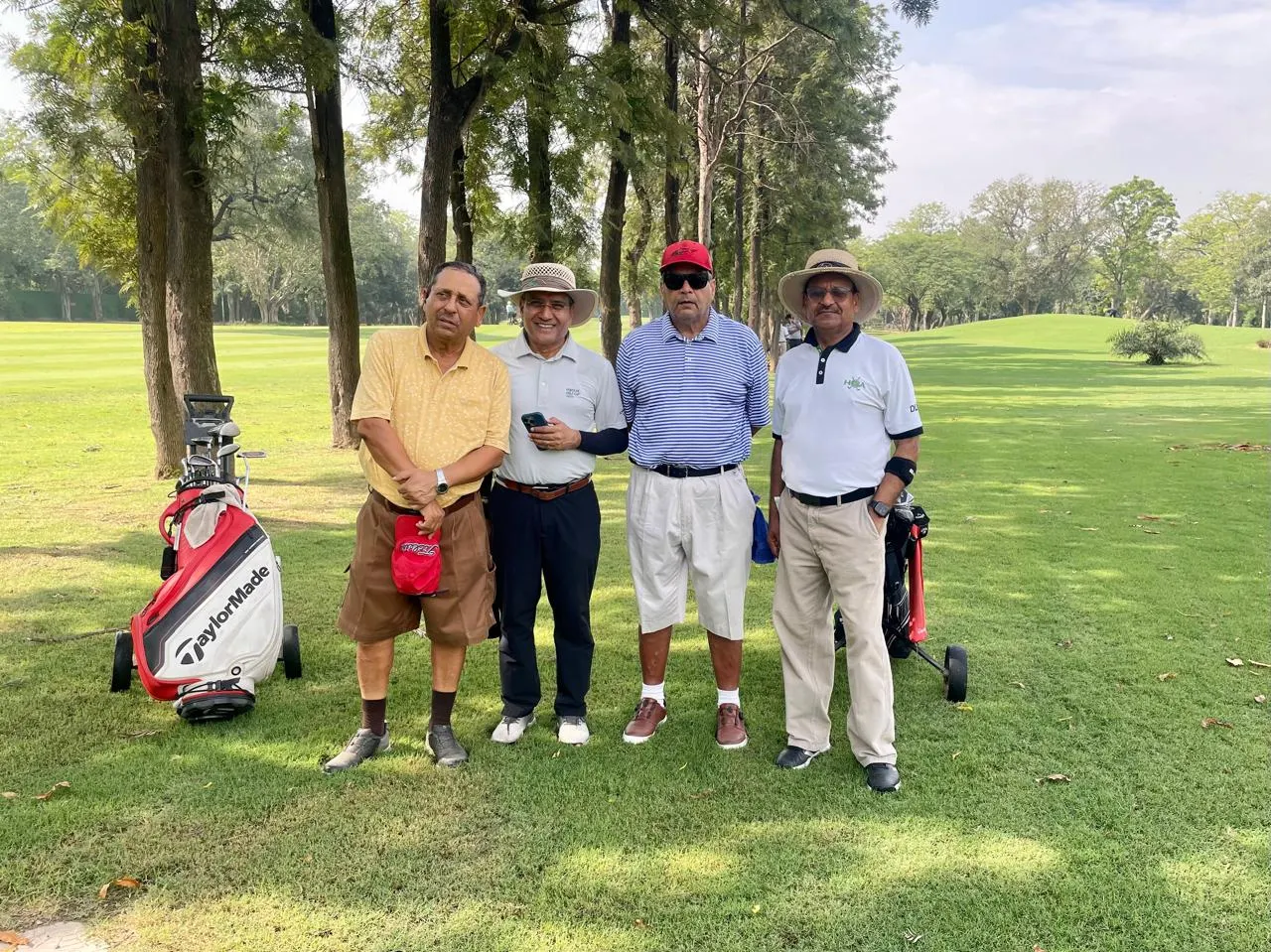 To do that, India doesn’t need to make golf popular with 1.4 billion people. It only needs to make golf accessible to a fraction of them. That fraction could become a multi-billion-dollar sports economy.