


Boot Sequence
On the morning of 18 August 2026, people close to China’s Ministry of State Security told Bloomberg something that read, on first pass, like a minor IT housekeeping notice: some state-linked entities had been instructed to uninstall a customised edition of Windows 10 from their machines, months ahead of the February 2027 retirement Microsoft had itself already scheduled. Half the internet filed it under “China bans Windows” and moved on. That headline is wrong, and the correction matters rather more than the story it corrects.
What was actually being uninstalled was Windows 10 China Government Edition, a bespoke build assembled since 2016 by C&M Information Technologies (CMIT, a joint venture between Microsoft and the state-owned China Electronics Technology Group). It was engineered for exactly one customer, the Chinese state, and nobody else. Ordinary Windows, on ordinary desktops, sat untouched. StatCounter had it at roughly 88 per cent of China’s desktop traffic as recently as July 2026. Nobody came for the shopkeeper’s laptop. What got retired, ahead of schedule and without any publicly named vulnerability, was the version the government itself had been running its innermost administrative machinery on. Beijing did not write that code, and evidently no longer trusted itself to have fully audited it.
Privilege Levels
That is the doctrine in miniature, and it deserves a name: sequencing. Consumers keep their iPhones. China’s own foreign ministry has said so, on the record, more than once. Google stays blocked, as it has for well over a decade. Still, Baidu, Alipay, WeChat Pay and Alibaba Cloud filled that gap organically, years before any formal restriction would have mattered. Capacity arrived ahead of necessity, not scrambling to catch up. Starlink was never licensed for the mainland to begin with; instead, two constellations, Guowang and the commercial Qianfan/Spacesail programme, are being built to occupy the same low Earth orbit under Chinese, rather than American, regulatory control. Government first, enterprise next, consumer rarely if ever. Beijing is recompiling its own kernel, one privilege level at a time. Draw one conclusion from a notice this small, if you draw any at all: ownership beats access, eventually, for any state patient and rich enough to wait it out.
Version History
None of this began in 2026. Run the tape back to 1 December 2018, when Huawei’s chief financial officer, Meng Wanzhou, was detained in Vancouver on a US extradition request tied to Iran sanctions. It’s the date a great many Chinese technologists still cite as the moment their government lost patience with depending on anyone else’s goodwill. Within two years, Huawei had been effectively excluded from 5G networks across the United States, Britain, Australia and much of Europe, on security grounds Washington considered self-evident and Beijing considered pretextual. Then came 7 October 2022, when the Biden administration’s Bureau of Industry and Security imposed the broadest semiconductor export controls in a generation, cutting off finished chips and the manufacturing tools needed to build credible substitutes at home. Each turn of that ratchet drew the same Chinese response, patient rather than furious: name the dependency, fund an alternative, wait for the technology to catch up to the intention. The Windows notice of August 2026 is only the ratchet’s latest click, applied this time to an operating system rather than a network or a chip.
The Presumption Problem
The layer where that doctrine is being tested hardest, and where it is least triumphant, is silicon. Washington keeps Nvidia’s frontier chips (the Blackwell family, B100 through GB200) under a standing presumption of denial. One rung down, the picture loosened: on 15 January 2026 the Bureau of Industry and Security moved the H200 and AMD’s MI325X from presumption of denial to case-by-case licensing, following Donald Trump’s 8 December 2025 announcement that “approved customers” in China could buy them against a 25 per cent cut of revenue to the US Treasury. Congress did not take the loosening quietly. Six days after the rule took effect, the House Foreign Affairs Committee voted 42-2 to advance the AI Overwatch Act, legislation that would statute a two-year ban on Blackwell-class sales and hand Congress a veto over future licences, a reminder that Washington’s own China policy is being fought out in real time rather than handed down as settled doctrine. Beijing’s actual reply was Huawei’s Ascend 910C, already shipping, with the 950-series behind it, and SMIC pressed to fabricate at volume without the one machine no amount of state will can currently substitute for: ASML’s extreme ultraviolet lithography. China can design its way around an export ban. It cannot yet manufacture its way around one. That gap, far more than any Windows uninstall notice, is the honest measure of how far “self-reliance” still has to travel, even for a state that has been rehearsing this exact line since Made in China 2025, over a decade ago now.
The Fine Print
Strip the euphemism and Beijing’s argument to its own people is plain. Universal standards are not the same thing as universal ownership. Use the world’s protocols, the world’s chips, even the world’s operating system, for now. But never again be one licensing decision, one export rule, one presidential signature away from losing them. What is new in 2026 is the visible acceleration, and Beijing’s evident willingness to absorb short-term pain (a bureaucracy still substantially Windows-dependent, a chip industry still generations behind) for a longer runway toward simply not having to ask.
What’s Already Running
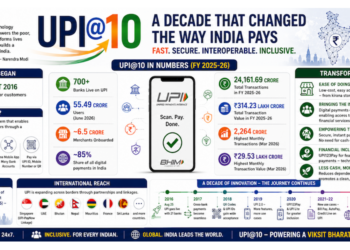
Where does that leave India, its own stack only half-built? Credit first, genuinely earned. UPI is India’s clearest tech export. Nepal, Singapore, the UAE and France have adopted or piloted it, more than China’s payment giants manage outside their own diaspora. Aadhaar remains the largest biometric identity system on earth. Zoho comes closer to Beijing’s instinct of owning your own layer than almost anything else India has produced. It’s bootstrapped, runs its own data centres instead of renting AWS, and is built partly out of small-town Tenkasi. That did not stop a 2021 flaw in one of its enterprise tools from being used, later, by a Chinese state-linked group to breach the Red Cross. Sovereignty does not excuse anyone from patching their software.
Delhi’s Task Manager
The unfinished business is everything Beijing spent this year rehearsing, and Delhi has barely opened. Tata’s fab at Dholera has crossed the halfway mark, with first silicon targeted for December 2026. That’s real, but at the 28-nanometre node, built for automotive chips, nowhere near any frontier. India has no equivalent to the Ascend programme because it hasn’t needed one: Nvidia’s chips reach Indian buyers without the licensing friction China faces, a comfort that doubles as an untested dependency. Nothing is seriously underway to substitute for AWS, Azure or Windows on the desktop; BharOS exists, and almost nobody outside a policy seminar has heard of it. Beijing’s lesson for Delhi is to sequence deliberately, starting with the layer you could least afford to lose. China began with the government’s own machines. India might usefully ask which of its own machines, one licensing dispute from now, it would discover it never truly owned.