

Introduction
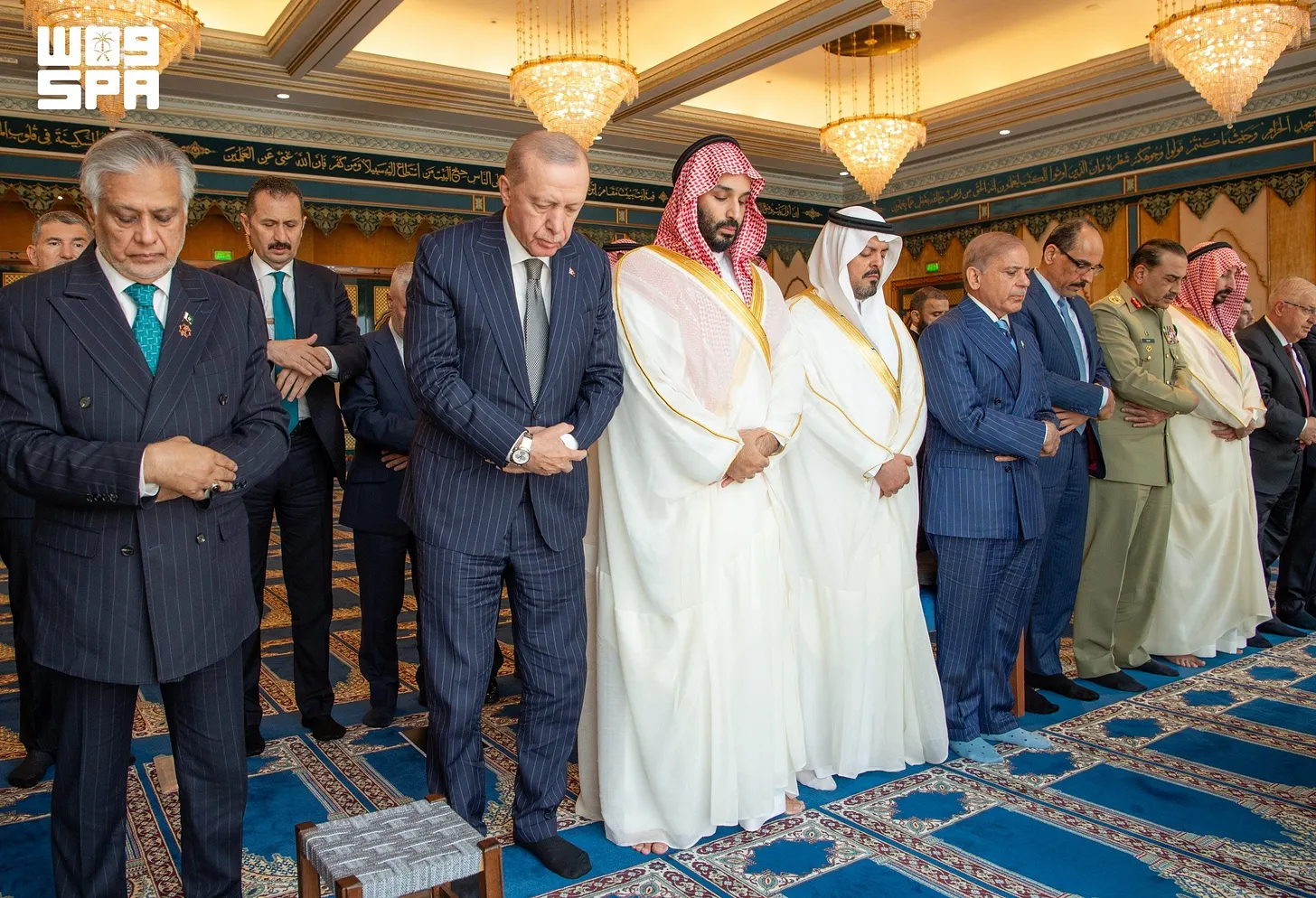
On August 7, 2026, three leaders stood together in Mecca. They signed an agreement that Gulf watchers are already calling one of the most consequential shifts in Middle Eastern security architecture in years. Saudi Crown Prince and Prime Minister Mohammed bin Salman, Pakistani Prime Minister Shehbaz Sharif, and Turkiye President Recep Tayyip Erdogan put their names to the Saudi Arabia-Pakistan-Turkiye Joint Defence Agreement, already referred to as the Makkah Joint Defence Agreement, or more simply, the Mecca Pact.
At its heart lies a clause borrowed straight from the Atlantic alliance’s playbook: an armed attack on any one of the three countries would be treated as an attack on all three, formally modelled on Article 5 of NATO. It is a striking formulation for a region long accustomed to shifting, transactional alignments rather than binding mutual defence commitments. Commentators have already described the trilateral pact as a “major change” in Middle East geopolitics, and the first institutional arrangement of its kind in the region.
For India, this is not a distant diplomatic curiosity. One of the three signatories is its principal adversary, and another, Saudi Arabia, is among its most important economic and energy partners. The pact marks an inflexion point in the emerging multipolar order in the Middle East and South Asia, and it arrives as New Delhi is already recalibrating its ties across West Asia and Israel simultaneously. The question this pact raises for Indian strategic planners is not whether it changes everything overnight; most analysts caution it does not; but what it signals about the direction in which the region, and Pakistan’s place within it, is now moving.
Anatomy of the Agreement
At the core of the Mecca Joint Defence Agreement lies a clause modelled directly on Article 5 of the NATO charter: an armed attack on any one of the three signatories, Saudi Arabia, Turkiye and Pakistan, is to be treated as an attack on all three. Together, the three countries command combined defence budgets of roughly $124.4 billion annually, with Saudi Arabia contributing $63.9 billion, Turkiye $51.4 billion and Pakistan $9.1 billion, alongside nearly 1.4 million active personnel, 3,400 aircraft and 6,000 tanks between them. Unlike NATO, which binds 32 members under a single command structure built over seven decades, the Mecca Pact is a leaner, three-nation arrangement, and analysts stress it is not intended to replace Washington but to signal that its signatories are hedging against over-dependence on American security guarantees.
Each partner brings a distinct asset. Saudi Arabia offers financial power built on petrodollar wealth, alongside advanced air capability, modern combat aircraft and sophisticated air defence systems acquired through decades of heavy spending on Western military equipment, giving Riyadh the financial capacity to underwrite large-scale joint defence programmes. Turkiye contributes military experience and a rapidly expanding, increasingly self-sufficient defence industry producing drones, naval platforms and fighter jets, backed by NATO’s second-largest standing army. Pakistan supplies the largest military in the Islamic world, extensive operational experience and the only nuclear deterrent held by a Muslim-majority nation. Together, these elements give the trilateral framework a reach and credibility no single member could project alone.
Turkiye’s role is not merely theoretical. Ankara has long lent Islamabad diplomatic cover at the United Nations on Kashmir, and during India’s Operation Sindoor in May 2025, Turkish-made Bayraktar and Asisguard Songar drones, along with Turkish contractors reportedly assisting Pakistani operators, featured prominently in the aerial assault on Indian military installations, a finding later corroborated by the Indian Army and government briefings. That precedent sharpens Indian anxieties about the Mecca Pact: if Ankara was willing to arm and diplomatically back Islamabad before any formal alliance existed, a codified defence pact raises the possibility that Saudi Arabia, and any future member joining the framework, could similarly be drawn toward backing Pakistan’s position at the UN. Turkish officials have called the agreement “purely defensive” and open to others, but that framing offers New Delhi limited reassurance.
Background: How We Got Here
Riyadh’s search for outside protection is not new. In 1945, President Franklin Roosevelt met King Abdulaziz aboard the USS Quincy, where the two leaders signed a Memorandum of Conversation. However, the now-famous oil-for-security exchange itself remained an informal understanding rather than a formal written treaty. That understanding hardened into declared policy in 1980, when President Carter, alarmed by the Iranian Revolution and Soviet moves in Afghanistan, warned that any outside attempt to control the Gulf would be treated as an assault on US interests. Washington acted on that broader commitment when Iraq invaded Kuwait in August 1990: Pakistani troops joined a US-led, 40-nation coalition deployed to defend Saudi Arabia under Operation Desert Shield, and when the coalition launched Operation Desert Storm in January 1991, Iraqi forces were driven out and Kuwait liberated by February that year. But the guarantee has since looked thinner: after Iranian-linked drones struck Saudi Aramco facilities at Abqaiq in September 2019, the US did not launch a retaliatory military strike on Iran although it sent military support. When Israel struck Hamas leaders inside Doha in September 2025, the US again did not intervene to defend a Gulf partner, a moment widely seen as the final trigger for Riyadh’s Strategic Mutual Defence Agreement with Pakistan just eight days later.
Pakistan’s Gulf entanglement, meanwhile, runs deeper than that one agreement. Islamabad joined the 1955 Baghdad Pact alongside Turkiye, Iraq, Iran and Britain, an early attempt at a Western-aligned Middle Eastern security bloc. In 1970, Pakistani officers, including a young Brigadier Zia-ul-Haq, helped Jordan’s King Hussein put down the Black September uprising. In 1979, Pakistani special forces helped Saudi National Guard troops storm the Grand Mosque and clear it of armed militants, using French-supplied tactical and technical assistance since Mecca’s status as a site barred to non-Muslims kept French commandos from entering directly. More recently, Pakistan’s former army chief, General (Retd) Raheel Sharif, was appointed to head the 41-nation Islamic Military Counter Terrorism Coalition, cementing Islamabad’s role as the Muslim world’s security contractor of choice.
Turkiye’s entry into this arrangement is best explained by timing. Ankara has watched Israel’s military reach expand across the region with unease, particularly after the Doha strike breached what had been considered a Gulf sanctuary. By February 2026, an escalating Israel-US war against Iran, met by Iranian missile and drone attacks on American bases across the Gulf, further convinced Riyadh and Ankara that regional deterrence could no longer rest on Washington alone. For President Erdoğan, binding Saudi wealth and Pakistani manpower to Turkiye’s own defence-industrial base offered both a hedge against Israel and a louder seat at the table.
Strategic Motives of Each Party
For Saudi Arabia, the pact is primarily a hedge, aimed less at any single adversary and more at reducing dependence on a single guarantor. Riyadh remains deeply wary of Iran, whose proxies have struck Saudi territory repeatedly over the past decade and whose nuclear and missile programmes continue to alarm Gulf capitals. But the more decisive driver has been Washington’s own unpredictability: the muted US response to the 2019 Abqaiq attack, its non-intervention when Israel struck Doha in 2025, and its selective engagement in the 2026 Iran war together convinced Crown Prince Mohammed bin Salman that American protection could no longer be assumed automatically. Diversifying security partnerships, while still keeping Washington close, has become Riyadh’s operating principle.
For Turkiye, the calculus is sharper and more adversarial. President Erdoğan has watched Israel’s military reach expand steadily across the region, including strikes deep inside Syria and Qatar, and views a formal defence bloc with nuclear-armed Pakistan and oil-rich Saudi Arabia as a meaningful counterweight to Israeli power. The pact also serves Ankara’s commercial interests: Turkish firms have built a formidable drone and defence-manufacturing base, and binding Gulf capital to that industry through joint procurement and co-production offers a lucrative export pipeline. Beyond hardware and deterrence, the agreement burnishes Turkiye’s claim to leadership of a loosely aligned bloc of Muslim-majority states, adding weight to Ankara’s ambitions in the wider Islamic world.
For Pakistan, the incentives are as much reputational as material. Years of economic instability, a fragile civilian-military balance, and a global image as a high-risk, aid-dependent partner have left Islamabad seeking ways to reposition itself as a serious security provider rather than a supplicant. Formal inclusion in a trilateral pact with two wealthy, influential partners elevates Pakistan’s diplomatic standing considerably, while deepening its already substantial security relationships across the Gulf, where thousands of Pakistani troops and advisers already serve. It also opens the door to fresh arms and investment deals with Saudi Arabia and Turkiye, both of which could ease pressure on Pakistan’s stretched defence budget and struggling economy. For India, this dimension matters most: Pakistan remains its principal military adversary, and any arrangement that strengthens Islamabad’s finances, arms access, or international standing has direct implications for the India-Pakistan military balance, beyond whatever collective-defence guarantees the pact formally offers.
Is This Really an “Islamic NATO”?
Despite the Article 5-style language, most analysts remain sceptical that the Mecca Pact amounts to a genuine “Islamic NATO.” NATO’s strength rests on far more than a mutual-defence clause: it has an integrated military command under a single Supreme Allied Commander, common operational standards that let 32 militaries fight side by side, established intelligence-sharing mechanisms, joint military planning, and decades of coordinated exercises binding its members together. The Mecca Pact, by contrast, has none of this institutional depth for now, only a shared declaration. The three signatories have also historically held differing threat perceptions: Riyadh’s primary concern is Iran and the Houthis, Ankara’s is Israel and Kurdish militancy, and Islamabad’s is India, and the agreement does not appear to supersede each country’s existing bilateral and multilateral arrangements, including Pakistan’s ties with China and Saudi Arabia’s long-standing relationship with Washington. Whether that changes will depend heavily on how many additional states eventually join and how much shared military infrastructure follows; until then, the pact reads as more symbolic than substantively binding, and India’s concern should scale accordingly rather than assume the worst today.
Real-world developments in Yemen support that scepticism. Since declaring a maritime blockade in July 2026, Houthi forces have claimed over 30 separate operations against Saudi Arabia, striking oil facilities at Yanbu, Jazan and Abqaiq, damaging or turning back dozens of tankers, and claiming to have hit Saudi warships and a landing vessel off Mocha. While Houthi casualty and damage figures are difficult to verify independently, the assaults themselves are real and ongoing. Yet, neither Pakistan nor Turkiye has intervened to defend Riyadh, a telling early test of what the pact’s grand promises are actually worth in practice.
Possible Expansion — A Widening Bloc?
The three signatories have made clear the pact is meant to grow. Turkish Foreign Minister Hakan Fidan said Ankara does not want to “remain limited to three countries.” Egypt has emerged as the most closely watched candidate: President Erdoğan has said Cairo’s membership is “among the options,” and Egypt’s accession would bring one of the Arab world’s largest standing armies along with control of the Suez Canal, extending the bloc’s reach across the Eastern Mediterranean and Red Sea. Egyptian officials have so far stayed cautious, reportedly wary of complicating Cairo’s Camp David relationship with Israel and its own security arrangements. Separately, Kuwait ratified a bilateral defence cooperation pact with Pakistan in July 2026, a step analysts describe as reinforcing, though not formally joining, the wider Mecca framework.
Gulf analysts consider Qatar the “most natural” next member, given its exposure after Israel’s September 2025 strike on Doha, with Kuwait, Jordan and even Syria also named as plausible near-term entrants. Should Qatar join, it would bring substantial financial firepower and added strategic depth along the Gulf’s northern flank. A larger coalition, spanning Egypt’s army and canal, Qatar’s wealth, and potentially Jordan and Syria, would transform the Mecca Pact from a three-country arrangement into a genuine regional bloc, sharply raising the stakes for India’s own calculus in West Asia even as it deepens New Delhi’s existing dilemma over Pakistan’s growing diplomatic weight in a bloc it cannot influence.
Bangladesh adds a fresh dimension closer to home. Foreign Affairs Adviser Humayun Kabir said Dhaka maintains a “positive approach” toward joining the Saudi-Pakistan-Turkiye framework, even as Bangladesh Prime Minister Tarique Rahman prepares to visit Riyadh on Crown Prince Mohammed bin Salman’s invitation, and Saudi Arabia hosts around 2.6 million Bangladeshi workers, among its largest expatriate communities, giving Riyadh real leverage over Dhaka. Turkiye’s ties to Dhaka run deeper than diplomacy. Since 2018, Bangladesh has steadily acquired several categories of Turkish weaponry and military equipment under its Forces Goal 2030 modernisation plan, with further deals under active negotiation. For India, this combination, a Gulf pathway opening alongside a substantial and growing Turkish defence relationship, signals expanding Pakistani and Turkish influence directly along its eastern border.
Second-Order Effects: The India-Israel Angle
The Mecca Pact’s most consequential effects for India may not come from the pact itself, but from how other powers react to it. Notably, Netanyahu phoned Modi on 6 August 2026, one day before the pact was signed, officially to review the “India-Israel Special Strategic Partnership” and discuss “developments in West Asia.” Analysts call the timing striking, though unconfirmed as directly linked. Saudi commentator Ali Shihabi mentioned that the pact reflects a recognition that American deterrence has weakened and that regional powers must now manage threats like Iran themselves, a reading that unsettles Israel as much as it does India. With Turkiye’s expanding regional footprint also troubling Israel, Greece and Cyprus, echoing the pattern that followed Israel-Turkiye’s own strategic rupture after 2003, the pact appears to be nudging India and Israel toward closer strategic alignment, even as India’s foreign ministry has denied reports of any resulting formal defence pact with Israel.
The India Dimension — Why New Delhi Is Watching Closely
Pakistan’s roughly 170 nuclear warheads have historically been built with India, not any Gulf rival, in mind, and its wider arsenal, manpower and battlefield experience are now backed by Saudi money and Turkish technology. Analysts doubt this extends any actual nuclear umbrella to Riyadh or Ankara. Still, the more immediate worry for New Delhi is diplomatic: with two influential partners now bound to Islamabad, it becomes harder for India to isolate Pakistan internationally after future terrorist attacks; analysts note that Islamabad will likely invoke the pact as a “buffer” in any future crisis, much as it attempted during Operation Sindoor. The MEA’s response so far, that India is “examining implications” for its national security and regional stability while safeguarding its interests, mirrors almost verbatim its measured reaction to the September 2025 Saudi-Pakistan pact, suggesting a wait-and-watch posture rather than alarm.
The pact also signals a broader unwinding of American primacy in the Gulf. Riyadh’s move to diversify security partnerships, rather than rely solely on Washington, points to a more multipolar West Asia, one where Saudi Arabia gains greater strategic autonomy even as the US, at least initially, benefits from allies sharing more of its defence burden. Over the longer run, however, if more Gulf states join the framework, Washington’s traditional hegemony in the region could steadily erode, a dynamic that also strengthens the case for India and Israel drawing closer, as discussed earlier.
Implications for India’s Strategic Options
The real threshold, as several analysts point out, is whether the pact stays confined to West Asia. If it remains focused on collective deterrence against Iran and Israel, India’s stakes stay manageable. But if it evolves into deeper military, intelligence and weapons-sharing cooperation, one that measurably strengthens Pakistan’s capability against India, New Delhi’s concerns grow accordingly. Bangladesh’s stated openness to joining would mark a particularly important shift here. It would transform a West Asian arrangement into one with a direct South Asian dimension, right on India’s own border.
For now, India’s soundest response is not alarm but preparation on multiple fronts. India has genuinely sought cordial ties with Pakistan in the past, only to be met with betrayal. The 1999 Lahore bus diplomacy was followed within months by the Kargil War. The 2001 Agra Summit collapsed without agreement. A 2003 ceasefire and renewed dialogue gave way to the 2008 Mumbai attacks. Prime Minister Modi’s surprise 2015 Lahore visit was followed weeks later by the Pathankot terror attack. This pattern makes clear that goodwill alone cannot anchor India’s policy toward Pakistan. What India can control is its own preparation. This means preserving and deepening substantial bilateral ties with Riyadh and Ankara, so neither partner drifts entirely into an anti-India posture. It means diversifying defence relationships further across Israel, France, Russia and the United States, rather than depending on any single supplier. It also means using bilateral diplomacy with Gulf states, particularly swing players like Qatar and the UAE, to discourage full bloc consolidation against Indian interests. Above all, it means steadily strengthening deterrence at home, including domestic weapons production, since Pakistan will remain New Delhi’s foremost strategic challenge regardless of how the Gulf realigns.
Conclusion
The Mecca Pact marks a genuine, structurally significant shift in West Asian security architecture, but not, at least not yet, an immediate alliance-versus-alliance confrontation with India on one side. Its true significance for India will be determined less by the text signed in Mecca than by how far the bloc expands, how deeply it cooperates militarily, and whether it drifts from a Gulf security arrangement into a wider Islamic coalition with Pakistan’s rivalry with India at its centre. Vigilance, not panic, should be New Delhi’s watchword.