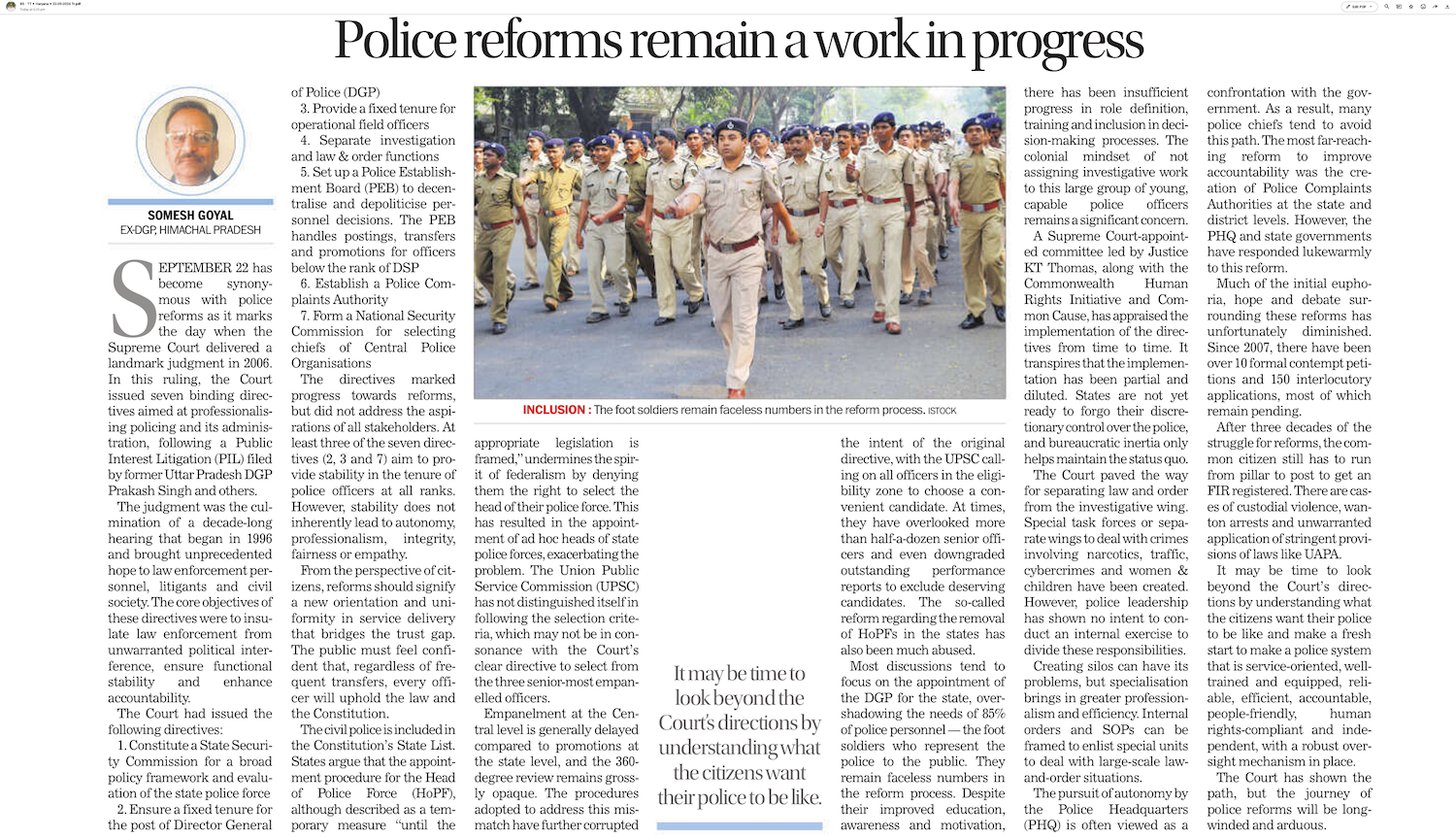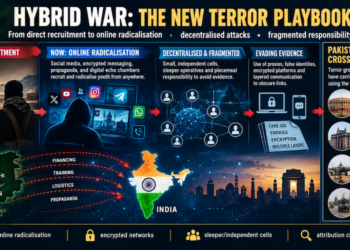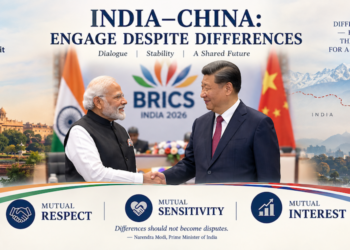


This article in edited form appeared in the Tribune on September 22, 2026. I am sharing the unedited version here for readers of SAVIOURS. I am also sharing a readable screenshot of the article as it appeared in the newspaper.
Introduction
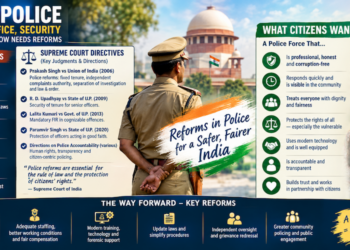
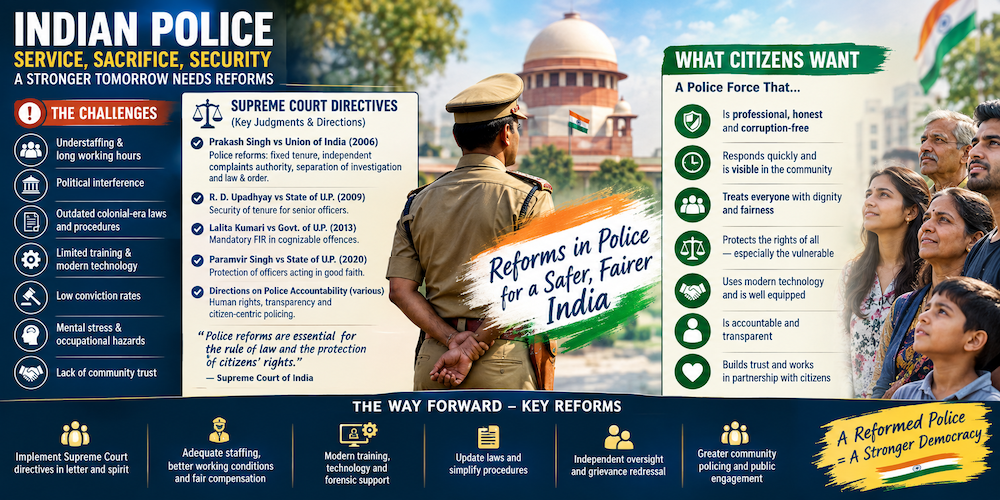
September 22 has become synonymous with police reforms, as it marks the day two decades ago when the Supreme Court of India delivered a landmark judgment. In this ruling, the Court issued seven binding directives to professionalise policing and its administration, following a Public Interest Litigation (PIL) filed by former DGP Prakash Singh and others. The judgment culminated a decade-long hearing that began in 1996 and brought unprecedented cheer and energy to law enforcement personnel, litigants, and civil society. The core objective of these directives was to insulate law enforcement from unwarranted political interference, ensure functional stability, and enhance accountability. On this day, all police officers and members of civil society come together in support of Prakash Singh, who, even in his nineties, remains committed to seeing these directives transformed into reality.
Were the Directives a Panacea for All Ills?
Just to remind the readers, the Supreme Court issued the following directives:
- Constitute a State Security Commission (SSC) for broad policy framework and evaluation of the state police force.
- Ensure a Fixed Tenure for the Director General of Police (DGP)
- Provide Fixed Tenure for Operational Field Officers
- Separate Investigation and Law & Order Functions
- Set up a Police Establishment Board (PEB) to decentralize and depoliticize personnel decisions.The PEB handles postings, transfers, and promotions for officers below the rank of DSP.
- Establish a Police Complaints Authority (PCA)
- Form a National Security Commission (NSC)for selecting chiefs of Central Police Organisations
The directives marked progress towards reforms, but did not address the aspirations of all stakeholders. At least three of the seven directives, namely serial nos. 2, 3, and 7, aim to provide tenure stability for police officers at all ranks. However, stability does not inherently lead to autonomy, professionalism, integrity, fairness in dealings, or empathy.
From the perspective of citizens, reforms should signify a new orientation and uniformity in service delivery that bridges the trust gap. The public must feel confident that, regardless of frequent transfers, every officer will uphold the law and the Constitution.
Federalism at Stake
The Civil Police is included in the Constitution’s State List. States argue that the appointment procedure of the Head of Police Forces (HoPF), although described as a temporary measure “until the appropriate legislation is framed,” undermines the spirit of federalism by denying them the right to select their head of the police force. This has resulted in the appointment of ad hoc heads of state police, exacerbating the problem. The Union Public Service Commission (UPSC) has not distinguished itself in following the selection criteria, which may not be in consonance with the Supreme Court’s clear directive to select from the three senior-most empanelled officers.
Empanelment at the central level is generally delayed compared to state-level promotions, and the 360-degree review remains grossly opaque. The procedures adopted to address this mismatch have further corrupted the intent of the original directive, with the UPSC calling on all officers in the eligibility zone to choose a convenient candidate. At times, they have overlooked more than half a dozen senior officers and even downgraded outstanding performance reports to exclude deserving candidates. The so-called reform regarding the removal of HoPFs in the states has also been much abused.
What about the Foot Soldiers?
Most discussions focus on appointing the Director General of Police (DGP) for the state, overshadowing the needs of 85% of police personnel—the foot soldiers who represent the police to the public. They remain faceless numbers in the reform process. Despite improved education, awareness, and motivation, progress in role definition, training, and inclusion in decision-making has been insufficient. The colonial mindset of not assigning investigative work to this large group of young, capable police officers remains a significant concern.
Twisted Implementation
A Supreme Court-appointed committee led by Justice KT Thomas, along with the Commonwealth Human Rights Initiative (CHRI) and Common Cause, has appraised the implementation of the directives from time to time. It transpires that the implementation has been partial and diluted. The States are not yet ready to forego their discretionary control over the Police, and bureaucratic inertia only helps maintain the status quo.
The Supreme Court paved the way for separating law and order from the investigative wing. Special task forces or separate wings to deal with crimes involving narcotics, traffic, cybercrimes, women and children have been created. However, police leadership has shown no intent to conduct an internal exercise to divide these responsibilities. Creating silos can have its problems, but specialisation brings in greater professionalism and efficiency. Internal orders and SOPs can be framed to assign special units to handle large law-and-order situations.
The pursuit of autonomy by the Police Headquarters (PHQ) is often viewed as a confrontation with the government. As a result, many Police chiefs tend to avoid this path.
The most far-reaching reform to improve accountability was the creation of Police Complaints Authorities at the state and district levels. However, the PHQ and state governments have responded lukewarmly to this reform.
Pervasive Fatigue
Since the filing of the PIL, three decades have passed with only partial implementation of the directives. Much of the initial euphoria, hope, and debate surrounding these reforms have unfortunately diminished. Since 2007, there have been over 10 formal contempt petitions and 150 interlocutory applications, most of which remain pending. This has led to fatigue among everyone involved, with discussions on reforms largely confined to the week surrounding September 22.
After three decades of the struggle for reforms, the common citizen still has to run from pillar to post to get an FIR registered. There are cases of custodial violence, wanton arrests and unwarranted application of stringent provisions of laws like UAPA.
Way Forward
It may be time to look beyond the Supreme Court directions by understanding what the citizens want their police to be like and make a fresh start to make a police system that is service-oriented, well-trained and equipped, reliable, efficient, accountable, people-friendly, human rights compliant, and independent, with a robust oversight mechanism in place.
The Supreme Court has shown the path, but the journey of Police reforms will be long and arduous.
Below is a screenshot of the article as it appeared in the Tribune on 22.9.2026.