

Introduction
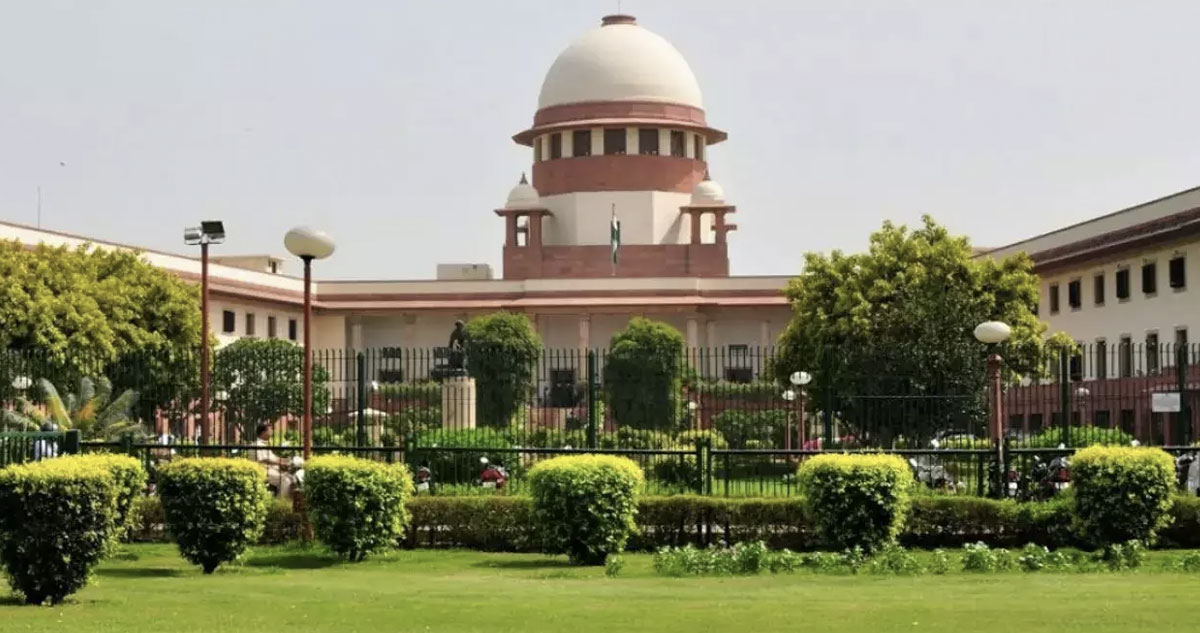
On the morning of 27 May 2026, a bench of Chief Justice Surya Kant, Justice Joymalya Bagchi, and Justice Vipul M. Pancholi of the Supreme Court of India delivered a judgment that will shape the democratic landscape of this country for decades. The Special Intensive Revision (SIR) of electoral rolls — challenged in a batch of petitions led by the Association for Democratic Reforms — was upheld in its entirety as constitutional, proportionate, and legally tenable. The apex court’s verdict is a landmark affirmation of the Election Commission of India’s plenary authority under Article 324 of the Constitution. But it is also, and this must be clearly understood, a judgment that comes with conditions that protect every legitimate voter in India. For the hundreds of millions of citizens across sixteen states and three Union Territories currently covered by Phase III of the SIR — from Odisha and Uttarakhand to Maharashtra, Delhi, Punjab, and Telangana — this judgment is not an abstraction. It is an immediate call to vigilance.
What the Court Has Upheld
The Constitutional Validity of SIR. The SIR is, in essence, a comprehensive ground-up revision of electoral rolls through house-to-house enumeration by Booth Level Officers. It differs from the routine Annual Summary Revision in its scope and intensity. Critics argued this departure from ordinary statutory procedure was itself unconstitutional. The Supreme Court has categorically rejected that argument.
First, the court confirmed that the Election Commission’s authority under Section 21(3) of the Representation of the People Act, 1950, read with Article 324 of the Constitution, is wide enough to permit an SIR exercise at any time, for reasons recorded, in any manner the Commission deems fit. The SIR does not supplant the statute — it gives it life.
Second, the court upheld the proportionality of the exercise. It was observed that more than four decades had elapsed since the last intensive revision of this kind, during which India underwent rapid urbanisation, large-scale migration, and demographic shifts. The court found that the Commission’s decision was neither arbitrary nor excessive, but a necessary corrective to decades of accumulated inaccuracy in electoral records.
Third, the court held that a voter’s existing enrolment does not create an absolute, irrebuttable right to immunity from fresh scrutiny. The presumption of enrolment is rebuttable. This is a significant constitutional proposition: being on the rolls does not immunise one’s registration from re-examination.
Fourth, the court held that the SIR does not violate the Representation of the People Act or the Registration of Electors Rules, 1960. In the court’s own words: “Since SIR is legally tenable, it is not in violation of the RP Act.”
What the Court Has Protected
Relief for Legitimate Voters. This is where the opposition parties and petitioners can, with justification, claim partial victory. The judgment does not hand the Election Commission a blank cheque. The court has imposed a framework of procedural safeguards that must be strictly observed. Every voter whose name is threatened must understand these protections.
Show-Cause Notice Before Deletion Is Mandatory
No name can be deleted from the electoral roll without prior notice to the individual concerned. The court confirmed that the requirements of notice and hearing under Rule 21A of the Registration of Electors Rules, 1960, are preserved “in substance.” Any deletion without notice is not merely irregular — it is unconstitutional.
ECI Cannot Determine Citizenship — Only Eligibility
The court has drawn a critical constitutional line. The Election Commission may examine a person’s eligibility for inclusion in the electoral roll from the limited perspective of citizenship. But it cannot determine citizenship. That power belongs exclusively to the competent authority under the Citizenship Act, 1955. If the Commission is not satisfied about a person’s citizenship, it must refer the case to that authority — it cannot itself decide and delete.
Deletion Does Not Equal Loss of Citizenship
This is perhaps the most important protection in the entire judgment. Being removed from the electoral roll does not strip a person of Indian citizenship. Citizenship can only be determined by a legally competent authority. The court has ensured that the SIR process cannot be weaponised to create “suspended citizenship” for millions.
Citizenship Cases from 2003 Rolls Must Be Referred Within Four Weeks
In a pointed direction, the court has ordered that persons deleted from the 2003 electoral roll on grounds of doubtful citizenship must have their cases referred by the Commission to the competent authority under the Citizenship Act within four weeks. That authority must decide before the next Vidhan Sabha or local body election, after notice and hearing. If found to be citizens, their names must be restored.
Wrongful Deletions Are Judicially Reviewable
Persons whose names have been erroneously deleted on grounds of being absent, deceased, shifted, or duplicated retain the full right to challenge that deletion through judicial review before the courts.
“Deletion of a person’s name from the voter list does not strip that individual of citizenship. Citizenship can only be determined by a legally competent authority.” — Supreme Court of India, 27 May 2026
What Political Parties Must Do
The Supreme Court’s judgment places an implicit but powerful responsibility on political parties. The court pointedly noted that during the Bihar SIR, political parties deployed over 1.5 lakh booth-level agents and were involved in the exercise, yet subsequently opposed it in the apex court. That contradiction does not serve voters.
Political parties must mobilise at the booth level now, not after the final roll is published. The window between draft publication and final publication — which varies by state but ranges from September to December 2026 — is the critical period for claims and objections. Every party with a presence in the states currently undergoing Phase III must treat this as an electoral duty rather than a political tactic.
Booth-level agents must be trained on the forms and the process. They must know Form 6 (inclusion of name), Form 6A (inclusion for overseas electors), Form 7 (objection to inclusion or deletion), and Form 8 (correction of entries). This is not optional electoral literacy — it is a party’s first duty to its constituency.
Parties must not politicise legitimate concerns into a narrative of victimhood. The court has upheld the process. Continued agitation that ignores the safeguards does a disservice to voters who need practical guidance, not political theatre.
Your State, Your Date — The Rolls That Will Decide Your Next Election
The SIR is now a nationwide exercise. Across three phases, the Election Commission has brought virtually every state and Union Territory under intensive revision. Phase III alone covers sixteen states and three UTs, reaching over 36 crore electors. The final electoral rolls — published on different dates depending on the state — will be the rolls on which the next round of Assembly elections is fought.
The broad contours of Phase III are as follows: states such as Odisha, Mizoram, Sikkim, and Manipur will have their final rolls published in early September 2026. Andhra Pradesh, Arunachal Pradesh, Haryana, and Chandigarh follow in late September. Punjab and Telangana — both with imminent Assembly elections — will have their final rolls on 1 October 2026. Karnataka, Meghalaya, Maharashtra, Jharkhand, and Delhi follow in the first week of October. Nagaland and Tripura will conclude later in the year.
Every one of these states has a substantial population of mobile citizens: seasonal workers, urban migrants, young voters coming of age, married women who have changed addresses, and NRI voters with special provisions. All of these categories are vulnerable to being left off the final roll if they do not act in time. The date of final publication in your state is the date that matters. Find it. Mark it. Act before it.
A Practical Guide for Every Citizen in an SIR State
The Supreme Court has confirmed that the process is valid. The ECI has published the schedule. Here is what every citizen must do:
Step 1 — Check the draft electoral roll. Visit the National Voters’ Service Portal (voters.eci.gov.in) or your nearest Electoral Registration Officer’s office. Verify that your name, photo, address, and voter ID number are correctly recorded. Do not assume that because you voted in the last election, your name is still on the list.
Step 2 — If your name is missing, file Form 6 immediately. Any citizen who is 18 years of age or above, ordinarily resident at the address, and not already enrolled elsewhere can apply for inclusion using Form 6. This form can be filed either online at voters.eci.gov.in or in person with the Electoral Registration Officer. Do not wait.
Step 3 — If you are an overseas voter, file Form 6A. Non-Resident Indians who hold a valid Indian passport and are not registered as voters in India may apply for inclusion in the electoral roll of their last ordinary place of residence using Form 6A. India’s vast diaspora in the Gulf, Canada, the United Kingdom, the United States, and elsewhere should take note.
Step 4 — If your name was deleted in error, challenge it. The Supreme Court has specifically stated that persons whose names have been deleted on grounds of being absent, deceased, shifted, or duplicated — wrongly — may challenge the Commission’s decision through judicial review. File an objection with the Electoral Registration Officer under Rule 21A first, and if that fails, approach the courts.
Step 5 — Even after the final publication date, you are not without remedy. The finalisation of the electoral roll does not close all doors. A Qualifying Date supplementary roll process allows continuous enrolment. Form 6 continues to be accepted for future roll updates. The critical point is that to vote in an election, your name must be on the roll operative at the time of that election. Act early — but if you miss the cutoff, do not give up.
Step 6 — Carry documents. During enumeration by Booth Level Officers, you will be asked to produce documents. The Supreme Court’s interim directions during the Bihar SIR required the ECI to accept Aadhaar, ration card, and EPIC (Voter ID) as valid documents for verification. Keep these documents readily available.
Conclusion: The Ballot Is Sacred — Guard It.
India’s democracy rests not merely on the act of casting a vote on polling day. As the Supreme Court said today, it rests fundamentally on the accuracy and credibility of the electoral rolls. Clean rolls are the foundation of clean elections. The SIR, however contentious its politics, is a legitimate constitutional exercise when conducted with the safeguards the court has now mandated.
The BJP and NDA governments will draw satisfaction from this judgment. The opposition will draw comfort from the procedural safeguards and the citizenship-referral directions. But neither party’s political satisfaction matters to the individual voter who wakes up on election day to discover that his name is not on the list.
Across sixteen states and three Union Territories now undergoing Phase III of the SIR — farmers and factory workers, teachers and NRI families, urban migrants and young first-time voters — the time for passive spectatorship is over. The court has said the process is constitutional. The ECI has set the dates. The burden now rests on the citizen. Check your name. File your form. Guard your vote. Democracy, in the end, is only as strong as the vigilance of its citizens.