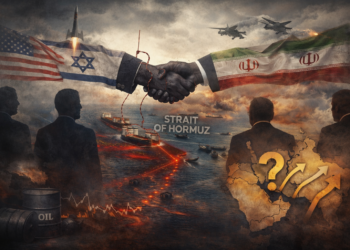

In this intertwined world, the policy direction flowing from the United States of America impacts the whole world like never before. The countries that have nothing to do with the US and Israel’s war on Iran have become secondary victims of the American aggression as energy supply chains get disrupted, affecting global manufacturing and the economy.
We invited Vappala Balachandran to provide a perspective on the governance style of various POTUSes to highlight the current global quagmire.
Introduction
The US President has been described as the most powerful person in the democratic world by virtue of his being the head of state of the world’s largest economy. In addition, he is also the commander-in-chief of the most powerful armed force in the world with the largest nuclear arsenal. By virtue of this, he is the world’s top diplomat, which entitles him to be the “primus inter pares” (first among equals) at all high-powered international meetings.
How US Presidents Are Judged by History
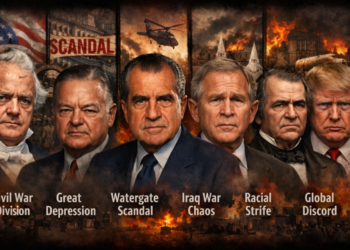
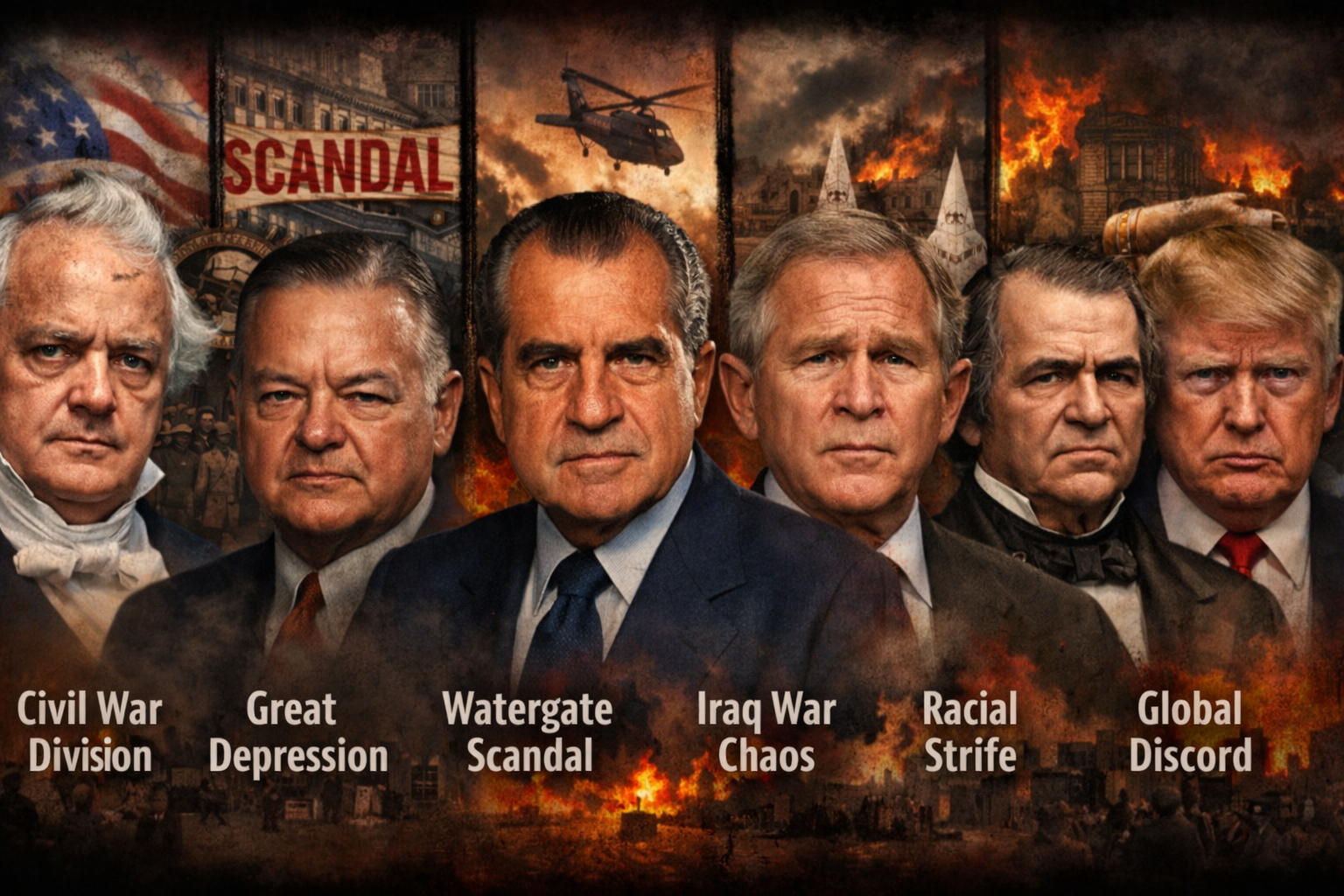
John Bolton, Trump’s National Security Adviser (2018-19) during his first term, had said this about Trump: “If his first four years were bad, a second four will be worse”. In the past, several surveys were conducted on the “worst presidents”. In many of these surveys, Trump’s name comes up prominently. For example, in September 2022, CBS News published a list of ten “worst presidents” in this order:
- Andrew Johnson (1865-1869)- The first president to face impeachment
- James Buchanan (1857-1861)- Poor crisis leadership
- Donald Trump (2017 – 2021& 2025–) Faced impeachment twice
On February 12, 2025, the “New Dealer” (The Students’ News Site of Franklin Delano Roosevelt High School in New York) also placed him in 4th place as the “Worst President” after Zachary Taylor (1849-1850), Herbert Hoover (1929-33), and Warren G. Harding (1921-23).
However, mere public opinion polls are not the barometer for judging a president. For example, many still consider the 43rd US President, George W. Bush (2001-2009), as one of the worst presidents. He is blamed for starting the Iraq War (2003-2011) on a totally false reason that Saddam Hussein was about to fabricate nuclear weapons.
This view is not shared by other responsible persons. Former CIA director Robert Gates, the most experienced “Washington Insider” who had served under 8 US presidents in various capacities, including as Deputy National Security Adviser, speaks highly of George W. Bush in his book “Duty” (2014). Gates was also the US Defence Secretary from 2006 to 2011, serving under Presidents George W. Bush and Barack Obama.
How then do we judge presidential qualities? Presidential historian Richard Norton Smith explained at a 2011 “Wharton Leadership Conference” that several other attributes must be considered when judging a US president. Smith said that President Dwight D. Eisenhower was considered “mediocre” compared to the “Dynamic Camelot Era” of John F. Kennedy, who immediately followed him as president and whose profile rose to dizzying heights after he was assassinated.
Norton Smith said that a historical analysis had revealed that Eisenhower was a far-sighted leader who had worked silently without publicity and kept the U.S. out of the active Vietnam War in 1954. Despite pressure to rescue the French, he did not agree, although he had asked the CIA to conduct covert operations, influenced by the “containment policy” initiated by his predecessor, Harry Truman.
This was because Eisenhower, as the Supreme Commander of the Allied Expeditionary Force in Europe during the Second World War, knew the horrors of war and did not commit US troops, unlike Kennedy, who later increased the number of US advisors from 900 to 16,300. Kennedy’s successor, President Lyndon Johnson, sent US Marines and got fully involved in the war. American presence peaked in April 1969, with 5,43,000 military personnel stationed in the country. Despite this, America had to suffer an ignominious defeat after losing more than 50,000 US soldiers in the war.
The same could be said about President Trump for increasing the US military presence in the Iran quagmire, which does not serve US or European interests. As Col.(retired) Douglas Abbott Macgregor, a former Trump follower, said, Trump is blindly following Israel’s script to make Iran another Gaza and, in that process, driving America into deep recession.
At the same time, it is worthwhile recalling that Trump had defused a big crisis during 2019-20 after threatening to destroy North Korea during his first term, by meeting Kim Jong-un thrice in Singapore, Hanoi and at DMZ.
Attributes of a good American President
What then are the attributes needed for a US president? Jon Meacham, former Newsweek editor and author of “Franklin & Winston” (2003), had said: “Curiosity, Candour, Empathy and Humility”. In his captivating 2003 book, Meacham described the fascinating relationship between Winston Churchill and Franklin D Roosevelt, “the two men who piloted the free world to victory in World War II”. He had also written about presidents Thomas Jefferson, Andrew Jackson, and George H.W. Bush.
Michael Beschloss, another famous presidential historian who personally knew President Richard Nixon, flags four important qualities: “The political guts of George Washington, the ability to explain tough decisions like Abraham Lincoln, a sense of history like Harry Truman, and the ability to reach across the aisle like the founders and Lyndon B. Johnson”. As we all know, historians had held that Nixon was one of the “worst” presidents for the Watergate Scandal although in foreign policy he was more far-sighted than any of his predecessors by his move to normalise relations with China in 1972, which had startled the world.
Similarly, how do we judge President Jimmy Carter, an exceptionally compassionate person who made human rights the sheet anchor of America’s internal and external policies? He also had a special bond with India, as his mother, Lillian Carter, had worked as a “Peace Corps nurse” at the age of 68 for nearly 2 years from 1966 at a clinic in Godrej Nagar, Vikhroli, in Mumbai. Carter, a deeply religious man, had walked out of the Southern Baptist Church in 2000, protesting their negative attitude toward women’s rights. He was also a prolific writer, having authored 32 books.
Yet he was highly critical of India’s nuclear programme and had criticised our reluctance to sign the Nuclear Non-Proliferation Treaty (NPT) during an official visit to India. Also, if an impartial history is written, his covert Afghanistan war through the CIA from 1979 onwards had inflicted indescribable suffering on millions of hapless Afghans who had no say in these developments. This war had also led to the rise of the cruel Taliban, Osama bin Laden and other extremist forces and was responsible for the consequent mayhem in America, like 9/11 and elsewhere in the world.
This war, which lasted more than 9 years (1979-1989), killed 15,000 Soviet soldiers and about 90,000 Afghans, including Mujahideen rebels. Three million Afghans who were rendered homeless had fled to Pakistan. Another 1.5 million escaped to Iran. By the end of the 20th century, Afghanistan had become a barren land, one of the most heavily mined countries in the world, with vast quantities of unexploded mines killing people. All these were started by Carter in 1979 through a moralistic zeal to punish the Soviet Union for its illegal invasion of Afghanistan.
Richard Norton Smith would recommend some rules to judge an American president: Firstly, history rewards the risk-takers: from this angle, he mentions Thomas Jefferson ( Louisiana Purchase), Harry Truman (stopping Communist aggression in Korea), Lyndon Johnson (Civil Rights Act of 1964), and Richard Nixon (dialogue with Red China).
Secondly, a president who thinks too much about his historical place will rarely reach his goals: Smith cites the case of President Warren G. Harding, who came to office in 1921-23 with a narcissistic hope that he would be the “best loved” president. Ultimately, he became involved in the “Teapot Dome bribery scandal” and was finally ranked among the worst presidents.
Thirdly, there is no single yardstick to judge any US president. “Presidents can only be understood within the context and limitations of their time”. Presidential power, although awesome on paper, is based largely on moral authority.
The last barometer he mentions is “Greatness, like beauty, is in the eye of the beholder”. That is why all presidents carefully study “approval ratings”. According to CNN, Trump’s approval rating has hit a new low on 1 April 2026 after he launched the Iran war.
US Presidents and India
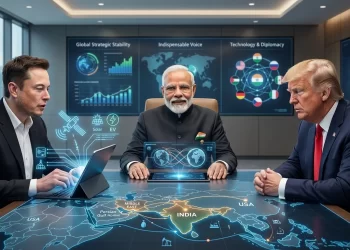
Do we judge a US president only from India’s point of view? If that is so, it must be frankly admitted that no US president had any special bond with India. On the contrary, almost all US presidents, except perhaps Barack Obama, had preferred Pakistan for historical and strategic reasons. The impression that Donald Trump was favouring us during his first term was wrong, as he wanted India to be only a check on China, which we could not fulfil. In his second term, he has been markedly favouring Pakistan for different reasons.
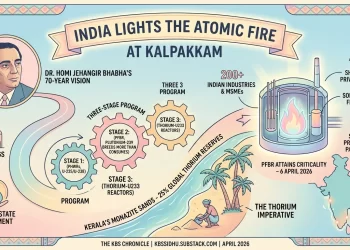
It is also futile to believe that India can become a great power only by having cordial relations with the US President. As Vikram Sood, former R&AW chief, had concluded in his captivating book “Great Power Games: from Western Decline to Eastern Ascent”: “India will not get there just by dreaming of it; no one will help India become a major power. We will have to work for it all the time”. This applies to our energy security, too.
Our Energy Security
Israel- America’s Iran war has exposed our dire energy predicament, displaying the helplessness of the Gulf powers, with whom we tried to cultivate special relations, as they were found to be of no use compared to Iran’s military superiority due to natural factors in the crucial “Hormuz Staits”. Depending on America is of no practical use for our energy security, as I will indicate later in this essay.
In this connection, I would like to quote the summary prepared by 2 foreign delegates from Wood Mackenzie, who had attended “India Energy Week 2026” in Goa in January 2026. Wood Mackenzie, also known as WoodMac, is a global research and consultancy group that supplies data, written analysis, and advisory services to the energy, chemicals, renewables, metals, and mining industries. They had flagged the following challenges:
The first challenge is that India will account for one-third of global final energy demand growth by 2050, as its share of the world’s primary energy consumption increases from 8% today to 11%. However, India must tread a difficult and delicate balance between “energy security, sustainability and affordability”.
This is because most of our power sector is fuelled by domestically produced coal fuels. Presently, India imports over 5 million b/d of crude oil and liquids and 25 Mt of LNG.
The second challenge is political pressure from consumers, whether industrial, commercial or residential, who are unlikely to accept a price increase. The third challenge is when liquid imports exceed 6 million b/d by the early 2030s, and LNG imports triple by 2050. All these would make it difficult for India to develop an ambitious low-carbon energy system.
It is true that US Deputy Secretary of State Christopher Landau had shown willingness to support India’s energy requirements while speaking at the “Raisina Dialogue 2026” in New Delhi on 6 March 2026. However, he also added a caveat that India should understand that ‘we are not going to make the same mistakes with India that we made with China 20 years ago”. In other words, America’s interests will be supreme.