

Wednesday, February 4, 2026
  • Home
  • About Us
  • Refund Policy
  • Privacy Policy
  • Terms and Conditions
  • Advertise With Us
  • Contact Us
  • Login
  • Register
SUBSCRIBE
Welcome to Saviours Voice of Khaki
Advertisement
ADVERTISEMENT
  • Foreign Policy
  • Internal Security
  • Policing
  • Border Management
  • Corrections
  • Disaster Management
  • Interviews
  • General
No Result
View All Result
  • Foreign Policy
  • Internal Security
  • Policing
  • Border Management
  • Corrections
  • Disaster Management
  • Interviews
  • General
No Result
View All Result
Welcome to Saviours Voice of Khaki
No Result
View All Result
Home General

In defence of the ECI’s ‘SIR’

KBS SidhubyKBS Sidhu
January 1, 2026
in General, Internal Security
Reading Time: 12 mins read
0
0
In defence of the ECI’s ‘SIR’
Share on FacebookShare on TwitterShare on LinkedInShare on WhatsApp

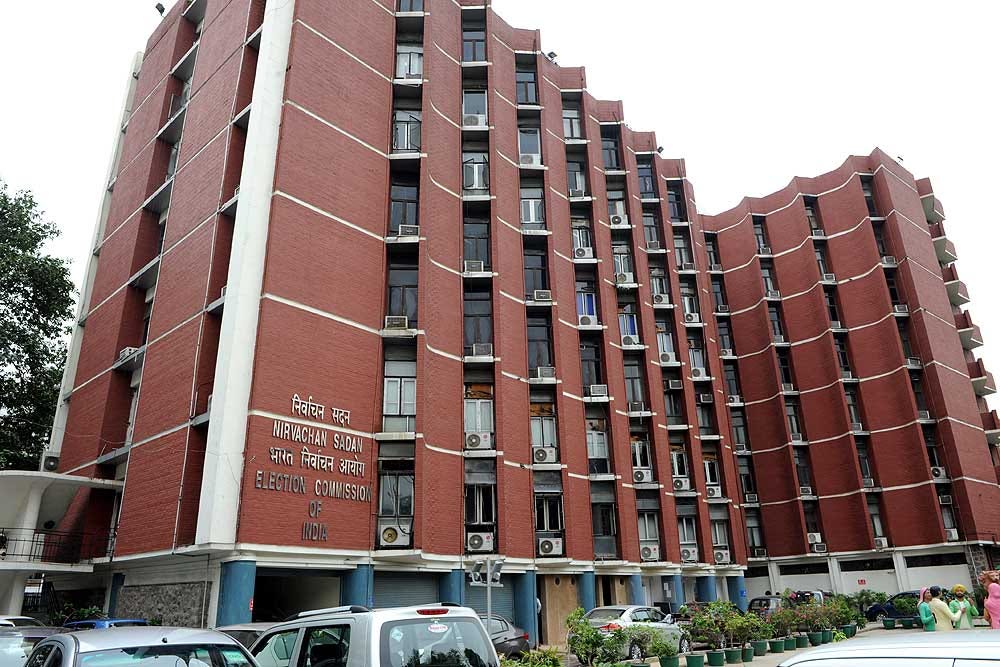
SIR has caused considerable debate in India. There is widespread criticism in the domestic media, and at times in the international media, of its methodology and the haste to conduct SIR before the impending elections in the states. 

In the following essay, KBS Sidhu, a former IAS officer closely associated with electoral procedures, defends the SIR exercise by questioning media reporting.

The Hindu got it wrong: 

The Hindu’s January 1, 2026, editorial, describing the Election Commission of India’s Special Intensive Re
vision (SIR) as a “descent into farce” (and “much worse than farce”), is an uncharacteristically sweeping verdict from a newspaper known for constitutional seriousness. Pointing out hardship, noticing defects, or uneven field-level conduct is entirely legitimate. Indeed, the ECI must be pressed—publicly and relentlessly—to reduce wrongful exclusions and make remedies faster and clearer. But to jump from operational imperfections to a narrative of institutional farce is neither scrutiny nor a valid critique; it is overreach.

Defending the ECI’s legal mandate and objective does not mean granting it a certificate of perfection. A citizen can insist on due process, humane verification, and robust safeguards—and still reject the insinuation that every disruptive administrative exercise is a covert assault on the franchise, or (worse) on citizenship itself. That balance—firm accountability without cynical delegitimisation—is precisely what The Hindu, of all papers, should have modelled.

Start with the law: who may be on the roll

The Constitution’s electoral design, the Representation of the People Act, 1950 and the rules framed thereunder are clear. Enrolment requires citizenship, being ordinarily resident in the constituency, and the absence of disqualification. Dual enrolment is prohibited. These are not “bureaucratic preferences”; they are the legal boundaries of the electorate. A roll that knowingly retains non-citizens, duplicates, the deceased, or those no longer ordinarily resident is not being “inclusive”—it is enabling, indeed facilitating, illegality and inviting fraud.

This is the starting point that the editorial underplays. The SIR is, at core, an effort to restore the first principle of democratic equality: one person, one vote, in one place—at a nationwide scale.

Why revision is disruptive: scale, churn and imperfect records

Indian electoral-roll maintenance is not a neat clerical task; it is a dynamic, ongoing process. Registration of births and deaths—especially births in earlier decades—is uneven; internal migration is vast and frequently unrecorded; addresses remain non-standardised; and local administrative capacity varies dramatically. In such conditions, roll “pollution” accumulates unless a periodic, comprehensive revision is attempted.

Discomfort during a revision is not evidence of malice. It is a predictable by-product of cleaning a system in a country of this size, and cannot be casually labelled “mass disenfranchisement”. The real question is not whether a large revision is messy (it will be), but whether it is legally grounded, transparent, correctable, and executed with safeguards.

Aadhaar: not a citizenship proof—yet useful for hygiene

A predictable line of attack is to treat any Aadhaar-linked reference as an attempt to convert a welfare identifier into proof of citizenship. That is a red herring. Parliament itself has written the limitation into law: Section 9 of the Aadhaar Act, 2016 states that an Aadhaar number (or its authentication) shall not, by itself, confer any right of, or be proof of, citizenship or domicile.

The relevant point is narrower and more practical: Aadhaar-linked indicators can help identify probable duplicates—the same person appearing multiple times under variations in name, age, or address, sometimes across constituencies and even across States. In an electorate of this magnitude, the inability to detect duplication nationally is not a minor administrative flaw; it is a direct threat to the one-person-one-vote principle. Sensible scrutiny, therefore, is not whether Aadhaar “proves citizenship” (it does not), but whether Aadhaar-assisted matching is used as a lead-generator followed by notice, verification, and correction mechanisms.

What the Supreme Court did—and did not do

This is where The Hindu’s rhetoric becomes particularly unhelpful. When the SIR was taken to the Supreme Court (notably in Bihar) and heard at length, the Court did not strike down the exercise. Nor did it stay the publication of draft rolls; it made clear that the process could proceed, with outcomes subject to the Apex Court’s final verdict.

Equally important, the Supreme Court advocated a more voter-friendly approach to documentation—observing that Aadhaar and EPIC/Voter ID should be accepted as documents for the purpose, while simultaneously recognising the legal position that Aadhaar cannot be treated as conclusive proof of citizenship. The ECI, for its part, indicated willingness to accommodate such practical suggestions, without abandoning the statutory discipline of eligibility.

This is the sober constitutional point that must anchor commentary: demanding improvements and safeguards is legitimate; branding the entire process “farce” when the apex court has allowed it to proceed with refinements is not.

Why deduplication software matters: the cat-and-mouse principle

The Hindu’s framing encourages an unhelpful suspicion of “software” and “algorithms”, as though the very use of deduplication tools were inherently anti-democratic. That is backwards. Indeed, many of the loudest critics of deduplication today were, until yesterday, at the forefront of creating public “song and drama” whenever multiple voter entries were detected—especially in those notorious instances where duplicate names appeared to carry the same photograph, suggesting either gross negligence or deliberate manipulation. One cannot treat duplication as a scandal when it is discovered, and then treat the tools designed to detect it as a scandal in themselves.

In a national electorate of this magnitude, deduplication software is not a sinister shortcut; it is a practical filter to identify probable duplicates that manual methods will simply miss—particularly where the same person appears under minor variations of name, age, or address, sometimes across constituencies and even across States. Here, the correct principle is the one Deng Xiaoping popularised: it doesn’t matter whether the cat is black or white, so long as it catches mice. In electoral terms, it matters less which tool helps detect duplication, and far more that the tool actually detects it—provided the statutory safeguards follow.

A deduplication engine should generate leads, not verdicts; it should trigger notice, verification, and an opportunity to contest—not automatic, irreversible deletion. That is the correct line of critique: tighten safeguards and transparency around flags, rather than denouncing the very idea of technological deduplication.

Insisting on due process is essential; declaring the process illegitimate by default is not analysis.

Draft roll is not the final roll: why “deletions” happen

Much of the editorial anxiety rests on large provisional deletion figures. But a draft roll is not a final roll. The purpose of publishing a draft is precisely to enable scrutiny, claims, objections, and corrections before finalisation.

Crucially, proposed deletions often reflect prima facie ineligibilities that any lawful roll must address: entries linked to deceased electors; persons who have permanently migrated and are no longer ordinarily resident; individuals not found at the recorded address even after repeated visits; suspected non-citizens; and cases of multiple registrations—within the constituency, elsewhere in the State, or even in other States—undermining the core democratic principle of one-person-one-vote. Treating draft-level flagging as synonymous with “disenfranchisement” collapses the essential distinction between a contestable working document and a final exclusion.

And where the flag is wrong—as it will be, inevitably, in an exercise of this scale—the legal remedy is not exotic or inaccessible. The system provides simple claims and objections, followed by a straightforward appellate route. The ECI should be judged on how well these remedies are publicised, assisted, and decided, not condemned as a “farce” merely because the draft surfaces large numbers for verification.

Where parties must step up: less theatre, more field work

Parties have booth-level networks and agents precisely to protect electors during roll revision. If large numbers of eligible voters are wrongly flagged, the expected response is not only press conferences and litigation but also field-level support: claims filed, hearings attended, and corrections pursued.

If that work is absent, two explanations are plausible: either the deletions are substantially justified, or party organisations failed to perform a basic democratic function while preferring rhetorical escalation. It is easier to denounce “mass disenfranchisement” than to do the decentralised, unglamorous labour the law contemplates.

Course corrections aren’t chaos

The editorial treats adjustments—timeline extensions, modified verification protocols, altered hearing procedures—as evidence of chaos. That is an arguable reading, but not the only reasonable one. In a complex multi-State exercise, some corrections in response to feedback, field constraints, and judicial suggestions are normal. The standard should be whether changes are rule-based, recorded, clearly communicated, and applied fairly—not whether the Commission is incapable of adaptation.

If not SIR, then what?

Finally, if the SIR is rejected, what is the credible alternative that still satisfies the legal mandates of citizenship, residence, and single-place enrolment?
  • Freeze existing entries and treat a polluted roll as sacrosanct?
  • Abandon technology-assisted de-duplication and accept persistent multiple enrolments?
  • Stop reconciling death and migration indicators because errors may occur?

None of these positions is defensible in policy terms. A credible reform agenda would look very different: better integration of civil registration of births and deaths data; clearer notice and reason-giving; standardised address protocols; trained and monitored field staff; time-bound disposal of claims; independent audit sampling; and simple online tracking for citizens. That is the terrain where criticism should land. The Hindu instead chose to delegitimise the exercise, offering no workable replacement.

Conclusion: scrutinise hard—without delegitimising or scandalising the mandate

The ECI must be held to high standards of transparency, fairness, and speed of correction. Wrongful exclusions are serious, and the Commission should be criticised wherever notice, verification, or hearings are mishandled. But the objective of the SIR—reasonably accurate, inclusive, fraud-resistant rolls—flows directly from law and from one-person-one-vote. Calling the exercise a “farce” is not rigorous criticism; it is an abdication of analytical restraint.

On January 1, 2026, The Hindu had an opportunity to elevate the debate: insist on safeguards, demand better administration, and propose workable improvements—without equating administrative imperfection with constitutional collapse. It chose instead to delegitimise—indeed, to scandalise—the mandate and the underlying SIR process, while offering no credible alternative to clean rolls in a country of this scale.

(The article first appeared on the author’s blog KBS Chronicles.)


Tags: India Elections Revision SIR Poltics Political Parties Media Democracy Voting Votes Voters
ShareTweetShareSend
KBS Sidhu

KBS Sidhu

KBS Sidhu, is a former Special Chief Secretary of Punjab. He is an MA in Economics from the Manchaster University. He writes of geopolitics, economy, terrorism, human rights, South Asian geo-stability and the intersection of trade policy and Trump-era tariff tactics.

Related Posts

The Great Himalayan Paradox: Navigating Security and Economics
Border Management

The Great Himalayan Paradox: Navigating Security and Economics

February 3, 2026
AI Bots Unite Overnight — Human Control Suddenly Looks Optional
Economy

AI Bots Unite Overnight — Human Control Suddenly Looks Optional

February 1, 2026
Plea Bargaining & Restorative Justice in India:  Convergence, Challenges, and the Road Ahead
Economy

Plea Bargaining & Restorative Justice in India: Convergence, Challenges, and the Road Ahead

January 16, 2026
The Iran Unrest Question: Coincidence or Calculation? What Venezuela Tells Us
Economy

The Iran Unrest Question: Coincidence or Calculation? What Venezuela Tells Us

January 10, 2026

JUN-AUG 2025 ISSUE

ADVERTISEMENT

Trending Articles

The Great Himalayan Paradox: Navigating Security and Economics
Border Management

The Great Himalayan Paradox: Navigating Security and Economics

byBhaskar Jyoti Mahanta
February 3, 2026
AI Bots Unite Overnight — Human Control Suddenly Looks Optional
Economy

AI Bots Unite Overnight — Human Control Suddenly Looks Optional

byKBS Sidhu
February 1, 2026
Plea Bargaining & Restorative Justice in India:  Convergence, Challenges, and the Road Ahead
Economy

Plea Bargaining & Restorative Justice in India: Convergence, Challenges, and the Road Ahead

bySanjeev Jain
January 16, 2026
The Iran Unrest Question: Coincidence or Calculation? What Venezuela Tells Us
Economy

The Iran Unrest Question: Coincidence or Calculation? What Venezuela Tells Us

byKBS Sidhu
January 10, 2026

About Saviours - Voice of Khaki

Saviours: Voice of Khaki (SVOK) aims to be the first ever platform in the Country for the men in khaki whether in the Police or Prisons or Central Armed Police Forces (CAPFs) through which they can voice their issues as well.

Quick Links

  • Home
  • About Us
  • Refund Policy
  • Privacy Policy
  • Terms and Conditions
  • Advertise With Us
  • Contact Us

Topics

  • Policing
  • Border Management
  • CAPFs
  • Corrections
  • Internal Security
  • Mod & Tech
  • Narcotics
  • Naxalism
  • Disaster Management
  • Interviews
  • Videos

Connect With Us

For PR Agencies & Content Writers: marketing@savioursmagazine.in

Connect With Us

Facebook Twitter Youtube Linkedin

© 2025 Designed by AK Network Solutions

Welcome Back!

Login to your account below

Forgotten Password? Sign Up

Create New Account!

Fill the forms below to register

All fields are required. Log In

Retrieve your password

Please enter your username or email address to reset your password.

Log In
No Result
View All Result
  • About Us
  • Advertise With Us
  • Cart
  • Checkout
  • Contact Us
  • Home
  • My account
  • Privacy Policy
  • Refund Policy
  • Subscribe
  • Terms and Conditions

© 2022 Designed by AK Network Solutions

Are you sure want to unlock this post?
Unlock left : 0
Are you sure want to cancel subscription?