

“In the great game of nations, geography is destiny, but geography without wisdom is merely imprisonment.”
The Himalayan Great Game
“We are not just neighbours in the Himalayas; we are partners in ensuring that this region remains peaceful and prosperous.”
Standing at the confluence where three nuclear powers converge, the Himalayas have transformed from impassable geographical barriers into the world’s most consequential strategic arena, where diplomatic handshakes carry mountainous implications and infrastructure investments function as elaborate chess manoeuvres. For India’s decision makers, the kingdoms of Nepal and Bhutan constitute the critical difference between strategic security and existential vulnerability. This reflects geographical realities rendered in unforgiving strategic calculations.
The fragility of this corridor does not merely reside in its width but in the possibilities it contains and the hazards it invites. Like a bottleneck through which the pulse of a nation passes, its security is relentlessly scrutinised by military strategists and diplomats alike. Even the faintest tremor in this narrow pass, whether by design or accident, stirs anxieties in distant capitals and echoes through the home ministry in New Delhi. This reality confers disproportionate strategic importance on Nepal and Bhutan, given their size. To us in India, these Himalayan buffer states are not just pieces on a regional board; they are sentinel outposts, custodians of balance in a theatre where any slight imbalance could unravel the uneasy tapestry of peace. Every road built, every bridge laid across a mountain stream, is a subtle move in a game where patience and foresight hold equal weight to strength.
Yet, the ongoing high-altitude “chess match” is more than military positioning; it is a test of India’s diplomacy. Here, relationships are cultivated not merely through embassies and envoys, but by understanding the quiet rhythms of mountain communities and responding with respect and restraint. For in the rarefied air of the Himalayas, alliances hold their altitude: they must be nurtured not with arrogance, but with wisdom and a shared partnership. India’s challenges demand a vision that sees the mountains not as lines to be defended, but bridges to be built, where a handshake or a timely phrase can carry as much weight as battalions. In these heights, policy must blend caution with creativity, for the stakes are nothing less than the security of a people, and the course of a region whose destiny winds along the razor’s edge between brinkmanship and balance. Our serving and retired Nepali-origin Gorkha soldiers now settled in the upper reaches of Nepal are one such bulwark. We need them to remain part of India’s extended security in the Himalayas.
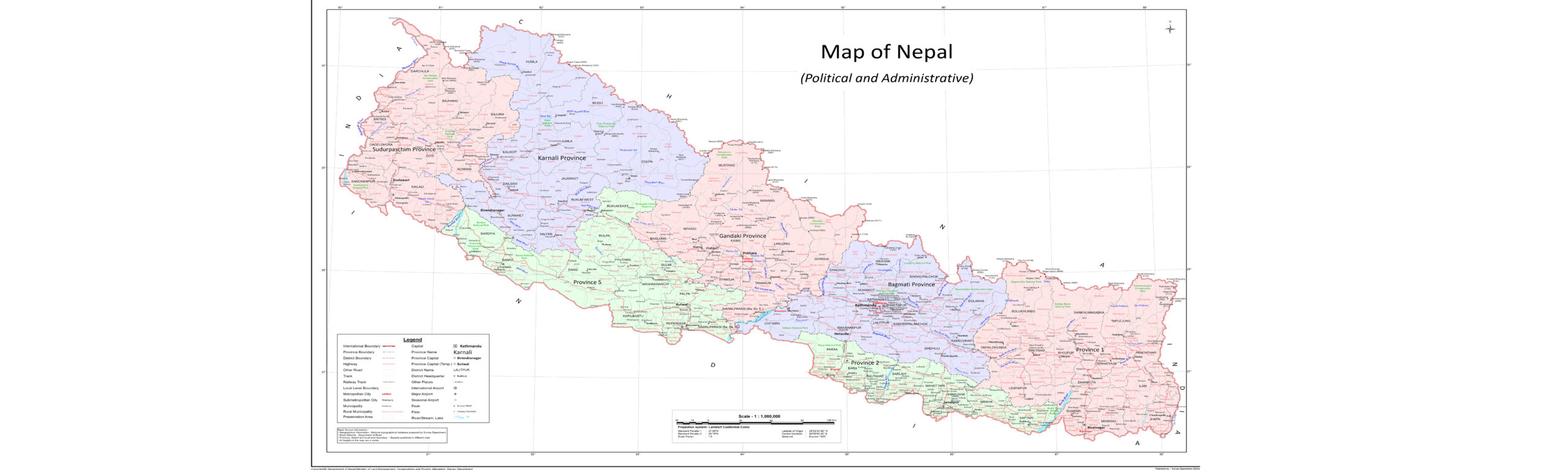
India’s northeastern territories depend largely upon a geographical lifeline known as the Siliguri Corridor. This passage, measuring barely 22 kilometres at its narrowest point, represents vulnerability incarnate. Should adversaries gain control over this terrain, India would suffer losses extending far beyond territorial, and the nation would haemorrhage an integral component of its civilisational identity.
The Ancient Art of Survival
“Nepal is like a yam between two boulders; we must be careful not to be crushed.” King Prithvi Narayan Shah, 18th Century
This was far more than poetic flair. It was a survival manual for a small Himalayan state wedged between much larger powers. Long before modern strategists spoke of great power competition, the rulers of the Himalayas had already mastered a delicate craft: balancing the interests of rival empires, playing them off one another, and preserving autonomy without openly defying either side. Shah’s words distilled a philosophy of resilience that would guide Nepal and its neighbours through centuries of shifting geopolitics. Simultaneously, Bhutan’s leadership developed what contemporary observers might term “strategic obscurity”, maintaining sufficient relevance to matter while preserving enough distance to endure. These weren’t fragile entities capitulating to imperial pressures. Instead, they represented sophisticated political systems that grasped something frequently overlooked by modern strategists: occasionally, genuine strength manifests through apparent vulnerability while quietly manoeuvring between titans.
The Colonial Inheritance That Won’t Die
“The buffer must be strong enough to resist being swept away, yet not so strong as to threaten its protectors.”
British surveyors along the northern rim of the subcontinent were doing much more than drawing maps. Every line they etched was part of a larger design, a defensive screen meant to shield against Russian advances from Central Asia and Chinese influence spilling over the Himalayas. Agreements such as the Treaty of Sugauli (1816), Sinchula (1865), and Punakha (1910) were not mere diplomatic signatures on parchment. They were carefully crafted instruments for building a layered security buffer around India’s vulnerable mountain frontiers. The irony of history becomes evident after 1947. When the British left, India didn’t discard these colonial frameworks; instead, it carried them forward, often with even greater resolve. The Indo-Bhutan Treaty of 1949 and the Indo-Nepal Treaty of 1950 were not simply revisions of earlier accords; they were India’s way of signalling its intention to inherit and actively manage the strategic architecture the Raj had put in place. In effect, independent India stepped seamlessly into the “Great Game,” armed with the very playbook it had once resisted.
Here’s where historical irony emerges following Britain’s 1947 departure: India didn’t merely inherit these frameworks; it embraced them with zealous conviction. The 1949 Indo-Bhutan accord and the 1950 Indo-Nepal agreement weren’t simple updates to colonial arrangements; they represented India’s emphatic declaration of intent to continue the great game using inherited rulebooks. The fundamental problem? Global dynamics had evolved dramatically, yet the operational playbook remained frozen in time.
“We inherited the British Raj’s fears along with its assets; sometimes it’s hard to tell which burden is heavier.”
The Narrow Gate to National Unity: Anatomy of a Vulnerability
“If you want to understand Indian foreign policy, start with a map of the Siliguri Corridor and work backwards.”
Consider the nightmares that regularly disturb Indian strategic planners’ sleep. The Siliguri Corridor, colloquially termed the “Chicken’s Neck”, represents the geographical manifestation of India’s most profound paranoia crystallised into concrete policy frameworks. Envision trying to connect cerebral functions to bodily extremities through a drinking straw, and you’ll understand India’s predicament. This narrow passage serves as the exclusive link between mainland India and its dynamic, resource-rich, yet occasionally turbulent northeastern regions. It transcends simple transportation bottlenecks; it constitutes a civilisational pressure point.
Every Chinese Road construction project across Tibetan territory, every Nepalese infrastructure development potentially supporting military logistics, every boundary disagreement within Bhutan, all reverberate through this constricted passage. The 2017 Doklam confrontation wasn’t fundamentally about an obscure plateau; it was about ensuring this vital artery remained unobstructed.
When Rocks Become Headlines
“In modern warfare, the most important battles are often fought over places no one can pronounce.”
Doklam delivered the international community a masterclass in contemporary conflict that military institutions continue to analyse. During an era characterised by hypersonic weaponry and cyber warfare, national destinies can still hinge on controlling windswept highland territories that most people couldn’t locate on a map. For seventy-three consecutive days, Indian and Chinese military personnel maintained tense standoffs over what essentially amounted to road construction privileges. However, all participants understood the genuine stakes: Chinese power projection into this tri-junction area would fundamentally alter the regional strategic equilibrium.
The confrontation concluded with diplomatic face-saving across all parties, yet satellite reconnaissance reveals contrasting realities. Chinese construction activities within the disputed area have persisted, merely adopting lower profiles. This exemplifies mastery of grey-zone warfare—altering ground realities without provoking confrontations that attract international media attention.
“We resolved the crisis publicly while continuing the competition privately, classic 21st-century diplomacy.”
– Regional security expert, 2018
The New Great Game: Infrastructure as Warfare. China’s Silk Road Offensive
“Give me control of a nation’s infrastructure, and I care not who makes its laws.”
– Adaptation of Rothschild’s banking maxim for the BRI era.
While many Western analysts obsess over tanks, jets, and troop deployments, Beijing has been waging a quieter contest. Its weapons are excavators, fibre-optic cables, and hydropower dams. The Belt and Road Initiative is not simply about moving goods; it is about reshaping the strategic wiring of entire regions. In Nepal, Chinese projects do more than lay concrete. They create long-term dependencies. The planned Lhasa–Kathmandu rail link is not only about transporting freight; it is about reorienting Nepal’s gravity away from New Delhi and toward Beijing. Each highway funded by Chinese banks, every telecom upgrade, every hydro plant represents a future decision Nepal’s leaders will have to make under the shadow of Beijing’s leverage. Infrastructure, in this sense, becomes the stealthiest form of power—hardly visible until one tries to unplug.
“We aren’t just laying tracks and pipes; we’re building the groundwork for the next Century of cooperation.”
New Delhi’s reply has been urgent, though not consistently smooth. Classic aid programs have been retooled into what might be called connectivity diplomacy, using roads, pipelines, and railways to weave tighter bonds with neighbours.
Projects like the Jayanagar–Bardibas railway, the Motihari–Amlekhgunj fuel pipeline, and smaller regional works are part of this strategy. But India’s democratic system adds friction: projects move through public debates, environmental hearings, and legal reviews. China’s state-driven model often finishes jobs before India has completed its paperwork. This contest pits speed against legitimacy. As one Indian analyst remarked, democracy may be messy, but its outcomes last longer.
Nepal’s Political Crosscurrents
“Anti-India rhetoric wins votes in Nepal, but pro-India ties bring the money.”
Nepal’s politics often look contradictory. Campaigns frequently ride on anti-Indian slogans, yet when it comes to trade, jobs, and relief in crises, Kathmandu leans on New Delhi. The Madhesi issue complicates things further: these southern communities, with roots in India, feel culturally closer to the border than to the capital. When they push for greater rights, India risks charges of interference by supporting them, while silence risks being seen as abandonment. The 2015 blockade captured this dilemma perfectly. India’s tacit support for Madhesi concerns was interpreted in Kathmandu as economic warfare. Fuel lines dried up, hospitals ran short of supplies, and resentment grew. Beijing saw an opening—and filled it.
Bhutan’s Balancing Act
“Gross National Happiness isn’t just philosophy; it’s a survival strategy.” Bhutanese official, 2023
Bhutan is a different case altogether. It has modernised without losing identity, democratised while keeping its monarchy, and welcomed the world while keeping China at arm’s length. Gross National Happiness may sound soft, but it is a sophisticated framework that includes cultural pride, environmental stewardship, and social balance, allowing Bhutan to resist external pressures while aligning naturally with India. But a generational shift is coming. Younger Bhutanese, shaped by global education and digital media, are not instinctively wary of China. For India, the challenge is clear: remain relevant to a generation that asks what New Delhi can deliver today, not what it did for their parents.
Climate as Strategy
“The Himalayas don’t respect borders; climate change is forcing cooperation”
The mountains themselves are becoming strategic actors. Glaciers retreat, monsoons grow unpredictable, and seismic risks increase. These are not just environmental problems; they are geopolitical stress tests. The 2015 Nepal earthquake showed both sides of the coin. India’s Operation Maitri won praise for its speed and scale, proving its ability to project humanitarian power. Yet disputes over aid distribution also revealed how quickly goodwill can sour when sensitivities are overlooked. Climate shifts are creating new, unavoidable interdependencies: disaster relief, river management, and energy security will demand cooperation, even among rivals.
The Hydropower Game
“Water is Asia’s oil, and we are sitting on a gold mine.”
Bhutan already sells most of its electricity to India, creating a deep interdependence that benefits both sides. Nepal, however, has barely tapped its immense hydro potential. If developed, it could transform the regional energy market. But Beijing has moved faster, offering turnkey packages, finance, build, and operate, while Indian firms lag. The issue is not only who builds the dams, but who controls them once the turbines spin. As one analyst warned, the same dam that lights your homes today could one day dim them, depending on whose switchboard it is connected to.
The Digital Frontline
“The real battles are happening on screens, not on summits.”
In today’s Himalayas, influence isn’t just fought on mountain passes; it plays out on smartphones. Chinese phone brands dominate markets, Chinese platforms attract youth, and Chinese e-commerce rewires local economies. India counters with its own soft-power edge: Bollywood, cricket streaming, digital education, and financial inclusion tools like UPI. The contest for influence is as much about apps and entertainment as it is about geography.
However, digital influence proves fragile. Single controversial films, visa disputes affecting students, or technical glitches in cross-border digital payments can undermine years of soft power cultivation. Digital domains reward agility over tradition, potentially favouring China’s centralised cultural projection approaches.
“Culture used to travel on horseback; now it travels at the speed of WIFI.” – Media studies professor on changing soft power dynamics.
Threading the Needle: What the Future Sees
“True partnership means accepting that your friends will sometimes make choices you wouldn’t make yourself.”
Optimal scenarios involve India’s Himalayan neighbours evolving into genuine partners rather than anxious dependents. This would require India to embrace “strategic patience”, accepting that an authentic partnership occasionally means tolerating disagreeable choices. Mature Nepal relationships might involve India accepting Chinese infrastructure projects while ensuring they complement rather than replace Indian connectivity. With Bhutan, it might mean supporting gradual diplomatic normalisation with China while maintaining special defence relationships.
The Pessimistic Path
“Influence, like water, always flows downhill, and right now, the gradient favours Beijing.”
Nightmare scenarios involve cascading influence losses, leaving India isolated within its own neighbourhood. Chinese economic penetration creates political dependence, leading to strategic realignments that eliminate Indian access to traditional partners. In such scenarios, Nepal becomes a willing Chinese regional strategy partner, Bhutan reluctantly accommodates Chinese territorial demands, and India defends the Siliguri Corridor against increasingly unfavourable circumstances.
The Likely Reality
“Perfect alignment is the enemy of workable partnership; we’ll take messy cooperation over elegant isolation any day.”
Truth typically exists between extremes. India’s Himalayan relationships will likely remain complicated, occasionally crisis-prone arrangements. Success lies in managing contradictions rather than resolving them, accepting imperfect alignment while preventing complete estrangement.
Lessons from the Roof of the World: The Paradox of Small State Power
“Size matters less than skill in the great game. David didn’t beat Goliath through brute force.”
Nepal and Bhutan have demonstrated crucial 21st-century power dynamics: being small doesn’t necessitate powerlessness. Both countries have extracted resources and concessions from major powers seemingly disproportionate to their size or strategic significance. Success lies in understanding the psychology of great power. Both India and China require neighbourhood success stories, examples demonstrating how their rise benefits everyone. This creates opportunities for smaller states to position themselves as model partners while quietly maximising leverage.
The Limits of Traditional Alliance Structures
“In a multipolar world, exclusive loyalty is a luxury most countries can’t afford.”
Himalayan experiences suggest traditional alliance and alignment concepts may be obsolescing. In interdependent environments, countries can maintain security partnerships with one power while pursuing economic relationships with another.
This doesn’t represent betrayal or hedging; it represents adaptation to a multipolar reality in which different powers excel in different domains. Major power challenges involve learning to accept partial alignment rather than demanding exclusive loyalty.
Conclusion: The Art of Strategic Patience
“In the mountains, those who rush usually fall; patience is not just a virtue, it’s a survival skill.”
India’s Himalayan challenge ultimately concerns questions of temperament. Can rising powers exercise influence without demanding subservience? Can they accept that genuine partnership sometimes involves tolerating unpreferred outcomes? Mountains possess their logic, favouring patience over pressure, relationship-building over transactional approaches, and cultural sensitivity over strategic absolutism. In Himalayan contexts, excessive effort often leads to failure, while understanding timing and movement opportunities frequently succeeds. The dragon may be ascending, but the situation is far from concluded. In these Himalayas, India’s future will be determined not by how tightly it constrains its neighbours, but by how skilfully it assists them in navigating upcoming storms while maintaining common ground.
Over millennia, the Himalayas have witnessed empires rise and fall. They reward wisdom and not arrogance. In learning to interpret their lessons, India may discover that the most significant strategic victories emerge not through dominance but through patient cultivation of trust across generations.
“The Himalayas have taught us that the strongest structures are built not from steel and concrete, but from mutual respect and shared dreams.”
The Himalayas remain what they have always been: character tests as much as strategy examinations. In passing these tests, India will demonstrate not merely regional credentials but global leadership fitness in an age when soft power matters as much as hard power, and wisdom counts more than wealth.