Why the current pause reflects deeper miscalculations and a rising Iranian leverage.
INTRODUCTION
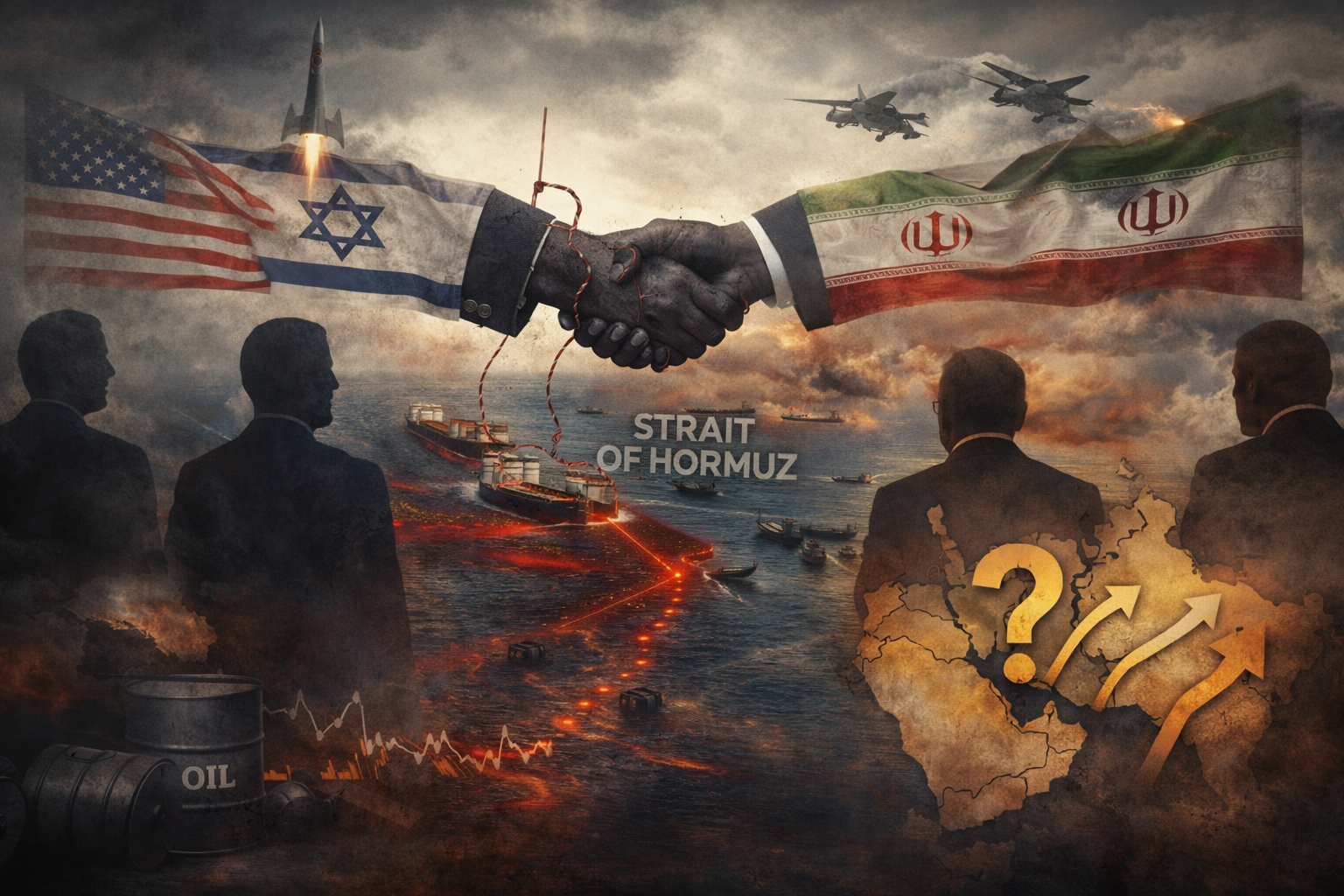
The newly announced two-week ceasefire, promoted by the United States, is billed as stabilising, but it points to a deeper reality. Tactical pauses do not hide political and strategic miscalculations. What began as a targeted kinetic action during direct negotiations now reveals the limits of force in the absence of a clear political endgame.
This conflict began with miscalculated escalation. Israel, guided by its security strategy, involved the United States in strikes targeting Iran’s top leadership and vital capabilities. Militarily, this seemed successful: high-value targets eliminated, command structures disrupted. But wars are judged by political outcomes—not just tactical gains. By that standard, this operation has faltered.
The strikes blurred the line between leadership and population. Civilian deaths, including children, caused moral and political backlash. Rather than isolating Iran’s regime, the attacks bolstered its legitimacy and international sympathy. Iran was politically strengthened, not weakened.
The stated objectives were ambitious. Regime change, control over nuclear facilities, and a shift in Iran’s strategic posture. None of these has been achieved. The leadership remains intact in its core structure. The regime has not collapsed. The nuclear question remains unresolved. In fact, the outcome has been the opposite. Iran has emerged with a stronger strategic lever.
GEOGRAPHY IS THE KEY
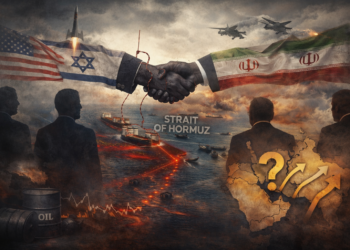
That lever is not merely nuclear capability. It is geography. The Strait of Hormuz has now been internalised by Iran as its most decisive instrument of power. Earlier, its disruptive potential was acknowledged but not fully operationalised as a central doctrine. This conflict has changed that thinking. Iran now recognises that control over the Strait of Hormuz can bring the global economy to the negotiating table faster than any missile or nuclear device.
This is the most critical shift. The world was debating enrichment levels and inspection regimes. Iran has moved the conversation to energy chokepoints and economic paralysis. That is a far more powerful bargaining position.
The two-week ceasefire window is therefore not a resolution. It is a test. Iran has reportedly presented a 10-point framework for negotiations. Whether this becomes a workable roadmap or merely a face-saving exercise for the United States administration remains uncertain. What is certain is that the balance of leverage has shifted.
The Middle East now finds itself in a deeply uncomfortable position. Many regional states did not choose this conflict, yet they are bearing its consequences. Countries that have built their identities as stable business and investment hubs are now exposed by their security arrangements. American protection and military presence, once seen as a guarantee of safety, have turned into potential triggers for retaliation.
This contradiction cannot continue. The region must reassess its approach. Stability in West Asia cannot be outsourced to distant powers whose priorities shift with their own strategic calculations. The immediate neighbours of Iran have the highest stakes, yet they have been largely absent from the negotiation framework.
Direct engagement with Iran is no longer optional. It is necessary. The Strait of Hormuz is not a temporary pressure point. It is a permanent geographical reality. Iran will not relinquish control over it, irrespective of the regime in power. This is not about ideology. It is about the continuity of geography and civilisation. No nation gives up its natural strategic advantage for others.
At the same time, expectations from Iran must also be grounded in realism. You cannot demand unilateral disarmament from one country while others retain and expand their military capabilities. The perception of threat from Israel remains deeply embedded in Iranian society. Unless there is a broader regional security framework that addresses these concerns, calls for Iran to abandon its defence posture will not succeed.
The comparison with North Korea is misplaced. Iran is not isolated in the same way. It is integrated into global energy flows and holds the capacity to disrupt them. Any attempt to push Iran into a corner will only accelerate its strategic defiance.
NO FOREIGN TEMPLATE
Another critical lesson from this conflict is the failure of external templates. The Gaza model applied by Israel and the pressure strategies used by the United States in other regions have not translated effectively here. Instead, they have strengthened Iran economically through rising oil dynamics and politically through increased domestic and international sympathy.
The longer this situation continues, the more it benefits Iran’s strategic positioning. It has lost key individuals but gained leverage, revenue, and a narrative advantage. That combination is far more consequential.
The path forward is complex but clear in principle. Regional ownership of security must be restored. The Middle East must engage Iran directly, define mutual red lines, and create mechanisms for coexistence. Leaving this process to distant intermediaries, including countries with limited influence over Iran’s core interests, will only prolong instability.
UNRELIABLE NEGOTIATOR
While Pakistan’s role in facilitating a temporary ceasefire has earned it visibility and some diplomatic credit, it would be a strategic miscalculation to view it as a sole or sufficient interlocutor for long-term stability in the Middle East. Pakistan does not carry the same depth of leverage across the broader region, nor does it command balanced trust among key stakeholders, including India. Any durable peace framework must recognise India’s centrality, given its demographic footprint in the Gulf, its long-standing civilisational and diplomatic ties with Iran, and the direct spillover effects that Middle East instability has on South Asia and India’s foreign policy calculus. Excluding India while over relying on Pakistan risks creating an incomplete and fragile negotiation architecture that cannot sustain long-term regional balance.
CONCLUSION
This ceasefire, therefore, is not peace. It is a fragile pause between two competing futures. One leads to a prolonged standoff in which mistrust deepens and strategic competition intensifies. The other requires difficult, direct, and honest engagement with Iran as a central regional actor.
The choice will determine whether this moment becomes a turning point or just another pause before the next escalation.