


Ministry of Home Affairs’ Review Petition Rejected, Leaving a Two-Year Window to Whittle Down Deputation Posts Across CAPFs.
Review Petititons’s Summary Rejection With Wide Ramifications
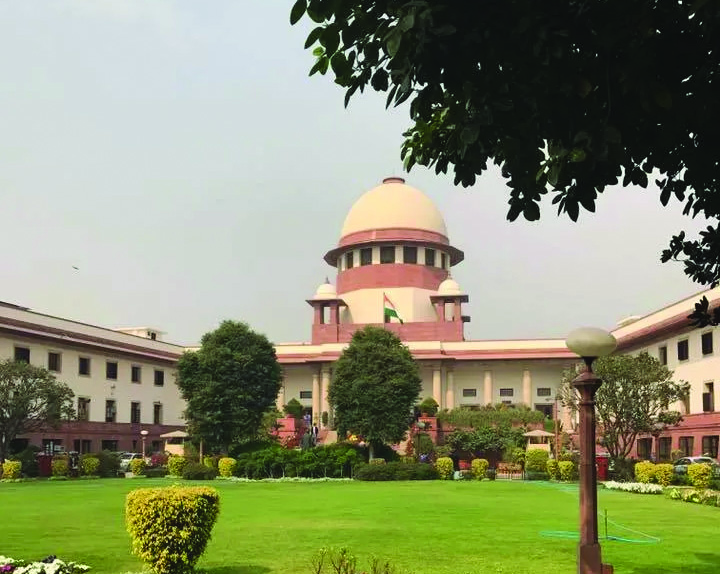
The Supreme Court’s order dated 28 October 2025, sitting by circulation, dismissed the Ministry of Home Affairs’ review petition in Union of India & Ors. v. Sanjay Prakash & Ors. (C.A. No. 13104/2024; Diary No. 36887/2025). The Apex Court condoned the delay, declined an oral hearing, and disposed of the pending interlocutory applications, leaving the impugned judgment intact. In administrative terms, the order is brief; in strategic terms, it may prove anything but. Over the next two years, unless corrected through legislative clarity, the ruling’s practical effect will be to harden organisational silos across the Central Armed Police Forces (CAPFs), erode the claim of the IPS to remain the premier Police service of the country, and weaken precisely the inter-service coordination on which India’s internal security architecture depends.
The Legal Backstory
The dispute has long revolved around leadership, promotion and control of posts in the CAPFs—BSF, CRPF, ITBP, SSB, CISF, and Assam Rifles—traditionally open to deputation by Indian Police Service (IPS) officers. Direct-entry cadre officers in these forces argued that a systematic predominance of deputed IPS officers at senior ranks stunted their career progression. The Apex Court agreed in material part, directing that command posts be substantially ring-fenced for cadre officers and curbing the long-standing deputation pipeline from the IPS. The Centre’s review petition sought to recalibrate, not erase, that balance by highlighting the need for operational coordination. With the review now dismissed, the earlier balance remains, and the space for inter-cadre movement—especially from the IPS—narrows further.
What the Court Intended—and What It Missed
The Supreme Court’s instinct—to do justice to cadre officers who have devoted entire careers inside the CAPFs—is understandable. No serious observer can deny the need for fair, predictable career paths and for eliminating ceilings that feel externally imposed. Yet the judgment’s practical consequence, amplified by today’s dismissal of the centre’s review petition, is to treat leadership staffing as a closed-circuit problem of internal equity. Law and order in India is not a closed circuit. It is a chain—and it is only as strong as the quality of its links.
A narrowly legal fix to promotions has morphed into a structural redesign of how India manages interoperability across the Police, paramilitary, and intelligence services. The question is not whether cadre officers deserve timely progression—they do. The question is whether that aim can be achieved without severing the connective tissue that enables the system to function in real time.
Coordination Is a Capability, Not a By-product
Coordination is not an incidental virtue that appears once a hierarchy is tidy. It is a rugged capability that must be designed, staffed and relentlessly rehearsed. India’s internal security theatre—Left-Wing Extremism districts, border belts, insurgency-affected pockets, cyber-crimes and economic offences and megacity counter-terror grids—requires daily synchronisation among State Police (constitutionally the first responders), CAPFs (the Centre’s deployable muscle), and specialised agencies (NIA, IB, R&AW, and military intelligence). When personnel flows and career incentives across these institutions are throttled, coordination decays first at the seams: information lags, SOPs diverge, and trust suffers.
The IPS Glue: Training, Cohorts and a Lingua Franca
Whatever the sins laid at its door, the IPS has historically served as a cross-cutting multi-disciplinary network. Officers from different States and Union Territories share formative training at the National Police Academy in Hyderabad; they progress through standard mid-career courses; and they maintain cohort ties that operate as an informal, nationwide hotline when the situation is fluid. Those bonds, joined to a doctrinal lingua franca of criminal law, public order and investigation, have been crucial in stitching together State Police and central units in moments of pressure.
Damming this flow entirely—or even substantially—into the CAPFs risks losing a lubricating layer that cannot be conjured overnight. It is precisely because the ITBP on the Himalayan frontier and the BSF on international borders interact constantly with State Police, whose top ranks are led by IPS officers, that deputation-driven cross-pollination matters. Remove the human bridges, and you will feel it in slower responses, duplicated briefings and frayed liaison during high-tempo operations.
Federal Ground Reality at the Borders
Consider the federal reality of border States: international smuggling routes, drone-dropped consignments, including narcotics, infiltration attempts, and communal flashpoints seldom respect neat jurisdictional lines. BSF and ITBP units rely on district Superintendents of Police for local intelligence, swift custody decisions, and prompt legal processes. Conversely, State chiefs look to CAPF commanders for surge capacity and specialised kit. When senior leadership on either side has lived and learned in the other’s world—often thanks to deputation—that conversation is crisp and candid. If leadership on both sides becomes insular and home-grown, coordination takes longer, and in operational art, seconds matter.
The Slippery Slope: Silos in IB, R&AW and Beyond
A predictable and worrying consequence of cordoning off CAPF leadership is the knock-on expectation that the Intelligence Bureau and R&AW ought likewise to be “pure-cadre” organisations. Some already float the idea. If accepted, it would splinter the already delicate information ecosystem. IB’s value lies in its embeddedness with State Police and its ability to whisper into multiple ears—from SPs to DGPs to MHA desk officers. R&AW must fuse inputs that ultimately intersect with domestic counter-terror grids. Military intelligence has its own interests. If each system decides that its leaders must be raised entirely “within the house,” India will be left with a collection of excellent but isolated fortresses—strong walls, weak bridges.
National Interest Demands Interoperability
The gentle critique of today’s outcome is, therefore, not ideological. It is operational. National interest requires interoperability more than ever. The theatre commands envisaged for the armed forces are premised on jointness; the internal security side needs an analogous philosophy. That does not mean CAPF cadre officers should be held back. It implies that progression must be expanded without abolishing avenues of inter-service deputation, which keep doctrines aligned and relationships warm.
A Proportionate Remedy: Promotions Without Partitions
There is a way to square the circle. First, recognise the entry equivalence honestly: direct recruits into CAPFs at the Assistant Commandant level are broadly equivalent to a Deputy Superintendent of Police, not an IPS probationer. Career ladders should reflect this, offering more rungs and faster time scales for early promotions based on rigorous assessments, and command opportunities that lateral entrants do not eclipse. Second, preserve a calibrated deputation window from the IPS at specified grades and roles: training institutions, doctrine and standards, operations rooms, state-CAPF liaison posts, and specific high-pressure commands where cross-jurisdictional coordination is paramount.
Third, institute joint professional education for internal security: a mandatory mid-career course that brings together IPS, CAPF, IB, NIA, and State Police leaders for scenario-based training; common staff exercises culminating in a single operational plan; and rotational tenures through liaison billets in State headquarters and frontier formations. Graduates should earn a “joint operations” qualification, which will serve as a prerequisite for select command posts. In short: reward those who learn to work across the system, not only those who rise within a silo.
Guardrails for Merit and Accountability
To address the fairness anxieties that propelled the litigation, a transparent selection architecture is essential. Deputation should be limited, role-specific, merit-screened, and subject to clear term ceilings and uncompromising return-to-parent-cadre rules. Performance in field coordination—measured through after-action reviews, joint audits and peer scoring by State Police and CAPF counterparts—should determine whether a deputed officer’s tenure is extended or cut short. This converts deputation from an entitlement into an accountable instrument for jointness.
The Two-Year Horizon: What Happens Next
Over the next two years, three practical consequences are likely to occur if no changes are made. First, pipeline disruption: as the current cohort of IPS officers cycles out of CAPF roles without replacement, the informal phone-a-friend network that oils joint operations will thin. Second, doctrinal drift: without shared training and personnel circulation, standard operating procedures will diverge, complicating everything from evidence handling to border incident response. Third, liaison fatigue: State Police and frontier forces will still meet daily, but their leaders will share fewer formative experiences, slowing the pace and reducing candour in decision-making during crises.
Mitigations are possible even within today’s legal boundaries: MHA can immediately expand mixed liaison cells in border States; mandate quarterly joint table-top exercises; and create a single incident-reporting format across State Police and CAPFs. But these are palliatives. Structural coherence needs a structural fix.
Why an Ordinance May Be Necessary
Ordinarily, one would prefer Parliament to legislate at leisure. Internal security, however, resents vacuums. A narrow, time-bound ordinance could restore a calibrated deputation channel and explicitly create joint posts while a comprehensive Bill is debated. Such an ordinance should (a) specify role baskets—for example, training, doctrine, inter-agency liaison and designated operational commands—open to IPS deputation; (b) cap the proportion of such posts; (c) mandate joint qualification for incumbents, whether IPS or CAPF; and (d) carry a sunset clause of 24 months, forcing Parliament to decide the permanent architecture. This approach respects the Court’s concerns for cadre equity while addressing the operational coordination that the Court’s judgment, perhaps inadvertently, has imperilled.
Meeting the Equity Argument Head-On
The fairest answer to cadre frustration is more opportunity, earlier, not the closure of bridges. Recognise entry equivalence candidly: CAPF direct recruits start broadly at the DSP-equivalent level. Build a denser promotion ladder through the junior and middle rungs; ring-fence substantial command postings for cadre officers; and invest in advanced leadership and technical programmes—including mountain warfare for ITBP, riverine and drone interdiction for BSF, industrial security cyber labs for CISF, and urban counter-terror craft for CRPF. Create prestigious specialist tracks (intelligence, logistics, air ops, communications) that culminate in apex-grade roles so a high-performing cadre officer can reach the top without needing to be replaced by a lateral entrant.
Anticipating and Answering Objections
Objection: “Home-grown leadership ensures culture and continuity.”
Answer: Continuity is vital—but so is cross-pollination. A limited number of joint posts does not dilute culture; it injects an external perspective exactly where interfaces are thickest.
Objection: “Deputation advantages IPS over CAPF officers.”
Answer: Not if the proportion is capped, the billets are narrowly defined, and performance is audited. Moreover, reciprocity should be explored: create reverse-flow fellowships for CAPF officers to lead State Police districts or head State–CAPF fusion cells, so that experience flows in both directions.
Objection: “Coordination can be achieved through SOPs alone.”
Answer: SOPs are necessary but never sufficient. In real crises, trust precedes text. People who have trained and served together will coordinate faster than strangers holding the same binder.
Federalism at the Frontier
States remain constitutionally responsible for public order. Border management, narcotics interdiction, and infiltration response all converge on the district SP’s desk. CAPFs bring the scale and specialised capability that many States lack. The best results appear where senior leaders have lived in both realities and can translate instantly between them: the IPS superintendent who has served in a CAPF battalion, the CAPF commander who has embedded with a state’s special branch, and the IB officer who has done a district tour. Erecting personnel walls ensures slower translation—and in a shoot-and-scoot drone drop or a communal flare-up, translation time is the difference between containment and escalation.
A Better Deal for CAPF Cadre—Without Closing the System
If we are serious about honouring CAPF careers, we should invest in what actually matters to officers in the arena: predictable promotion boards; hardship pay that recognises high-altitude and high-risk postings; family-friendly rotation policies; sabbaticals for advanced study; and lateral pathways into technology agencies (signals, UAVs, cyber forensics) that bring new prestige and skills back into the forces. None of this is inconsistent with retaining a modest, purposeful IPS deputation window. Instead, it complements it by lifting the waterline across the system.
A Mild but Firm Word on the Court’s Approach
The Supreme Court has plainly sought to remedy perceived inequity. Yet treating leadership staffing as a zero-sum ledger between cadres has underweighted a public-interest variable that does not fit neatly into promotion charts: jointness. Today’s dismissal of the review application cements that underweighting. Respectfully, the judiciary’s equilibrium would be more credible if paired with an explicit acknowledgement that India’s internal security relies on interoperability and that staffing rules must enable, rather than frustrate, this end. The Constitution’s promise of public order is not vindicated by equity alone; it is delivered by systems that can think, decide and act together.
In summary: Keep the Bridges Open
India cannot afford an internal-security architecture where great institutions stand proud but apart—CAPFs guarding borders, State Police grappling with local turbulence, IB and R&AW running parallel channels, and military intelligence humming in a separate register. The price of such elegance is friction, duplication and delay. The better course is humbler and harder: protect equity and preserve connectivity; reward talent and insist on joint qualifications; open more doors within forces even as you keep a few carefully chosen bridges between them.
The Supreme Court’s dismissal offers clarity but not comfort. Over the next two years, the Centre should act—through a narrow, sunsetted ordinance followed by a deliberative statute—to restore calibrated deputation, build joint professional education, and expand fair pathways for CAPF cadre. Let us fix ceilings without building walls. Coordination is not a luxury; it is a matter of national interest. This is not about the hegemony of the IPS—it is about India’s sovereignty, unity, and integrity as a democratic republic.
(This article first appeared on the author’s blog, the KBS Chronicle.)