

Wednesday, February 4, 2026
  • Home
  • About Us
  • Refund Policy
  • Privacy Policy
  • Terms and Conditions
  • Advertise With Us
  • Contact Us
  • Login
  • Register
SUBSCRIBE
Welcome to Saviours Voice of Khaki
Advertisement
ADVERTISEMENT
  • Foreign Policy
  • Internal Security
  • Policing
  • Border Management
  • Corrections
  • Disaster Management
  • Interviews
  • General
No Result
View All Result
  • Foreign Policy
  • Internal Security
  • Policing
  • Border Management
  • Corrections
  • Disaster Management
  • Interviews
  • General
No Result
View All Result
Welcome to Saviours Voice of Khaki
No Result
View All Result
Home Border Management

Bangladesh Elections & Aftermath

Somesh GoyalbySomesh Goyal
December 21, 2025
in Border Management, Foreign Policy, General, Internal Security
Reading Time: 13 mins read
0
0
Bangladesh Elections & Aftermath
Share on FacebookShare on TwitterShare on LinkedInShare on WhatsApp

The current situation in Bangladesh constitutes the most severe strategic challenge to India since the 1971 War of Liberation. With its enduring ally, Sheikh Hasina, deposed, India stares at dealing with heightened security and geopolitical challenges and a radicalised and pro-Pakistan regime. 

INTRODUCTION

Three countries in India’s immediate vicinity are scheduled to hold elections in the coming weeks and months. Myanmar, which has been devastated by a prolonged civil war, is set to conduct elections shortly. Bangladesh and Nepal will elect new governments in February and March, respectively. Both Bangladesh and Nepal have recently experienced student-led movements that contributed to the collapse of their elected governments.

This essay analyses the upcoming elections in Bangladesh and their potential outcomes, which are likely to have significant implications not only for Bangladesh but also for India and the broader region. These elections represent a critical contest among democratic survival, radical recrudescence, and geopolitical realignment. As the Shashi Tharoor-headed Parliamentary Committee notes, the developments in Bangladesh pose the “greatest strategic challenge” to India since the Liberation War of 1971.

NO INCLUSIVE ELECTIONS

The Bangladeshi Election Commission has scheduled elections to form a new government for February 12, 2026. As if taking a cue from the ruling junta in Myanmar, which dissolved Aung San Suu Kyi’s political party, the National League for Democracy (NLD), Sheikh Hasina’s Awami League (AL), which governed the country from 2009 to 2024, has been barred from all political activities. By banning the Awami League, the interim government and the election commission have effectively disenfranchised one-third of the electorate, seen as committed AL cadres. While the interim government and leaders of the agitation may object to Sheikh Hasina’s governance style due to long incumbency, centralised power, and perceived human rights violations, denying political participation to a significant portion of the population is fundamentally undemocratic and indicative of authoritarian or dictatorial tendencies.

Sans the Awami League, the Bangladesh Nationalist Party (BNP) and Bangladesh Jamaat-e-Islami (BJI) are the two leading contenders to govern the country in the upcoming elections. BNP and the National Citizens Party (NCP) are collaborating in the elections, albeit without any formal agreement. The NCP was established in February 2025 by Students Against Discrimination and the Jatiya Nagorik Committee, in the aftermath of the July uprising, as the first student-led political party in Bangladesh’s history to present a “third option” to the voters.

According to a survey published by the US-based International Republican Institute (IRI), if the elections are held next week, the BNP will get only 33 per cent of the votes and the Jamaat around 29 per cent. This also predicts 6 per cent vote for the National Citizens Party (NCP), 5 per cent for Islami Andolan Bangladesh, and only 4 per cent for the Jatiya Party (JP). Hypothetically, BNP and Jamaat are running neck and neck. NCP’s support makes BNP a strong contender. If Khaleda Zia’s health further deteriorates, her party is likely to get more sympathy votes, giving the BNP a decisive edge over its political adversaries.

However, without an inclusive electoral process, the election risks being perceived as illegitimate, reduced to a contest among various radical Islamist parties. This scenario raises serious concerns regarding  the prospects for subsequent political stability, too.

Globally, student-led movements have often strengthened democratic values. In contrast, the recent regime change in Bangladesh appears to have facilitated the rise of a regressive, radical, and non-secular political ideology. It remains uncertain whether the younger generation genuinely advocated for such a regime or whether their movement was hijacked by radical and theocratic forces exploiting the political vacuum.
India, on its part, has said in an official statement that “we are in favour of peace and stability in Bangladesh and have consistently called for free, fair, inclusive and credible elections conducted in a peaceful atmosphere”.

WITHERING  SECULAR ETHOS

Bangladesh has long nurtured a syncretic culture. In fact, radical Islamist organisations like BJI were banned by the Hasina government, citing danger to national cohesiveness. However, the inclusion of known radical Islamist organisations like the BJI and other groups in the interim government, and the lifting of the ban on the BJI student wing, Islami Chhatra Shibir, and all associated organisations, immediately after the ouster of Hasina by the Muhammad Yunus-led interim government, strongly indicate an exclusionary ideological drift in Bangladesh. Other radical Islamist parties like Hizb-ut-Tahrir, Hefazat-e-Islam, and Al-Qaeda affiliate Ansarulah Bangla Team (ABT) have become very active, exploiting the vacuum in the political space created by the Hasina ouster.

Awami League cadres and networks have been systematically dismantled across the country, and secular voices have been suppressed. Freedom of the press is also under severe strain. The interim government, lacking an electoral mandate, has rapidly appointed Jamaat-aligned vice chancellors and administrators, thereby seeking to reshape the education system to promote radical ideologies and discourse.

In a worrying development, the Constitutional Reforms Commission has recommended removing the basic guiding tenets of secularism, socialism, and nationalism from the constitution.

The resurgence of ideological divisions, pro-Pakistan narratives, and extremist rhetoric signals a palpable departure from Bangladesh’s foundational secular and liberation-era principles.

SHEIKH HASINA’S TRIAL AND ANTI-INDIA TIRADE

Sheikh Hasina has been tried in absentia by the Bangladesh International Crimes Tribunal and sentenced to death on November 17, 2025, for committing crimes against humanity by her order to use drones, helicopters, and lethal weapons.  Other courts have also awarded decades of imprisonment and fines to Sheikh Hasina, her family members and close associates on several other counts.

There has been criticism in many sections of the human rights and legal bodies about the award of capital punishment to Sheikh Hasina, giving short shrift to the established dictum of audi alteram partem. The dictum “is a core principle of natural justice in criminal justice, demanding that every person affected by a legal decision gets a fair chance to present their case, challenge evidence, and defend themselves before any judgment is made, ensuring fairness, preventing arbitrary power, and upholding the right to a fair trial, which includes rights to notice, legal representation, and cross-examination”. (Wikipedia)

Some political analysts find uncanny similarity between the death sentence for Sheikh Hasina in Bangladesh and that of the Zulfikar Ali Bhutto saga from 1978 Pakistan. Both faced a questionable trial and death sentence after being unseated by the students’ revolution in Bangladesh, and Zia-ul-Haq led a coup in 1977 in Pakistan.

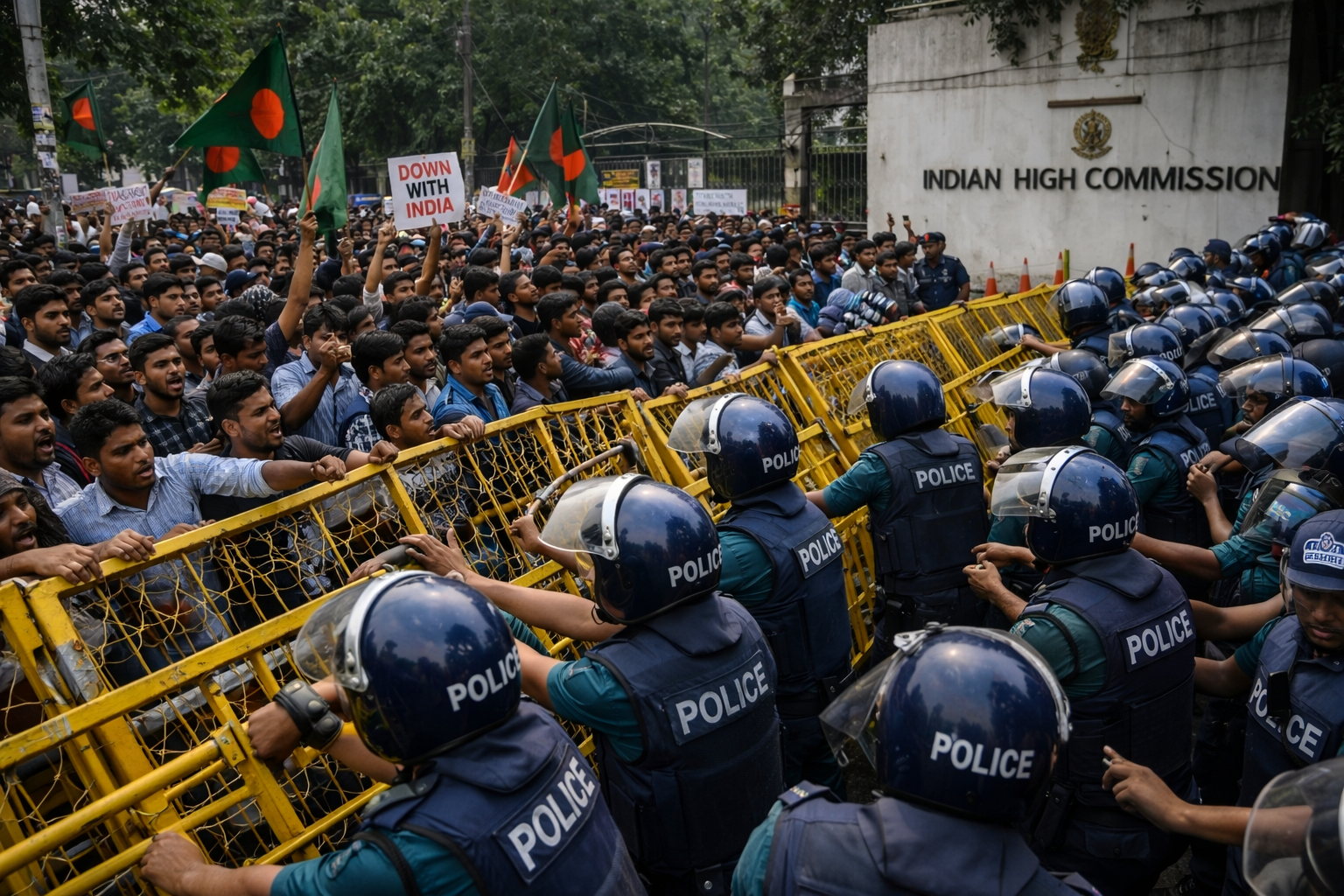
Several student groups have expressed their anger at the refuge provided by India to Sheikh Hasina despite an official request from Bangladesh to extradite her to face trial and sentence. Some of them, under the banner of July Oikiyo, have demonstrated in front of the Indian missions in Bangladesh, jeopardising the security of diplomats and other personnel. This threat has particularly increased after the death of a key student uprising protagonist and a candidate for the general elections, Sharif Osman Hadi, who was shot by unknown assailants as he launched his electoral campaign a day after the poll panel announced the general election date. He was airlifted to Singapore for treatment but succumbed to the injuries a week later. As a spokesperson for Inquilab Mancha, Hadi nurtured an anti-India stance. Some mischievous elements are peddling the narrative that his assailants have found safe haven in India.

The law and order situation is worsening as the rumour mill is working overtime and isolated incidents like the Hadi attack are given a communal and anti-India colour. There have been widespread cases of violence and stone pelting on media houses and even the residence of an Indian diplomat. In fact, the protestors indulged in arson in the offices of two respected newspapers, Prothom Alo and the Daily Star, in Dhaka. An Awami League party office and 32, Dhanmondi were ransacked. A Hindu factory worker in Mymensingh was lynched and set afire by the mob, sending shockwaves among the minorities. Anti-India slogans were heard in gatherings and processions by students at Dhaka University.

Forces inimical to India-Bangladesh friendship will surely fish in these troubled waters to sully the image of India by orchestrating more protests and street violence against the minorities before the elections. They will also exploit public anger to sabotage elections to preserve the present arrangement.

Most of the current angst against India stems from the shelter provided to Sheikh Hasina. The 2013 Extradition Treaty between India and Bangladesh delivers a framework for the extradition of offenders. But cases of political persecution, human rights issues, the standard of legal process, and sovereign discretion influence all such decisions. Articles 6 and 8 of the treaty provide guidance on this matter. India has repeatedly stated that credible evidence has not been shared with India on the events leading to the removal of Sheikh Hasina and subsequent violence.

SORDID LAW & ORDER – NEED FOR INTERNATIONAL ELECTION MONITORS
India’s concerns about the targeted violence of minorities in Bangladesh have remained unanswered. Between August 4 and 20, 2024, the Bangladesh Hindu Buddhist Christian (Aikio Parishad) Unity Council documented 2,010 incidents of attacks on minority communities and businesses across Bangladesh. An independent investigation by Prothom Alo identified 1,068 attacks in 49 districts during the same period. Indian Parliamentary Committee on External Affairs, in its recent report covering India-Bangladesh relations, has also expressed concern about the selective targeting of religious minorities, cultural institutions, and businesses in Bangladesh. The number of such incidents has declined significantly, but fears about Bangladesh’s capacity and willingness to uphold its constitutional commitment to the protection of minorities remain.

Asian Centre for Human Rights (ACHR) finds that the current law & order situation and available resources make free and fair elections in Bangladesh a far cry. There have been 281 killings and 7,698 injuries in political clashes from August 2024 to September 2025, as per a local NGO, Odhikar. The Bangladesh Police has recorded 3,509 murders from January to November 2025. There are instances of politically motivated extrajudicial killings by the Bangladesh Police, with 40 extrajudicial killings recorded from August 2024 to October 2025. At least 718 persons were lynched to death, including 41 police officers, from August 2024 to November 2025, including 637 mob lynching deaths from August 2024 to July 2025 and 81 mob lynching deaths from August to November 2025.

The problem of law & order is compounded by the availability of over 400,000 illegal firearms in circulation in Bangladesh in the hands of hardened criminals and rampaging gangs.

Thousands of people have been facing political persecution in the name of countering terrorism. At least 12,231 political activists were arrested in February 2025 alone under Operation Devil Hunt-1, which was launched on 8 February 2025. Another 4,232 political activists were arrested as of 18 December 2025 under Operation Devil Hunt-2, launched on 12 December 2025. Furthermore, by October 2025, an unprecedented 5,19,529 persons were implicated in 1,586 politically motivated cases. Such wholesale arrests point to violations of the human rights of a large number of political activists opposed to the radical Islamist ideologues guiding the interim government.

Of the 42,761 polling booths in Bangladesh, the Bangladesh Police has identified 8,746 polling centres as highly vulnerable, 16,359 as vulnerable, and 17,656 as normal. This vulnerability test, however, does not include the vulnerability of religious minorities in 97 constituencies and indigenous peoples, at least in three constituencies of the Chittagong Hill Tracts (CHT).

There is no surprise that ACHR has strongly advocated for the positioning of international election monitors to oversee the elections.

ECONOMIC HEADWINDS

Bangladesh is among the Least Developed Countries (LDCs). Its strong economic performance under the Sheikh Hasina government was set to lead Bangladesh to graduate from LDC status. However, since the fall of the Sheikh Hasina regime in August 2024, the Bangladesh economy has faced serious challenges, including stagnant investment, rising unemployment estimated at 28%-30%, high double-digit inflation, and structural challenges. Over two million jobs were lost following the ouster of Sheikh Hasina and ensuing violence and disruption in manufacturing and other economic activity. The World Bank projects that an additional three million Bangladeshis could be pushed into poverty in 2025. GDP growth is projected to slow to 3.4-4% in the current fiscal year, down from higher rates in previous years. The country also faces a severe power generation deficit, relying heavily on India and Nepal for its energy needs. The lifting of LDC status brings its own challenges for Bangladesh, including the loss of duty-free market access and increased compliance costs.

India and Bangladesh embarked on efforts to improve regional connectivity and communication. Connectivity across the border has already become a collateral casualty as relations between the two neighbours have suffered a setback after the July-August 2024 events. The Maitree Express train, which had commenced following sustained efforts by both sides, has already halted. The recently inked MoU between the Indian and Bangladesh Railways on ‘Rail Connectivity’ is also headed for a similar fate. India has committed nearly $10 billion in lines of credit and grants for Bangladesh’s infrastructure projects.

Bangladesh is the second-largest economy in South Asia, following India. Political instability, labour unrest, disruptions in manufacturing, internal strife, and various domestic and international factors present significant challenges to Bangladesh’s economic growth. Adopting a radical political Islamist ideology, as seen in Pakistan, could undermine Bangladesh’s economic well-being. Pakistan’s ongoing economic and political difficulties, including its reliance on international handouts, should not serve as a model for Bangladesh.

BANGLADESH-PAKISTAN AXIS

The pace of warming up of relations between Bangladesh and Pakistan, affirmed by high-level bilateral visits, forgetting the egregious actions by Pakistan soldiers, including genocide and the violation of thousands of women before the War of Liberation in 1971, cultural exchanges, direct shipping communication between Karachi and Chittagong ports, direct air links, deeper bilateral trade, visa facilitation, mutual trust-building, and enhanced people-to-people contact has caused consternation among security analysts worldwide. The interim chief of Bangladesh, Yunus, and the Prime Minister of Pakistan, Shehbaz Sharif, have met at least three times.

In the last week of October, an eight-member delegation of the Pakistan Army visited Bangladesh to further trade, investment, and defence collaboration. Muhammad Yunus stoked controversy after presenting a gift to the visiting Pakistani general that featured a distorted map of Northeast India in Bangladesh. The controversial map appears to represent the idea of a “Greater Bangladesh,” a concept propagated by the Dhaka-based Islamist group Sultanat-e-Bangla. In 2024, Yunus’s close associate Nahidul Islam, the founding convenor of the NCP, had circulated a similar map online, suggesting the inclusion of West Bengal, Tripura, and Assam within Bangladesh’s territory.

Nahidul Islam has been instrumental in shaping the narrative that the interim regime no longer recognises Sheikh Mujib as the nation’s founding father. Several statues and buildings, particularly 32, Dhanmondi, the residence of Sheikh Mujibur Rahman, housing the legacy of the founding father of Bangladesh, were vandalised and torched in the presence of the state machinery, which chose to be a mute spectator. In an unrelated but significant development, an otherwise low-profile pro-Pakistan  Nawab Salimullah Academy openly celebrated the legacy of MA Jinnah on his birth and death anniversaries, indicating shifting loyalties and ideology.

Pakistan’s claim that the next attacks on India will be launched from the eastern side is suggestive of the sinister plans designed by the deep states of both countries. In a strategic shift against India, Pakistan Army Chief Field Marshal Asim Munir appears to be eyeing India’s eastern flank, leveraging recent political change in Bangladesh. In an interview with The Economist, a senior Pakistani general warned, “We’ll start from the East,” suggesting a possible front via the India-Bangladesh corridor. With Dhaka’s new regime reportedly softening toward Pakistan, old Islamist ties and militant channels may be reactivating. As Munir’s grip tightens and U.S. ties deepen, India faces the challenge of countering a multi-front hybrid threat rooted in evolving regional alliances and asymmetric tactics.

Bolstered by the newfound equation with Pakistan, the ABT chief has, in fact, called for waging a war against India, urging its cadres and countries like Pakistan and Afghanistan to help in liberating West Bengal from “Modi’s rule” and “independence in Jammu and Kashmir”.

India’s northeast becomes particularly vulnerable if Bangladesh permits the use of its territory to ISI and Islamist groups to launch operations to destabilise peace. The growing Islamist nexus could engineer trouble in regions east of the proverbial ‘Chicken’s Neck’ or the Siliguri Corridor. In his book titled ‘The Myth of Independence’, Zulfikar Ali Bhutto laid claims to Assam and lamented his country’s inability to get ‘some areas of India’s northeast included in Pakistan.’ Bhutto went on to flag Assam’s non- inclusion in his country, an unfinished agenda of partition, saying the issue was “…nearly as important as the Kashmir dispute.”

We must recall that not long ago, the Chittagong Hill Tracts were frequently used by all shades of insurgents in the northeast for training and shelter. Some of the leaders of insurgent groups like ULFA, NDFB, HNLC, NLFT, and ATTF had safe houses in Dhaka and other parts of Bangladesh, allegedly in connivance with the local security establishment, as well as operatives of Pakistan’s ISI. It was only during the Sheikh Hasina regime that decisive action was taken against all such groups by destroying their training and shelter capabilities, especially since the mid-2000s and intensifying around 2014-2015, with military operations, intelligence sharing with India, and implementing security pacts like the 2013 Extradition Treaty to prevent militants from finding shelter, and significantly reducing their bases. However, the next government with a pronounced leaning towards Pakistan could look the other way to revive the support for Indian insurgent groups, if not actively colliding with them.

DRAGON MUSCLE FLEXING

China is seeking to influence the Bangladeshi government through a range of projects across several sectors. During Muhammad Yunus’s March visit to Beijing, China committed $2.1 billion in loans, investments, and grants to Bangladesh, building on its longstanding engagement. Over the past decade, Beijing has emerged as Bangladesh’s largest trading partner and has pledged infrastructure financing that various estimates place between $24 and $ 50 billion. China is adept at exploiting vulnerable countries through debt, elite bargaining, and infrastructure financing, which invariably come with heavy costs and strings attached. Dhaka has not been immune to such advancements from the dragon.

With the expansion of the Mongla port, the development of a large submarine base at Pekua to accommodate as many as eight submarines, whereas Bangladesh has just two, and the expansion of a dual-purpose airfield at Lalmonirhat, barely fifteen kilometres from the Indian border, China seems to be playing its grand game of encirclement in the east and northeast. China gains a positional advantage in strategic intelligence, with visibility and surveillance of Indian defence assets through these developments.

Bangladesh-Pakistan and China’s tactical cooperation to keep India’s eastern and northeastern borders active could strain security forces’ deployments. This arrangement is yet to be a done deal, but has the potential of creating a three-front hostility a reality.

India has consistently maintained that Bangladesh’s external partnerships are matters of its sovereign choice. However, the concentration of strategic assets, such as ports, telecom infrastructure, and energy facilities, under external financing arrangements impinges on India’s interests, which lie in maintaining a balanced regional security architecture, particularly in the Bay of Bengal.

UNCERTAIN BORDER
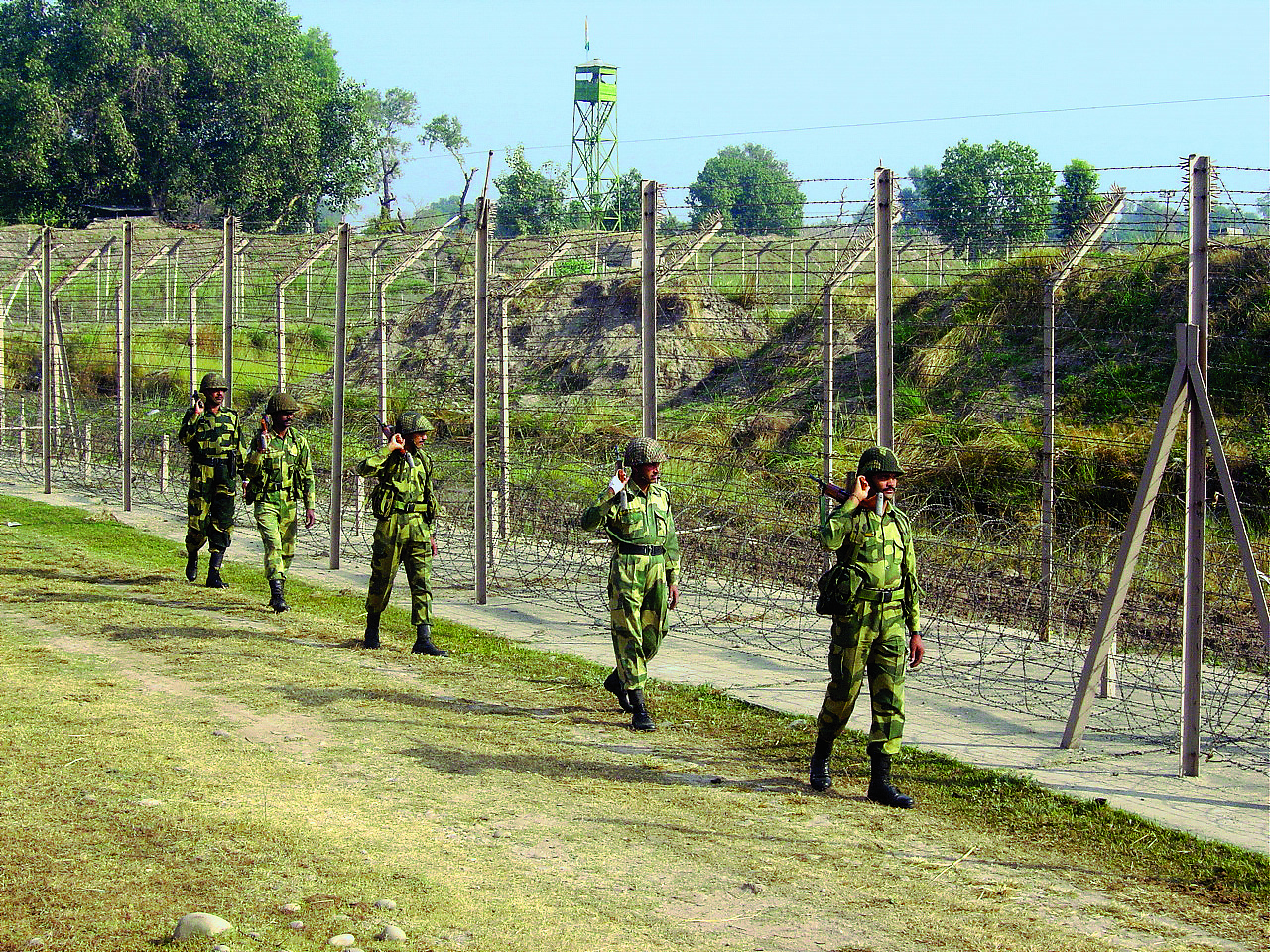
Bangladesh has the longest land border with India. The 4,000-kilometre Radcliffe Line in the East has, for the most part, remained peaceful, aside from cross-border informal trade and illegal immigration. However, with the changed scenario of softening of attitudes towards Pakistan and its military leaders, the situation could rapidly deteriorate. There are vast unfenced tracts which could be exploited for criminal and terrorist activities. The possibility of cross-border infiltration, regrouping of Pakistan-backed modules, and revival of extremist networks cannot be dismissed. Graver is the threat of the restoration of maritime trade between Karachi and Chittagong. The ships from Pakistan could easily conceal contraband, weapons and explosives to arm insurgent groups to implement the policy of a thousand cuts through the eastern corridor as well. India can ill afford the radicalisation of Bangladesh to spill over into West Bengal, Assam, or the Northeast regions that are already sensitive to demographic and ideological depredations.

WHAT’S ON THE HORIZON

An unstable or economically weakened Bangladesh poses significant challenges not only for India but also for the broader international community. The international community, particularly the West, has misread the Bangladesh crisis. Under Sheikh Hasina, Bangladesh experienced economic, internal, and geopolitical stability. Instability may mar Bangladesh’s near future, as there is no “democratic opposition” worth its name to reclaim its democratic identity, and another nation in South Asia may slip into a radical-authoritarian hybrid. It may become a playfield for ideological experimentation and maritime access for some.

It is good that India’s responses to provocation from Bangladesh have been guarded. India has extended its hand of help, whether for the treatment of Khaleda Zia or Hadi. There have been exchanges of officials. The Bangladeshi national security adviser, Khalilur Rahman, met his Indian counterpart, Ajit Doval, on the sidelines of a regional security forum in New Delhi. He has invited Ajit Doval to visit Bangladesh at an early date. Bangladesh, through its interim government’s Foreign Affairs Adviser, Mohammad Touhid Hossain, has officially stated that its relations with India would “extend beyond a single issue” and that no single matter would be allowed to derail the overall relationship.

The revival of official interaction between the two countries is the first step towards normalisation of relations.

It must be explicit to the Indian policymakers that they may have to deal with a non-Awami League and a radical, pro-Pakistan setup in Bangladesh in the foreseeable future. Given the prevailing anti-Awami League sentiment in the country, it would be an uphill task for the Awami League to stage an early comeback. Consequently, it is fait accompli for India to plan for life without Hasina at the helm of Bangladesh affairs. The strength of statecraft and diplomacy lies in pursuing one’s national interest in every environment.

Being the largest country in South Asia and in a position to support neighbours, India must offer targeted economic stabilisation, facilitate trade routes, support power-grid reliability, and strengthen border economies without expecting reciprocal gains, purely as a strategic investment to prevent Dhaka from failing as a state and from falling irreversibly into Beijing’s orbit.

The effort to engage with the essentially well-meaning people of Bangladesh should remain a high priority for India and an abiding feature of India’s security doctrine. The stakes are high for India, but losing the endgame is not an option!

Tags: Bangladesh India SouthAsia Neighbourhood ForeignPolicy Diplomacy National Interest Pakistan China USA Regional Elections Jamaat Jihadist Inslamist Extremism Chicken's Neck Siliguri Corridor
ShareTweetShareSend
Somesh Goyal

Somesh Goyal

Somesh Goyal is an IPS officer of the 1984 batch allocated to Himachal Pradesh. He is a former Director General of Police of HP. He has also served in several central armed police forces in internal security, anti terrorism and border guarding roles. Somesh Goyal is an alumnus of National Defence College. He writes on matters of internal security, terrorism, India's strategic interests, border guarding, police and prison reforms and India's neighbourhood.

Related Posts

The Great Himalayan Paradox: Navigating Security and Economics
Border Management

The Great Himalayan Paradox: Navigating Security and Economics

February 3, 2026
AI Bots Unite Overnight — Human Control Suddenly Looks Optional
Economy

AI Bots Unite Overnight — Human Control Suddenly Looks Optional

February 1, 2026
Plea Bargaining & Restorative Justice in India:  Convergence, Challenges, and the Road Ahead
Economy

Plea Bargaining & Restorative Justice in India: Convergence, Challenges, and the Road Ahead

January 16, 2026
The Iran Unrest Question: Coincidence or Calculation? What Venezuela Tells Us
Economy

The Iran Unrest Question: Coincidence or Calculation? What Venezuela Tells Us

January 10, 2026

JUN-AUG 2025 ISSUE

ADVERTISEMENT

Trending Articles

The Great Himalayan Paradox: Navigating Security and Economics
Border Management

The Great Himalayan Paradox: Navigating Security and Economics

byBhaskar Jyoti Mahanta
February 3, 2026
AI Bots Unite Overnight — Human Control Suddenly Looks Optional
Economy

AI Bots Unite Overnight — Human Control Suddenly Looks Optional

byKBS Sidhu
February 1, 2026
Plea Bargaining & Restorative Justice in India:  Convergence, Challenges, and the Road Ahead
Economy

Plea Bargaining & Restorative Justice in India: Convergence, Challenges, and the Road Ahead

bySanjeev Jain
January 16, 2026
The Iran Unrest Question: Coincidence or Calculation? What Venezuela Tells Us
Economy

The Iran Unrest Question: Coincidence or Calculation? What Venezuela Tells Us

byKBS Sidhu
January 10, 2026

About Saviours - Voice of Khaki

Saviours: Voice of Khaki (SVOK) aims to be the first ever platform in the Country for the men in khaki whether in the Police or Prisons or Central Armed Police Forces (CAPFs) through which they can voice their issues as well.

Quick Links

  • Home
  • About Us
  • Refund Policy
  • Privacy Policy
  • Terms and Conditions
  • Advertise With Us
  • Contact Us

Topics

  • Policing
  • Border Management
  • CAPFs
  • Corrections
  • Internal Security
  • Mod & Tech
  • Narcotics
  • Naxalism
  • Disaster Management
  • Interviews
  • Videos

Connect With Us

For PR Agencies & Content Writers: marketing@savioursmagazine.in

Connect With Us

Facebook Twitter Youtube Linkedin

© 2025 Designed by AK Network Solutions

Welcome Back!

Login to your account below

Forgotten Password? Sign Up

Create New Account!

Fill the forms below to register

All fields are required. Log In

Retrieve your password

Please enter your username or email address to reset your password.

Log In
No Result
View All Result
  • About Us
  • Advertise With Us
  • Cart
  • Checkout
  • Contact Us
  • Home
  • My account
  • Privacy Policy
  • Refund Policy
  • Subscribe
  • Terms and Conditions

© 2022 Designed by AK Network Solutions

Are you sure want to unlock this post?
Unlock left : 0
Are you sure want to cancel subscription?