Dr Harjit Sandhu, a noted UN and international Terrorism and Crime Investigator, discusses the contours and entire gamut of Narco-terrorism with particular reference to the Afghanistan and Pakistan axis. It is a must-read for all security professionals, the legal community, the general public, and policymakers.
Executive Summary
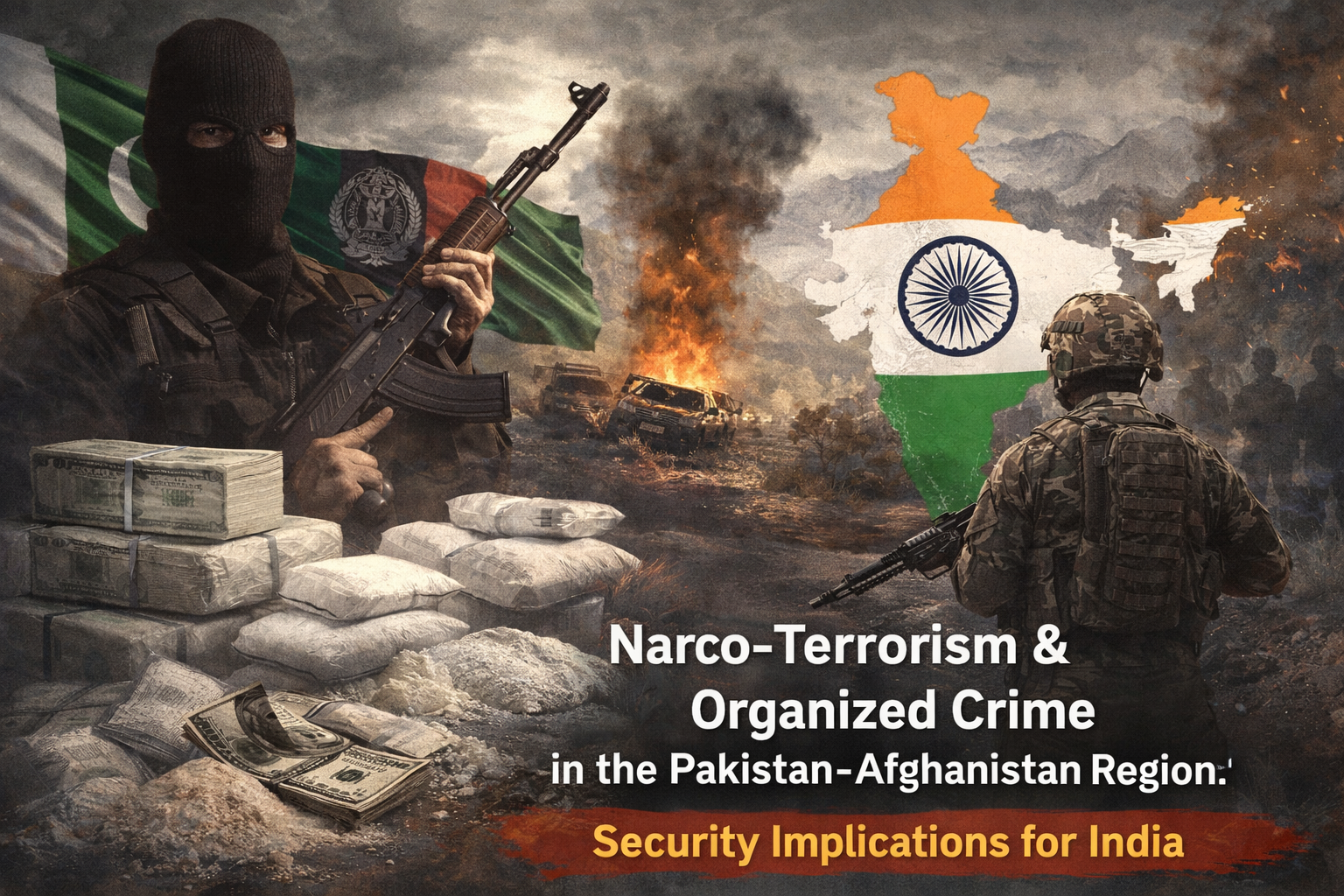
The nexus between narcotics trafficking, organised crime, and terrorism has become one of the most persistent hybrid security threats in South Asia. In the Pakistan–Afghanistan region—commonly known as the “Golden Crescent”—illicit drug production and trafficking networks have long intersected with militant groups and organised criminal organisations. This interaction has produced what analysts describe as a conflict economy, in which narcotics revenues sustain insurgent networks while armed actors provide protection for trafficking operations.
For India, this phenomenon represents more than a conventional law-enforcement challenge. Drug trafficking from the Pakistan–Afghanistan region contributes to terror financing, organised crime expansion, and domestic social destabilisation. The evolution of new trafficking methods—including drone-based smuggling across land borders and maritime trafficking routes through the Arabian Sea—has further complicated enforcement efforts.
Recent policy developments in Afghanistan have produced a sharp decline in opium cultivation. However, the broader narcotics ecosystem has proven resilient. Trafficking networks have monetised existing stockpiles, shifted toward synthetic drugs such as methamphetamine, and diversified their trafficking routes. As a result, the structural foundations of the narco-terror system remain intact.
This article examines the evolution of the narco-terror nexus in the Pakistan–Afghanistan region and analyses its implications for India’s national security. It argues that India must adopt a comprehensive response combining border technology, financial disruption, maritime vigilance, inter-agency coordination, and social resilience. Ultimately, countering narco-terrorism requires dismantling the ecosystem in which organised crime finances conflict and conflict protects criminal networks.
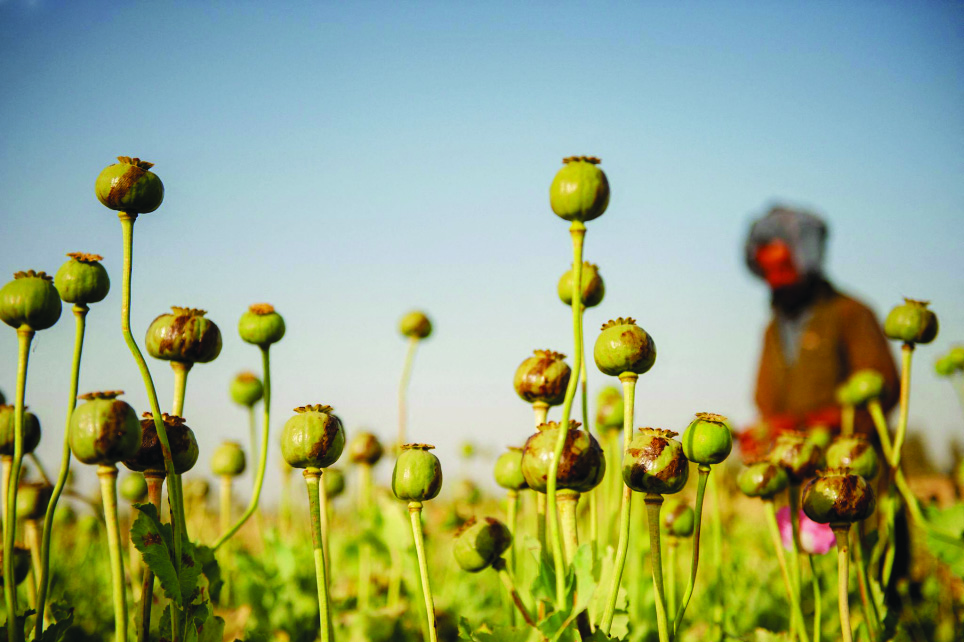
Poppy Crop under Armed Supervision
Introduction
Traditional discussions of national security often focus on visible threats such as military confrontation, territorial disputes, and conventional warfare. However, modern conflicts increasingly depend on illicit financial networks rather than formal state resources. Among these networks, narcotics trafficking has emerged as one of the most significant funding sources for insurgent and terrorist organisations worldwide.
The concept of narco-terrorism describes the intersection between drug trafficking and terrorist activity. In such systems, illicit narcotics production generates financial resources that sustain extremist networks, while organised crime groups provide transportation, distribution, and money-laundering infrastructure. Armed groups, in turn, offer protection, taxation arrangements, and territorial control that enable trafficking networks to operate.
This relationship produces a mutually reinforcing ecosystem. As drug trafficking expands, it generates additional revenue for militant groups. Increased financial resources strengthen those groups’ capacity to protect trafficking routes and sustain insurgent operations. The result is a self-perpetuating cycle in which organised crime and terrorism reinforce each other.
The Pakistan–Afghanistan region has become one of the most prominent examples of this phenomenon. Political instability, weak governance structures, and porous borders have allowed illicit drug economies to flourish across the region. Over time, narcotics production has become deeply embedded in local power structures, enabling militant groups and criminal networks to develop long-standing partnerships.
For India, the implications are significant. India’s geographic proximity to the Golden Crescent places it directly within the strategic environment shaped by this narco-terror ecosystem. Drug trafficking affects India through cross-border smuggling, terror financing networks, and the domestic social impact of narcotics consumption.
Understanding the structure of this narco-terror system—and how it continues to evolve—is therefore essential for developing effective policy responses.
The Historical Evolution of the Golden Crescent Drug Economy
The Golden Crescent—comprising Afghanistan, Pakistan, and Iran—has been a major global narcotics production region for several decades. Afghanistan, in particular, has played a central role in the international opium economy.
The origins of Afghanistan’s narcotics industry can be traced to the geopolitical upheavals of the late twentieth Century. During the Soviet-Afghan war in the 1980s, opium cultivation expanded significantly as warlords and militant groups sought alternative sources of financing. Weak governance structures and the collapse of state institutions created conditions in which illicit economies could thrive.
During the 1990s, the Taliban regime initially tolerated opium cultivation as a source of revenue before briefly banning it in 2000. After the fall of the Taliban government in 2001, opium cultivation expanded dramatically once again, fuelled by continued instability and limited economic alternatives for rural farmers.
By the early twenty-first century, Afghanistan had become the world’s largest producer of illicit opium. According to data from the United Nations Office on Drugs and Crime (UNODC), opium poppy cultivation reached approximately 232,000 hectares in 2022, representing one of the highest levels recorded. Following a Taliban ban on opium cultivation, the area reportedly declined sharply to around 12,800 hectares in 2024 and 10,200 hectares in 2025.
Despite this decline, the broader narcotics economy has remained resilient. Drug trafficking networks have adapted to shifting conditions by increasing prices, drawing on accumulated stockpiles, and expanding production of synthetic drugs such as methamphetamine.
Synthetic narcotics present particular challenges for law enforcement agencies because they do not rely on large agricultural cultivation areas. Instead, they can be produced in small laboratories using chemical precursors, making detection and suppression more difficult.
The persistence of trafficking infrastructure—smuggling routes, financial channels, and criminal partnerships—means that the narcotics ecosystem continues to operate even when cultivation levels fluctuate.
Structure of the Narco-Terror Ecosystem
The narco-terror nexus operates as a multi-layered system involving production networks, militant groups, organised crime syndicates, and financial laundering mechanisms.
Drug Production and Manufacturing
The first stage of the narcotics supply chain involves cultivation or manufacturing. Historically, Afghanistan’s opium poppy cultivation formed the backbone of the Golden Crescent drug economy. Opium harvested from poppy plants is processed into morphine and heroin before being trafficked to international markets.
In recent years, however, synthetic drug production has become increasingly significant. Methamphetamine production requires precursor chemicals rather than agricultural cultivation, enabling traffickers to establish laboratories in remote or mobile locations.
This shift has made the narcotics economy more flexible and resilient.
Protection and Taxation by Armed Groups
The second stage involves protection arrangements between traffickers and armed groups. Insurgent organisations, militant factions, and local militias frequently control territories through which trafficking routes pass.
In exchange for protection, traffickers may pay taxes, provide logistical support, or share profits with armed groups. These arrangements effectively transform narcotics into a conflict commodity whose trade directly finances violence.
International security assessments have repeatedly identified drug trafficking as a major revenue stream for terrorist organisations operating in several conflict zones.
Logistics and Organised Crime Networks
The third stage of the narco-terror system involves the logistical infrastructure required to transport drugs across borders. Organised crime networks typically coordinate this stage, providing transportation routes, safe houses, forged documentation, and cross-border contacts.
These networks operate transnationally and involve a diverse array of facilitators, including transport operators, financial intermediaries, corrupt officials, and criminal brokers.
Because these actors operate across multiple jurisdictions, dismantling trafficking networks requires coordinated international enforcement efforts.
Financial Laundering
The final stage involves laundering drug profits into legitimate financial systems. Traffickers employ various methods, including cash couriers, hawala networks, trade-based money laundering schemes, and front businesses.
Increasingly, digital financial technologies and cryptocurrencies are also used to obscure the origin of illicit funds.
Once laundered, these funds may be reinvested in extremist activities, such as recruitment, propaganda campaigns, and weapons procurement.
Trafficking Routes Affecting India
India’s geographic location places it at the intersection of multiple narcotics trafficking routes.
Land Border Smuggling
The Punjab and Jammu & Kashmir sectors have historically served as primary entry points for narcotics smuggling from Pakistan. Traditional methods included cross-border couriers, tunnels, and concealed shipments.
In recent years, traffickers have increasingly adopted drone-based smuggling techniques. Drones allow traffickers to transport small but high-value packages across borders without requiring human infiltration.
This development presents new challenges for security forces, particularly in terms of detection, attribution, and rapid response.
Maritime Trafficking Routes
The Arabian Sea has emerged as a major trafficking corridor. Drug shipments frequently depart from the Makran coast along the Pakistan-Iran border and travel through maritime routes toward South Asia, the Middle East, and Africa.
These operations often involve mid-sea transfers between vessels, allowing traffickers to evade maritime monitoring systems.
Even when India is not the final destination for these shipments, the presence of trafficking networks in the region strengthens the broader narco-terror ecosystem.
India’s Two-Front Narcotics Challenge
India faces narcotics inflows not only from the Golden Crescent but also from the Golden Triangle in Southeast Asia. This dual exposure stretches enforcement resources across multiple borders and maritime zones.
As a result, India must address narcotics trafficking simultaneously across several geographic fronts.
Comparative Lessons from Other Regions
Narco-terror dynamics are not unique to South Asia. Similar patterns have emerged in other regions where illicit drug economies intersect with insurgent or criminal networks.
In Colombia, for example, cocaine trafficking provided significant financial resources for guerrilla groups such as the Revolutionary Armed Forces of Colombia (FARC). The relationship between drug traffickers and insurgent groups prolonged internal conflict for decades.
In Mexico, powerful drug cartels have evolved into quasi-military organisations capable of challenging state authority. Their financial resources enable them to recruit personnel, purchase weapons, and corrupt officials.
Similarly, West Africa has emerged as a major transit hub for cocaine trafficking from Latin America to Europe. Weak governance structures in several states have allowed organised crime networks to establish trafficking corridors.
These international examples highlight a key lesson: once narcotics trafficking becomes embedded within conflict economies, dismantling such networks becomes extremely difficult.
Security Implications for India
The narco-terror nexus presents several interconnected challenges for India’s national security.
Drug trafficking provides a steady source of funding for extremist networks operating in the region. Even modest amounts of financial support can sustain recruitment, training, and logistical operations.
At the domestic level, narcotics abuse can weaken communities and create long-term social vulnerabilities. High addiction rates among youth populations can contribute to crime, unemployment, and social instability.
Drug trafficking also enables organised crime networks to expand their influence. Wealth generated through narcotics can be used to corrupt officials, distort governance systems, and establish parallel power structures.
Finally, narcotics trafficking can function as a form of grey-zone warfare. By facilitating narcotics flows into a country, hostile actors may seek to destabilise society while maintaining plausible deniability.
1. India Case Studies (Punjab drug crisis, seizures, drone incidents)
2. Regional Geopolitics and Security Dynamics
3. Future Trends in Narco-Terror Networks
Case Studies: Narco-Trafficking and Security Challenges in India
India’s experience with narcotics trafficking illustrates how the narco-terror nexus can translate into concrete domestic security challenges. Over the past two decades, several regions of the country have experienced significant pressure from drug trafficking networks linked to international supply chains.
Punjab: The Domestic Impact of Cross-Border Narcotics
The state of Punjab has been one of the most affected regions in India’s fight against narcotics trafficking. Its proximity to the India–Pakistan border has made it a major entry point for heroin originating from the Golden Crescent.
Over time, narcotics trafficking has had significant social and economic consequences for the region. Widespread drug abuse has affected sections of the youth population, creating long-term public health challenges and contributing to social instability. Drug addiction not only harms individuals and families but also weakens community resilience and increases vulnerability to criminal recruitment.
The Punjab experience demonstrates how narcotics trafficking can evolve from a border-security issue into a broader socio-economic and governance challenge. When addiction spreads within communities, it creates an environment in which organised crime networks can recruit couriers, facilitators, and local distributors.
Rising Drone-Based Smuggling
One of the most significant developments in recent years has been the increasing use of drones to transport narcotics across the India–Pakistan border. Traffickers have begun using small unmanned aerial vehicles to drop packages of heroin, weapons, or cash in designated locations within Indian territory.
This method offers several advantages to smugglers. Drones can operate at night, fly low to avoid detection, and deliver payloads without requiring human couriers to cross the border. As a result, the risk to traffickers is significantly reduced.
For Indian security agencies, drone-based smuggling creates new operational challenges. Traditional border security systems—such as fencing and patrols—are designed to prevent human infiltration rather than aerial delivery. Detecting small drones requires specialised radar systems, radio-frequency monitoring, and rapid interception capabilities.
The proliferation of drone-based trafficking, therefore, highlights the need for technological adaptation in border management strategies.
Major Maritime Seizures
India has also witnessed several high-profile maritime narcotics seizures in recent years, demonstrating the growing importance of sea routes in regional trafficking networks.
Large consignments of heroin and methamphetamine have been intercepted in the Arabian Sea by Indian authorities, often involving vessels operating far from the coast. These operations illustrate how trafficking networks use international maritime routes to transport drugs between the Golden Crescent and global markets.
Maritime trafficking poses particular challenges because of the vast geographic area that must be monitored. Even advanced surveillance systems cannot cover every section of the ocean, allowing traffickers to exploit gaps in monitoring.
These incidents highlight the need for stronger maritime domain awareness, including improved coordination between naval forces, coast guards, and international partners.
Regional Geopolitics and the Narco-Terror Economy
Narco-terrorism in the Pakistan–Afghanistan region cannot be understood solely as a criminal issue. It is deeply embedded within the broader geopolitical dynamics of South Asia.
Political instability in Afghanistan has created conditions in which illicit economies can flourish. Decades of conflict have weakened state institutions and limited the availability of legitimate economic opportunities for rural communities. In such environments, opium cultivation often becomes one of the few viable sources of income.
Similarly, porous borders and limited governance capacity in parts of the region have enabled trafficking networks to operate across multiple jurisdictions. Smuggling routes often extend through remote mountainous areas where law enforcement presence is limited.
Militant groups operating in the region have exploited these conditions by embedding themselves within the narcotics economy. By providing protection to traffickers or taxing drug shipments, these groups gain access to financial resources that sustain their operations.
The geopolitical rivalry and security tensions that characterise South Asia can further complicate efforts to combat narco-terror networks. Cross-border mistrust and limited intelligence sharing between states often hinder coordinated enforcement efforts.
As a result, narcotics trafficking continues to function as a transnational security challenge that requires regional cooperation as well as national enforcement strategies.
Emerging Trends in Narco-Terror Networks
The narco-terror ecosystem is not static. Trafficking networks continually adapt to enforcement measures and technological developments.
One emerging trend is the increasing importance of synthetic drugs, particularly methamphetamine. Synthetic narcotics can be produced more easily than plant-based drugs because they rely on chemical precursors rather than agricultural cultivation. This flexibility allows traffickers to relocate production facilities and scale operations rapidly.
Another trend is the growing use of digital communication technologies by trafficking networks. Encrypted messaging platforms and online marketplaces allow criminal organisations to coordinate operations while reducing the risk of detection.
Financial technologies are also transforming the narcotics economy. Cryptocurrencies and digital payment systems can facilitate cross-border transactions that are difficult for authorities to trace.
Finally, trafficking networks are increasingly diversifying their routes to reduce vulnerability to enforcement pressure. When one route becomes risky, traffickers quickly shift operations to alternative corridors.
These trends suggest that narco-terror networks will remain highly adaptive in the coming years. Effective counter-strategies must therefore emphasise flexibility, technological innovation, and international cooperation.
Policy Recommendations
Addressing narco-terrorism requires a comprehensive policy approach.
• India should strengthen border surveillance technologies, including counter-drone systems, radar detection, and artificial-intelligence-assisted monitoring.
• Maritime domain awareness must also be expanded through improved coordination between the Indian Navy, Coast Guard, and coastal security agencies.
• Financial disruption strategies are equally important. Strengthening anti-money-laundering frameworks and targeting hawala networks can significantly weaken trafficking organisations.
• Improved inter-agency coordination between narcotics control agencies, intelligence services, financial regulators, and state police forces is essential.
• Finally, demand reduction strategies—including rehabilitation programs, youth employment initiatives, and community awareness campaigns—must be integrated into national security policy.
Conclusion
Narco-terrorism represents a hybrid security challenge that combines elements of organised crime, terrorism, and geopolitical competition. In the Pakistan–Afghanistan region, drug trafficking and militant networks have evolved into a mutually reinforcing system that is both resilient and adaptive.
For India, the challenge extends beyond narcotics interdiction. It involves dismantling the broader ecosystem in which crime finances conflict and conflict protects criminal networks.
An effective response must therefore combine border technology, financial enforcement, maritime vigilance, and social resilience.
If terrorism is the visible flame of instability, narcotics are often the invisible fuel that sustains it.
Dr Harjit Sandhu has worked with global premier bodies and is a certified Fraud Examiner. He has dealt with a number of international crimes and terrorism. Dr Sandhu belongs to 1983batch of IPS.



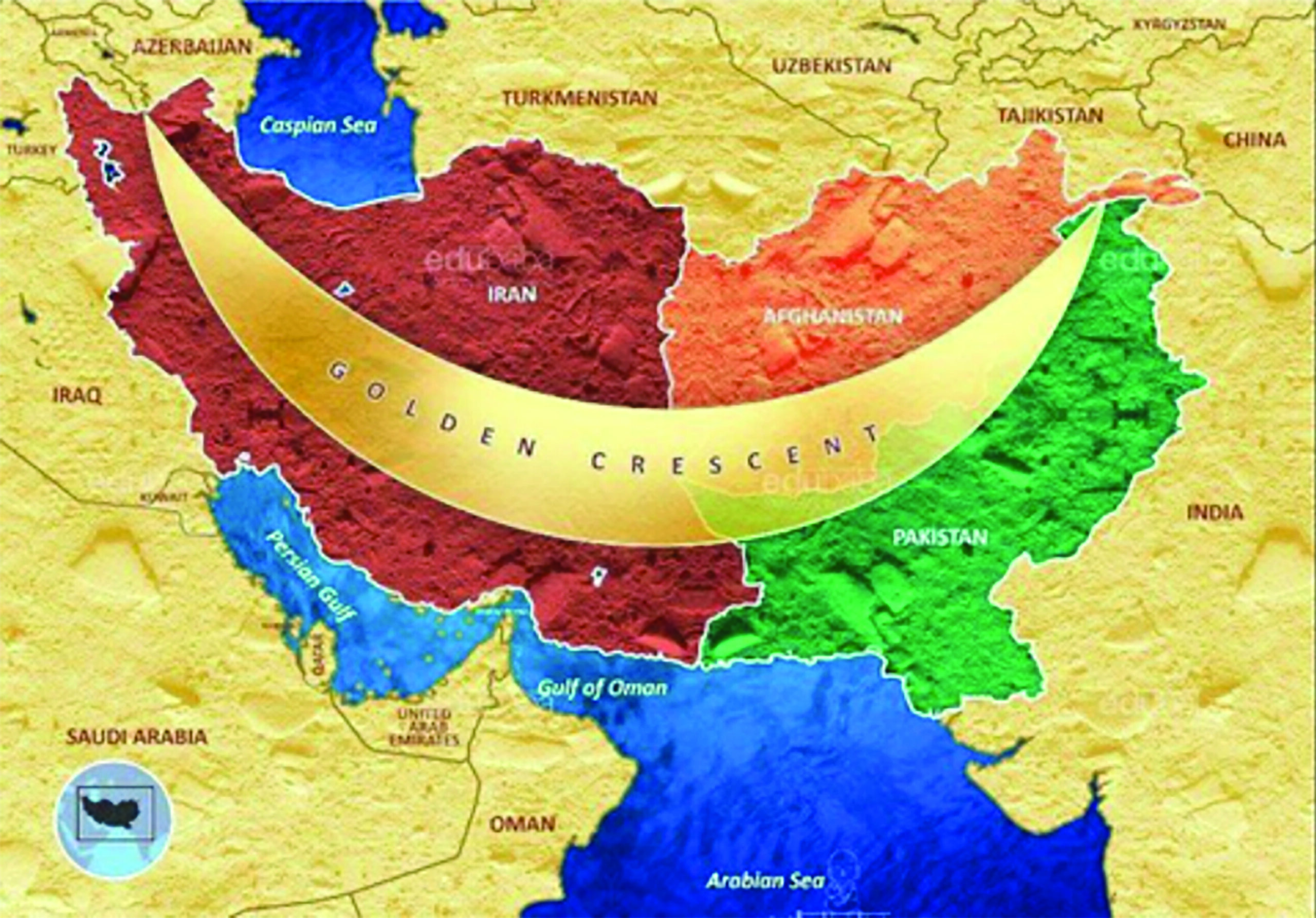 The Golden Crescent—comprising Afghanistan, Pakistan, and Iran—has been a major global narcotics production region for several decades. Afghanistan, in particular, has played a central role in the international opium economy.
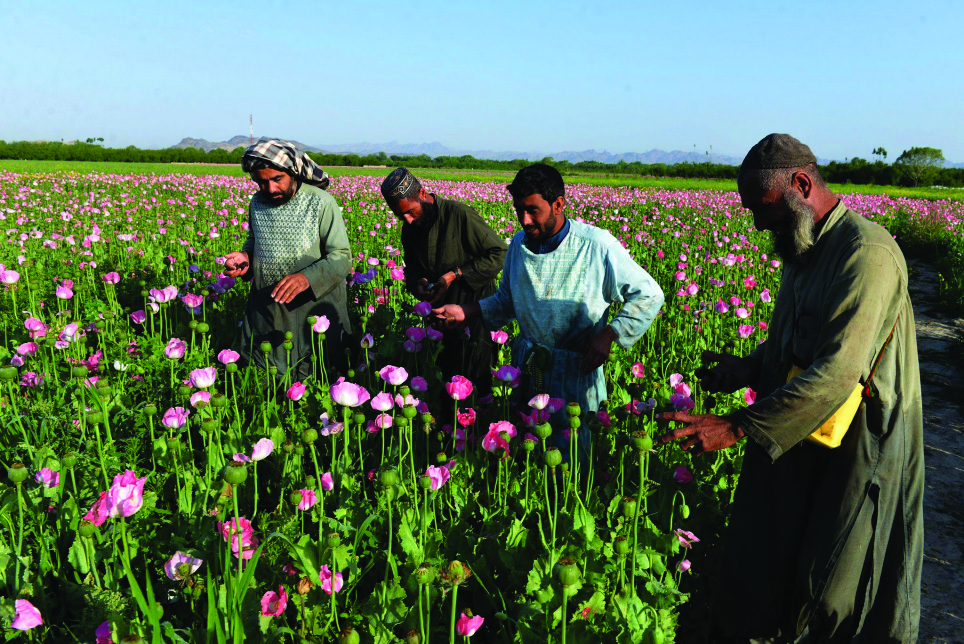 Despite this decline, the broader narcotics economy has remained resilient. Drug trafficking networks have adapted to shifting conditions by increasing prices, drawing on accumulated stockpiles, and expanding production of synthetic drugs such as methamphetamine.
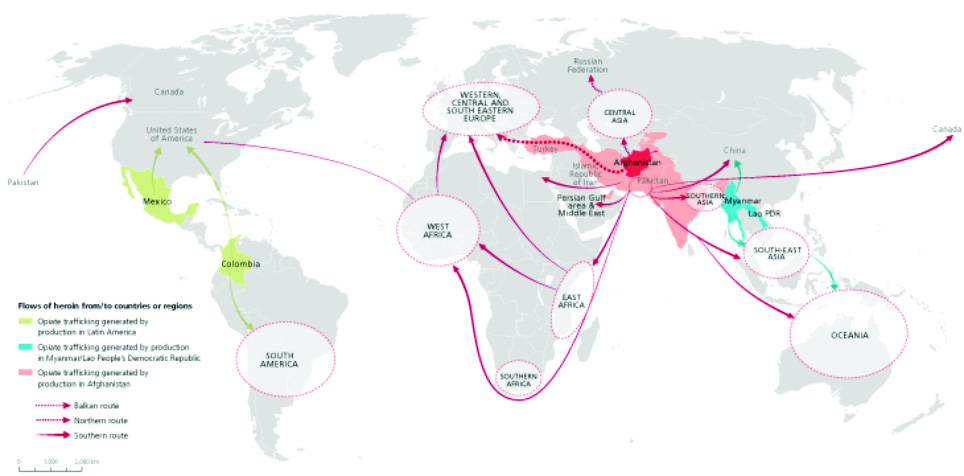 India’s geographic location places it at the intersection of multiple narcotics trafficking routes.
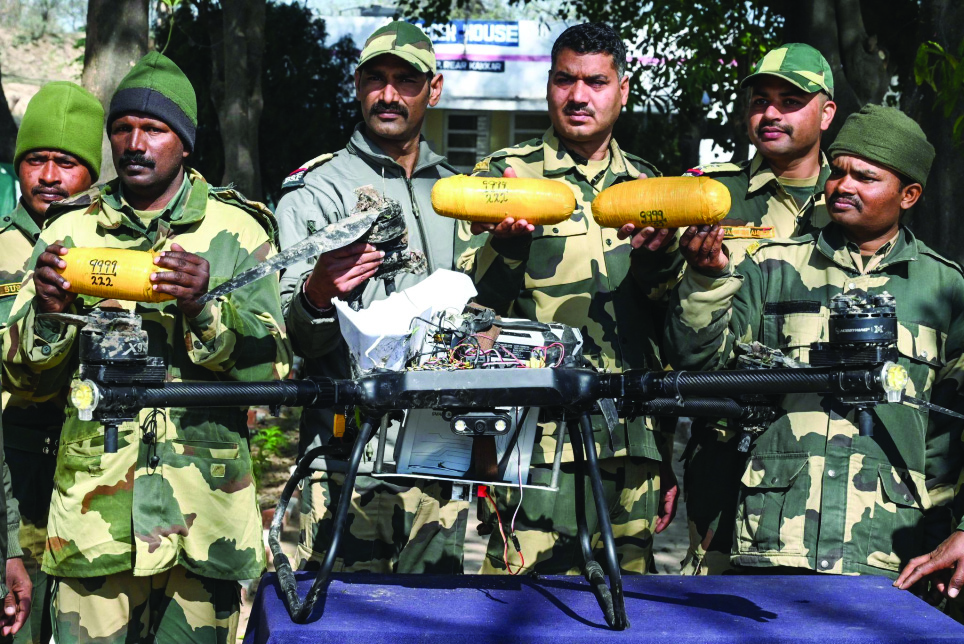 One of the most significant developments in recent years has been the increasing use of drones to transport narcotics across the India–Pakistan border. Traffickers have begun using small unmanned aerial vehicles to drop packages of heroin, weapons, or cash in designated locations within Indian territory.
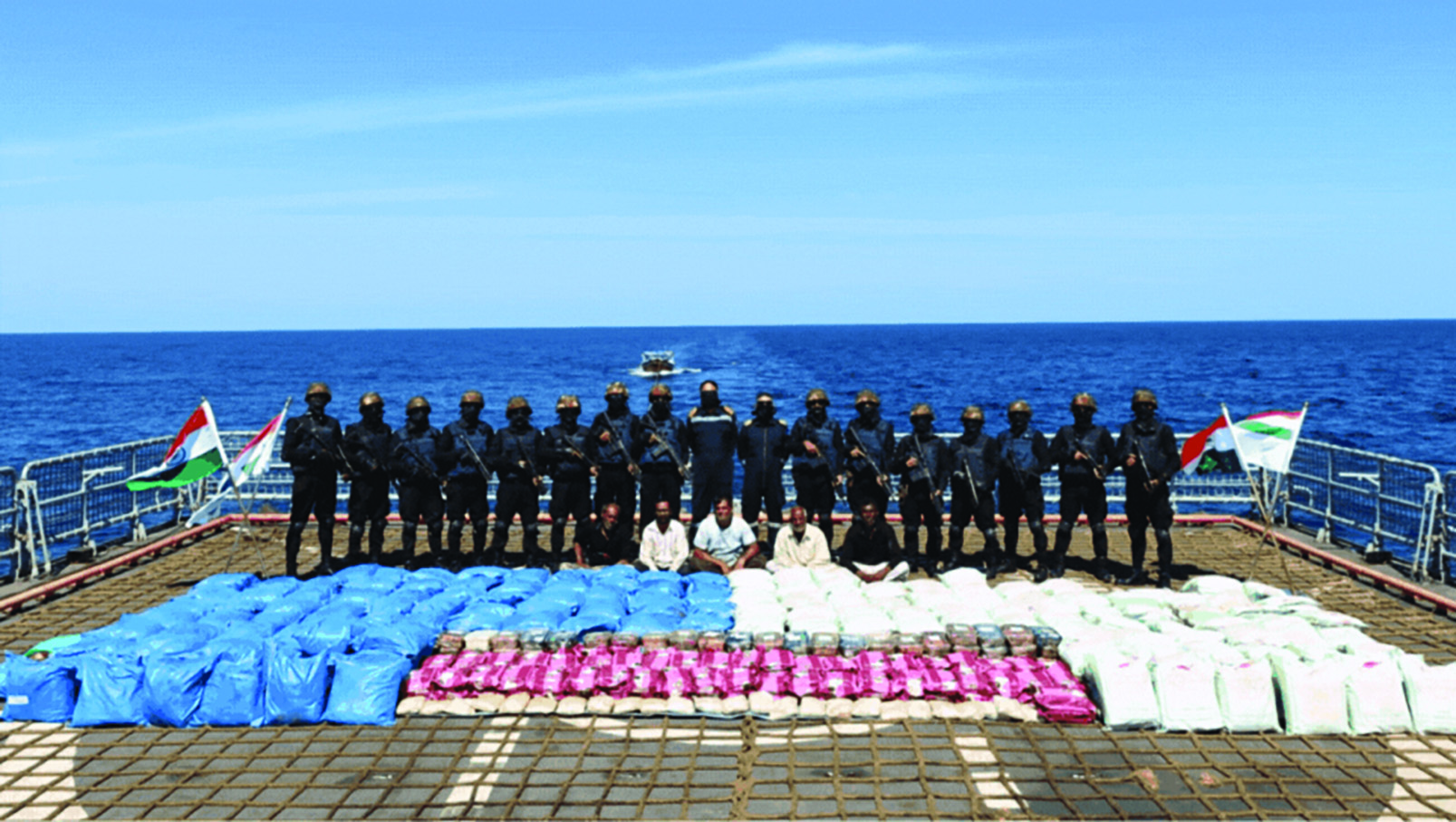 Maritime trafficking poses particular challenges because of the vast geographic area that must be monitored. Even advanced surveillance systems cannot cover every section of the ocean, allowing traffickers to exploit gaps in monitoring.