

Wednesday, February 4, 2026
  • Home
  • About Us
  • Refund Policy
  • Privacy Policy
  • Terms and Conditions
  • Advertise With Us
  • Contact Us
  • Login
  • Register
SUBSCRIBE
Welcome to Saviours Voice of Khaki
Advertisement
ADVERTISEMENT
  • Foreign Policy
  • Internal Security
  • Policing
  • Border Management
  • Corrections
  • Disaster Management
  • Interviews
  • General
No Result
View All Result
  • Foreign Policy
  • Internal Security
  • Policing
  • Border Management
  • Corrections
  • Disaster Management
  • Interviews
  • General
No Result
View All Result
Welcome to Saviours Voice of Khaki
No Result
View All Result
Home Border Management

The Great Himalayan Paradox: Navigating Security and Economics

Bhaskar Jyoti MahantabyBhaskar Jyoti Mahanta
February 3, 2026
in Border Management, Economy, Foreign Policy, General, Internal Security
Reading Time: 8 mins read
0
0
The Great Himalayan Paradox: Navigating Security and Economics
Share on FacebookShare on TwitterShare on LinkedInShare on WhatsApp

India-China relations suffer from mistrust following China’s repeated incursions into the Indian territory. The Galwan stand-off paused direct engagement between leaders. Recently, there has been a thaw necessitated by global geopolitical pressures and improved ground conditions.

Introduction

The geopolitical landscape of early 2026 presents a fundamental, almost agonising paradox for the Republic of India, the management of a primary strategic rival that remains an indispensable, if entirely untrusted, economic partner. As New Delhi enters this fiscal year, the relationship with the People’s Republic of China has migrated from a state of total diplomatic and economic freeze, a deep frost initiated by the 2020 Galwan Valley clash, to a phase defined by cautious, fragile re-engagement. This transition is not the result of a sudden restoration of strategic trust; indeed, the trust deficit remains the defining feature of the bilateral relationship. Instead, it is driven by a cold, pragmatic assessment of domestic economic requirements and a volatile global trade environment that leaves little room for ideological purity.

The central challenge for Indian policymakers is to navigate what has been termed “de-risked interdependence.” This model seeks to harness Chinese manufacturing inputs and technical expertise to fuel India’s own industrial ambitions while simultaneously erecting high-security barriers around strategic sectors and the disputed frontier. It is a tightrope walk, with the safety net of international alliances fraying and the wind of domestic political pressure picking up.

The Shadow of Power Asymmetry

The bedrock of India’s current approach to China is the recognition of a deep and growing power asymmetry. Over the past decade, the pace of growth between the two nations has been markedly uneven, allowing Beijing to channel its substantial GDP gains into the development of human capital and a formidable hard-power capability. By 2025, China’s official defense budget was estimated at approximately $250 billion, more than three times India’s defense allocation. This material gap creates a structural imbalance that influences every aspect of the relationship, from border management to trade negotiations.

The most visceral manifestation of this mistrust is the state of the Line of Actual Control (LAC). The 2020 Galwan clash fundamentally shifted Indian public opinion, positioning China as the primary long-term strategic threat. This perception was further cemented by the events of May 2025, specifically Operation Sindoor. While the conflict was primarily an India-Pakistan skirmish triggered by the Pahalgam terrorist attack, the unprecedented level of Chinese military and intelligence support for Islamabad during the crisis underscored the reality of a collusive two-front threat. Reports from the Indian security establishment indicated that Chinese-origin military platforms and “military software,” including intelligence, surveillance, and reconnaissance (ISR) data and cyber operations, all of which played a critical role in Pakistan’s posture. Deputy Chief of Army Staff Lt. Gen. Rahul R. Singh explicitly described China as an “ever-present factor” bolstering Pakistan’s effort through battlefield collusion. This reinforces the view that the “stability” currently seen on the border is merely a tactical pause by a rival that continues to arm India’s primary adversary.

Economic Friction and Market Realities

Despite high-level meetings between Prime Minister Modi and President Xi in Kazan (2024) and Tianjin (August 2025), the underlying friction points remain unresolved. Both sides continue to maintain large numbers of forward-deployed troops along the high-altitude frontier, and meaningful de-escalation remains elusive. The security establishment in New Delhi remains convinced that the state of the border determines the state of the relationship, a principle that has led to heightened scrutiny of Chinese trade, technology, and investment.

In early January 2026, the fragile equilibrium of the relationship was tested by reports that the Indian Finance Ministry was planning to scrap five-year-old restrictions on Chinese firms bidding for government contracts. These curbs, implemented in 2020 post-Galwan, required any bidder from a country sharing a land border with India to register with a high-level government committee and obtain both political and security clearances. These measures effectively shut Chinese companies out of an Indian public procurement market estimated to be worth up to $750 billion.

The rationale for easing these curbs was purely economic and operational. Several government departments, most notably those overseeing the power and infrastructure sectors, had reportedly requested exemptions. They cited acute shortages of specialised equipment and significant project delays as direct consequences of the 2020 rules. For instance, India’s plan to expand thermal power capacity to 307 GW over the next decade has been hampered by limitations on importing Chinese equipment, which remains more cost-effective and readily available than alternatives. However, the market reaction to the rumours on January 8, 2026, was swift and negative. Shares of major engineering firms plummeted, with BHEL falling 14% and L&T dropping 3.1%. Investors feared the return of Chinese firms would erode the competitive advantage Indian firms had enjoyed. Under sharp criticism from the opposition, which labelled the potential shift a “calibrated capitulation,” the Finance Ministry officially denied the reports, clarifying that the restrictions remain firmly in place.

The Strategic Transition

This episode highlights the delicate balancing act the government must perform. While some departments advocate easing curbs to meet infrastructure deadlines, the political and security costs of such a reversal remain exceedingly high. The lesson of 2026 is that the “total freeze” of the post-Galwan era is no longer sustainable if India is to meet its own industrial milestones, yet a return to the status quo ante is impossible given the persistent security threat.

What is emerging instead is a transition toward a more nuanced strategy. This approach acknowledges that India must selectively engage with the Chinese economic machine to build the very national strength required to eventually resist Beijing’s hegemony. It is a shift from reactive defense to a posture that views economic engagement as a tactical instrument of statecraft rather than a sign of weakness. As we move forward, the focus must shift from simply barring Chinese participation to strategically integrating it in ways that minimise vulnerability while maximising our own sovereign capabilities.

In the second part of this series, we will examine how this “dual-track” paradigm is being operationalised through investment recalibrations, sectoral dependencies in green energy, and the external pressures of a shifting global order that are forcing India into a new era of strategic hedging.

The Dual-Track Strategy: Navigating the Dragon in a Multipolar World

In the first part of this series, we examined the “Great Himalayan Paradox,” the tension between India’s industrial needs and its deep-seated mistrust of Beijing’s security intentions. We saw how the threat of market volatility and political fallout continues to shape the boundaries of engagement. However, the current period represents a shift from a reactive “total freeze” to a more sophisticated “stability without trust.” This transition is driven by a strategic imperative to manage national vulnerabilities while ensuring that the pursuit of industrial self-reliance does not lead to unintended economic stagnation.

This new era is defined by a “Dual-Track” strategy. On one track, New Delhi remains unyielding on matters of territorial integrity and border infrastructure. On the other hand, it is quietly recalibrating its economic filters to facilitate the flow of essential Chinese capital and expertise, where it serves the broader goal of building Indian national power.

Operationalising Engagement: Investment and Visas

While the government has denied plans to scrap procurement curbs, there is substantial evidence of an internal push to relax Foreign Direct Investment (FDI) restrictions through an amendment to Press Note 3, issued in 2020 to prevent opportunistic takeovers. This note became the primary tool for blocking Chinese investment. A high-level committee chaired by Rajiv Gauba has now recommended a “graded” opening. The proposed pathway employs a threshold-based approach that permits financial participation while strictly preserving Indian management and strategic control.

This aligns with the Economic Survey 2023-24, which argued that attracting Chinese FDI is a more effective strategy for integration into global value chains than relying solely on trade. By encouraging Chinese firms to manufacture in India, the government hopes to address a trade deficit that reached $99.21 billion in FY25. The strategic logic is clear: if components must be sourced from China, it is preferable for factories to be located on Indian soil, subject to Indian law, and to contribute to Indian employment.

Recognising that industrial growth cannot be achieved without technical collaboration, New Delhi launched the e-Production Investment Business Visa (e-B-4) on January 1, 2026. This digital-first category is designed for Chinese technical experts supporting Production Linked Incentive (PLI) schemes. It addresses a bottleneck that, due to visa delays, costs Indian manufacturers an estimated $15 billion in losses over 2022-2025. Complementing this is the restoration of direct air connectivity, which resumed in October 2025. These moves represent a pragmatic middle path of maintaining security vetting while ensuring that stalled manufacturing units can finally be commissioned.

The Reality of 2026: Sectoral Dependencies

The urgency of this shift is underscored by deep structural dependencies. In electronics, India’s demand for components is projected to reach $240 billion by 2030, with China currently supplying more than half. The India Cellular and Electronics Association (ICEA) has emphasised that achieving deep localisation in products like lithium-ion cells and sophisticated semiconductors requires the presence of Chinese experts to install and tune specialised machinery.

Similarly, in the renewable energy sector, India is structurally vulnerable to Chinese control over the green technology value chain. Beijing refines nearly 90% of global rare-earth production and controls nearly 100% of India’s solar wafer supply. When China restricted rare-earth exports in April 2025, Indian electric-vehicle production declined significantly. These are not merely economic issues; they are strategic vulnerabilities that could derail India’s energy transition. The e-B-4 visa and 26% investment threshold are therefore not concessions, but tactical tools designed to bridge the technology gap as quickly as possible.

The External Catalyst: Strategic Hedging

This thaw is also heavily influenced by the second Trump administration in the United States. In 2025, Washington dramatically increased tariffs on Indian goods, raising them to 50% on many exports. Combined with U.S. pressure regarding India’s energy ties with Russia and a visible rapprochement between the U.S. and Pakistan, New Delhi has been forced to reassess its “American gamble.” Stabilising ties with Beijing serves as a tactical hedge, allowing India to reallocate resources to manage economic frictions with the West and to expand trade options in a multipolar world. It provides India with the breathing room to avoid being squeezed between two superpowers.

Strategic Recommendations for a Managed Rivalry

To navigate this relationship, India must adopt a sophisticated strategy that prioritises national security without sacrificing growth:
Hardening the Strategic Boundary: Economic re-engagement must remain strictly decoupled from territorial concessions. India must accelerate construction of the 1,840-km Arunachal Frontier Highway and strategic tunnels to ensure any attempt to alter the status quo incurs prohibitive costs.
Selective De-risking via “Strategic Insulation”: Formalise a “negative list” permanently barring Chinese participation, such as in telecommunications and core power grid management. Use the investment threshold only for non-strategic manufacturing that is essential to PLI success.
Capability-Led Manufacturing: Future budgets must shift from tariff protection to “deep manufacturing.” Treat the rare-earth sector as a strategic test case, with tax incentives to scale domestic mining and processing.
Leveraging Multi-Alignment: Exploit ties with Japan, Taiwan, and South Korea for semiconductors. Operationalise the Andaman-Nicobar Islands as a primary asymmetric maritime asset to counter Chinese naval expansion.
Unified Strategic Narrative: Counter China’s “three warfare” doctrine by documenting historical names to counter Chinese claims and building pressure through Global South partners.

Conclusion: Toward a Managed Rivalry
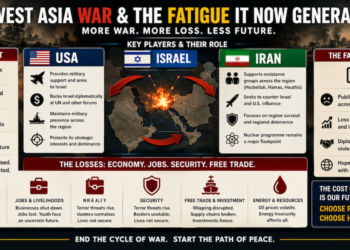
As 2026 unfolds, the India-China relationship will not be remade, but it will be tested. The goal is not to outmatch China in every domain, a goal currently out of reach due to power asymmetry, but to ensure that coercion delivers diminishing returns. By embracing a pragmatic, interest-based foreign policy that balances the need for Chinese industrial inputs with a resolute defense of sovereignty, India can manage its untrustworthy rival while building the economic foundation of its future status as a leading global power. The “dual-track” path is narrow and fraught with risk, but it is the only viable means of navigating a multipolar world characterised by both deep interdependence and intense strategic competition.


Tags: India China Relations Diplomacy Foreign Relations Dragon elephant Galwan Expansionist South Asia Trade Economy TradeImbalance
ShareTweetShareSend
Bhaskar Jyoti Mahanta

Bhaskar Jyoti Mahanta

Bhaskar Jyoti Mhanata is a former a former DGP of Assam. He later became the Chief Information Commissioner of Assam. At present he is the General Secretary of a Think Tank called Society to Harmonise Aspirations for Responsible Engagement-SHARE

Related Posts

AI Bots Unite Overnight — Human Control Suddenly Looks Optional
Economy

AI Bots Unite Overnight — Human Control Suddenly Looks Optional

February 1, 2026
Plea Bargaining & Restorative Justice in India:  Convergence, Challenges, and the Road Ahead
Economy

Plea Bargaining & Restorative Justice in India: Convergence, Challenges, and the Road Ahead

January 16, 2026
The Iran Unrest Question: Coincidence or Calculation? What Venezuela Tells Us
Economy

The Iran Unrest Question: Coincidence or Calculation? What Venezuela Tells Us

January 10, 2026
The Naga Conundrum
Border Management

The Naga Conundrum

January 5, 2026

JUN-AUG 2025 ISSUE

ADVERTISEMENT

Trending Articles

The Great Himalayan Paradox: Navigating Security and Economics
Border Management

The Great Himalayan Paradox: Navigating Security and Economics

byBhaskar Jyoti Mahanta
February 3, 2026
AI Bots Unite Overnight — Human Control Suddenly Looks Optional
Economy

AI Bots Unite Overnight — Human Control Suddenly Looks Optional

byKBS Sidhu
February 1, 2026
Plea Bargaining & Restorative Justice in India:  Convergence, Challenges, and the Road Ahead
Economy

Plea Bargaining & Restorative Justice in India: Convergence, Challenges, and the Road Ahead

bySanjeev Jain
January 16, 2026
The Iran Unrest Question: Coincidence or Calculation? What Venezuela Tells Us
Economy

The Iran Unrest Question: Coincidence or Calculation? What Venezuela Tells Us

byKBS Sidhu
January 10, 2026

About Saviours - Voice of Khaki

Saviours: Voice of Khaki (SVOK) aims to be the first ever platform in the Country for the men in khaki whether in the Police or Prisons or Central Armed Police Forces (CAPFs) through which they can voice their issues as well.

Quick Links

  • Home
  • About Us
  • Refund Policy
  • Privacy Policy
  • Terms and Conditions
  • Advertise With Us
  • Contact Us

Topics

  • Policing
  • Border Management
  • CAPFs
  • Corrections
  • Internal Security
  • Mod & Tech
  • Narcotics
  • Naxalism
  • Disaster Management
  • Interviews
  • Videos

Connect With Us

For PR Agencies & Content Writers: marketing@savioursmagazine.in

Connect With Us

Facebook Twitter Youtube Linkedin

© 2025 Designed by AK Network Solutions

Welcome Back!

Login to your account below

Forgotten Password? Sign Up

Create New Account!

Fill the forms below to register

All fields are required. Log In

Retrieve your password

Please enter your username or email address to reset your password.

Log In
No Result
View All Result
  • About Us
  • Advertise With Us
  • Cart
  • Checkout
  • Contact Us
  • Home
  • My account
  • Privacy Policy
  • Refund Policy
  • Subscribe
  • Terms and Conditions

© 2022 Designed by AK Network Solutions

Are you sure want to unlock this post?
Unlock left : 0
Are you sure want to cancel subscription?