
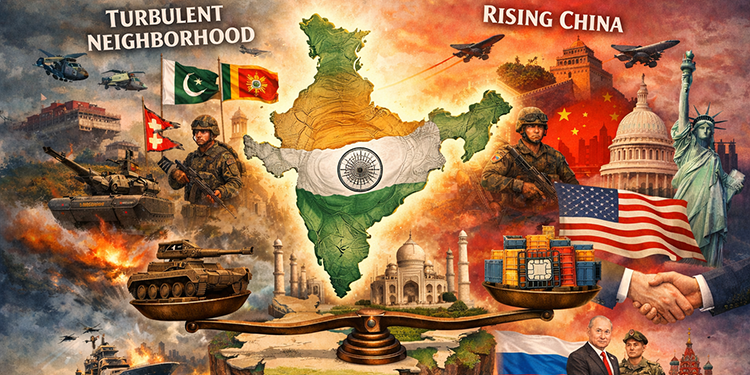
As 2025 comes to a close, Saviours asked a distinguished former ambassador, Anil Triguniyat, to make an assessment of the likely challenges to the Indian Foreign Policy in 2026.
Introduction
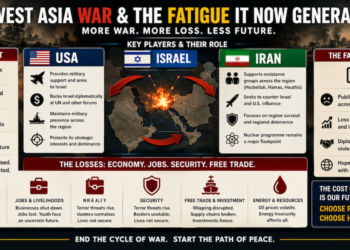
In 2025, natural and man-made disruptions posed major challenges to the foreign policies of most countries, as unilateralism continued to erode multilateralism. The inefficacy of multilateral institutions became glaring as the conflicts in Eurasia and the Middle East continued to challenge them. Fragile ceasefires became hostage to an ever-present trust deficit and susceptible to flare-ups time and again. While the Russia-Ukraine war still may haunt the world with dangerous consequences and even nuclear escalation, the Israel -Iran and Iranian proxies continue to suffer from MAD syndrome. For the superpowers, the regime change agenda remains quite attractive. President Donald Trump, in his second term, has shaken the foundations of the so-called liberal order through his America First and MAGA fads, tooled by the imposition of unilateral tariffs or threats thereof. Few countries stood up. China, India, Brazil, Russia and South Africa, the original BRIC -4+1, stood their ground and followed an independent foreign policy despite short-term losses and dislocations.
Although USA in its recently announced NSS( National Security Strategy 2025) appears to mull over G2 ( US-China) and G3( US-China -Russia) or even G5 ( or C5-United States, China, Russia, India and Japan) formats and reluctantly acknowledges the presence and viability of other major powers, but in reality and in the public domain the statements appear to be driven by fear and deception as international systems and institutions continue to falter ceding space to a transitional order or disorder which might eventually lead to Cold War 2.0 at least geopolitically and Geo technologically.
China’s egregious rise is a given. Meanwhile, minilateralism, plurilateralism, regional, and bilateral trading arrangements have become preferred instruments for limited international discourse. Hence, unbridled and engineered uncertainty has become the new currency of interaction in the resultant anarchy and chaos. In a scenario like this, a country like India, pursuing a foreign policy with defined vectors of strategic autonomy and multiple alignments, also faces unprecedented challenges that are evident not only in bilateral relations but also in our neighbourhood and elsewhere.
India First
Indian foreign policy is driven by the “India First” principle and the supremacy of its National Interest. But this is further predicated by the underlying philosophy of Vasudhaiv Kutumbakam -the world is one family, which has been evident in India’s Vaccine Maitri and G20 dictum of “One World, One Family, One Future” or, for that matter, Health for all, AI for all or One Grid One world. These are not mere slogans; they have been displayed with genuine intent, implementation and sincerity of purpose. No wonder India is perceived as a credible Voice of the Global South. In recent years, the execution of a civilisation’s foreign policy has been marked by Strategic Autonomy and Multi-alignment, much to the chagrin of big powers, especially the USA and the West, which think only in terms of an alliance mindset. This was very clearly evident when, in the wake of the Russia-Ukraine war, New Delhi refused to condemn the Kremlin for its war or special operations, even if it did not endorse Moscow’s aggression. It repeatedly abstained from UNSC/UNGA discussions and resolutions, but remained openly and discreetly engaged with both warring sides, urging them to end the war and return to the table for dialogue, diplomacy, and peace. PM Modi also made it a point to travel to both Moscow and Kyiv to persuade both leaders to desist from further destruction, which was taking its toll on the global economy.
In view of the imposition of severe sanctions by the West on Russia, New Delhi had to resort to the assured supplies of crude from Russia to meet the enormous energy requirements for fuelling its turbo charged fastest growing major economy much to the disappointment of the West, which intends to throttle even Indian industry as they have had no game plan except defeating Russia on the battle field and strategically. This equation has posed a unique challenge that will continue to fester into 2026, since abandoning your time-tested, trusted partner of decades for the fads of some will be a strategic folly. Hence, nimble diplomacy would be warranted in engaging closely with the USA, the so-called Global comprehensive strategic partner, which has become crassly transactional in recent times. As a realist, it should not be a bad thing after all. An early wake-up call in diplomacy often pays better dividends. It allows for diversification of risks and opportunities. At the same time, New Delhi may be able to take stock of its strategic partnerships to see whether they have delivered or remained garbled in deception and self-interest.
Of course, as PM Modi says, India follows a mix-and-match foreign policy, and rightly so, in such an unpredictable global scenario; flexibility and agile diplomacy can provide the requisite leverage.
Major Powers
Repairing relations with both the USA and China will be a priority, as both prefer Indian strategic autonomy, as neither would want India to be too close to the other. In that context, both QUAD and BRICS/SCO remain strategic tools for India. The USA under President Trump has emerged as a major challenge for the Indian foreign policy establishment, and hence, the signing of a trade deal that might extract more than India was willing to concede could ease the tension, but respect for redlines is a must. Likewise, if Trump’s visit to India materialises in the first quarter for the QUAD Summit, it could be a good opportunity to have an in-depth conversation. In recent times, Rubio’s statements regarding India’s importance and the mention of India three times in the NSS in the context of the Indo-Pacific are indicative. But in the US, what President Trump thinks goes through. His penchant for Pakistan and Gen Asim Munir attests to that and has emerged as a major irritant for the US-India relationship. Likewise, India will be watching Trump’s G2 policy with China, which will have its own permutations, combinations and implications for the Indian foreign policy establishment. The signing of the Free Trade Agreement with the EU and the presence of their leadership at the 2026 Republic Day as the Chief Guest are good moves, as the Trans-Atlantic cracks offer certain opportunities to India, even if they are not on the same page regarding Russia. India will have to continue reassuring Moscow, and President Putin’s visit to India was a testament to that. Since India will also be hosting the BRICS Summit, the presence of Russian and Chinese leaders will give a serious message that there are options available. Keeping India-Russia ties on a sustainable keel and orbit will be necessary across the spectrum, for which faster progress on the EAEU-FTA (Eurasian Economic Union), the Russian Far East and the Arctic, along with the operationalisation of the Chennai-Vladivostok corridor, will provide the requisite momentum. The relationship with China has been testy since the Galwan in 2020. Even if efforts have been made since the Kazan and Tianjin Summits to improve relations incrementally, the Chinese challenge will remain and can cause dislocation in the region, especially as Bangladesh remains volatile and Pakistan remains their iron-clad all-weather ally despite their philandering with Washington DC.
Neighbourhood First Policy under stress
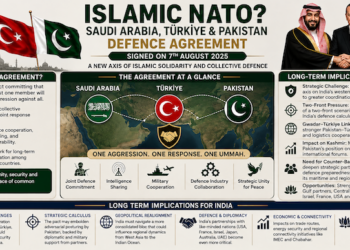
India’s biggest challenge lies in its immediate neighbourhood. Pakistan, under Asim Munir -the de facto ruler, remains on a high and emboldened note after Operation Sindoor, since it got many pats on their back. Meeting with Trump three times and securing funds released by the IMF and other multilateral institutions with the US’s nod has helped them temporarily tide over domestic discontent. Likewise, Rawalpindi’s emergence as a security guarantor for Saudi Arabia and other Middle Eastern countries has given it new Islamic legitimacy in the region. Participation of Pakistani contingent and recent discussions between the ISI, CIA and Mossad have added a new dimension to it. China, after testing its low-grade equipment during the Op Sindoor, has upgraded Pakistan’s military capability, while the US has provided additional funding for the F-16s and related infrastructure. But Pakistani moves may have their own limitations, depending on how the Sino-US contest unfolds. They may have to face the reality of big power competition sooner rather than later. But for New Delhi, Pakistan, and cross-border terrorism will become more challenging going forward.
Bangladesh, especially a volatile and radical one, will be a real challenge to the Neighbourhood First Policy. If the elections are held on February 12,2026 and power transition does take place without greater violence, the chances of a broadly anti-India coalition with the Bangladesh Nationalist Party (BNP) and Jamaat-e-Islami, or a combination thereof with smaller factions, coming into power are quite real. Given the support by the US, China, Pakistan and Turkiye to the ruling dispensation, it will cause greater discomfort for India’s security interests, and Islamic extremism will rise with the plight of minorities becoming more accentuated. The proposed Bangladesh-Pakistan mutual defence agreement will be yet another factor to contend with, and a 2.5 or 3-front war or cross-border terrorism, if not a full-fledged war, is a real possibility.
The fallacy and misplaced dream of a greater Bangladesh with the Seven Sisters of North India can lead to a kinetic conflict to preserve India’s security and interests intact. Keeping Sheikh Hasina in India indefinitely has its own repercussions. Hence, even though New Delhi will not, on its own, like to extradite her, it can surely facilitate her transfer to a gulf country.
The Afghanistan relationship has moved in a strategic direction and is very likely to continue on that trajectory toward full-fledged diplomatic relations. One could even expect recognition of the Taliban government, which is a reality and is keen on developing closer India-Afghan ties.
Sri Lanka, Nepal, and the Maldives will try to leverage the Sino-India contest to maintain closer ties with both, with occasional twists. Hence, it is important to remain a first provider, responder, and contributor to their growth story.
Meanwhile, attempts by Pakistan and Bangladesh to create another SAARC under Chinese tutelage, excluding India, could create an additional challenge at the regional level.
West Asia: A Success Story
West Asia has been an important success story of PM Modi’s foreign policy and needs to be nurtured, especially through strategic economic and connectivity engagements and sub-regional and regional networks. Unfortunately, the Pakistan factor has once again become salient in the region, and even though it may not have a direct impact on India, it will surely make them pause and think in the event of a heightened conflict between India and Pakistan, as was the case during the Op-Sindoor. India should also refocus on its relations with Iran and the INSTC. Other important connectivity project IMEEC can witness some slow yet steady progress. India-Israel relations will continue to strengthen as the new FTA and defence projects are finalised. India-GCC FTA and India-Arab League Foreign Ministers’ conference will be important markers for a regional interactive policy. However, for being a reliable player and partner, the de-hyphenation policy, along with proactive regional diplomacy, will be a sine qua non, lest the confidence in India’s commitment becomes questionable. However, PM Modi’s visit to Jordan and Oman, two strategic countries in West Asia and the signing of CEPA with Oman, the second for them globally and India’s second in the region after the UAE (2022), augurs well. Türkiye will remain a challenge if no efforts are made to resolve it.
East Asia
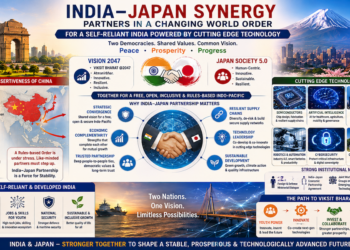
Relationships with Japan, South Korea, and Australia, as well as with ASEAN countries, are expected to continue to develop. However, India-ASEAN FTA/CEOA would need to be finalised in 2026
It may be advisable to adopt an Asia First Policy, with other regional polities as a sub-sector, given India’s rise and Asia as its Karm Bhoomi. The hub-and-spoke model of diplomacy could be deployed and harnessed in the region.
Africa Policy
Since 2018, when PM Modi articulated India’s Africa Policy at the Ugandan Parliament for the first time, high-level exchanges and extensive engagement at the top levels of leadership have been regular. President Murmu’s visit to Botswana and Angola, followed by an excellent visit by PM Modi to Ethiopia, underscored India’s priority. The speed of execution and delivery on commitments needs to be accelerated, especially in Africa. Likewise, closer cooperation and functional arrangements with AfCFTA (African Continental Free Trade Agreement) will provide a whole-of-the-continent opportunity for the Indian industry and businesses. Likewise, tri-lateral projects in Africa from the I2U2 partners could find greater traction in 2026.
One of the dampeners has been the inability to host the 4th India-Africa Forum Summit even after a decade, which sends negative signals, since every other major power has held its iterations of such engagement in China, Japan, Russia, the USA, and European countries. The timing, format, and collective approach of the Summit will be critical.
Latin America
Similarly, although India has excellent strategic partnerships with Brazil and Argentina, developing ties with countries like Peru, Chile, and Mexico, especially through FTAs, will also require a focused push to secure cooperation on critical minerals supply chains. The relationship with Venezuela, where India has significant energy interests, will be tested in 2026 amid the US imposing its will in the Americas.
With the US opting out of the Paris Agreement, the fight against Climate Change will be waged ineffectively, and the leadership through the International Solar Alliance, CDRI, and Global Biofuels Alliance will have to be sustained to bridge the Trumpian disinterest.
Conclusion
Geoeconomics will be accentuated in 2026, as will the Geo-technological contestation. India will host the AI Summit, providing it with yet another opportunity to have a say in a vital area. India will continue to finalise various FTAs and CEPAs in major geographies while pursuing its connectivity imperatives and broadening soft and smart power.
So one can see that the plate is full, yet there are too many slips between the plate and the mouth; a steady hand will help steer the course.
India’s foreign policy challenges in 2026 will largely revolve around strategic competition with China, managing great-power relations (especially with the U.S. and Russia), stabilising its neighbourhood, and ensuring economic and maritime security.
Not an easy task, but Indian diplomacy has functioned well even when the coast was not clear, and India’s growing economy and expanding market, with its huge demographic dividend and skilled youth, will remain an attraction for major stakeholders and a geostrategic pivot. The key is to harness them smartly through an agile diplomacy and proactive communication strategy.